GG-2026-060
Loch Ness Monster
- Phenomenon Cryptids & Unknown Zoology
- Documentation
Rating B
- A — Strong dossier: several independent sources plus primary evidence (original media, records, measurements) a researcher could use without interviewing anyone.
- B — Well documented: multiple independent witnesses with at least some contemporary primary material, or one witness with substantial primary corroboration (photos, recordings, contemporaneous notes, documents).
- C — Multi-source but soft: several witnesses or a long run of reports, but mostly testimony and after-the-fact secondary sources (newspapers, folklore collections, later interviews). Little or no primary physical evidence. Regional legend clusters such as the Bridgewater Triangle land here.
- D — Thin: single witness (or one household), little or no support beyond the account. Normal for a sincere personal experience.
- E — Incomplete or not yet assessed. Every new submission starts here until staff have read it.
- Evidence & media 2 items
- Status Active
- Location Loch Ness, Scotland · regional placement
- Occurred 28 April 1933
Regional marker using Loch Ness as a public reference point. Reported sightings, searches, photographs and investigations are associated with numerous locations around the loch rather than a single incident site.
This file is placed as a region or body of water, not a single exact event location.
Summary
The Loch Ness Monster, affectionately known as "Nessie," is a famous aquatic cryptid alleged to inhabit Loch Ness in the Scottish Highlands. Popularized in 1933 following local sighting reports, the creature is frequently described as a large, long-necked aquatic organism. While iconic photographic evidence was later revealed as a hoax, centuries of eyewitness accounts and sonar anomalies sustain ongoing scientific and folkloric inquiry.
Background
Historical Origins and the 1933 Explosion
Apparitions of aquatic beasts in the Great Glen date back to the 6th century, when Adomnán’s Life of St. Columba recorded the saint commanding a "water beast" in the River Ness to retreat. However, the modern legend crystallized in April 1933.
The Spicer Encounter: Aldie and Eleanor Mackay reported seeing a massive creature disturbing the loch's surface while driving along the newly constructed A82 road. Months later, George Spicer described a 25-foot-long, long-necked creature crossing the road in front of his car toward the water.
The "Surgeon's Photograph": In 1934, a photograph published in the Daily Mail—purportedly taken by physician Robert Kenneth Wilson—showed a slender neck protruding from the water. It became the defining image of Nessie, cementing the popular image of a relict plesiosaur.
Timeline of Key Events
├── 565 AD : St. Columba reportedly banishes a water beast in the River Ness.
├── Apr 1933: The Mackays spot a massive creature in the loch, sparking national news interest.
├── 1934 : The iconic "Surgeon's Photograph" is published in the Daily Mail.
├── 1970s : Robert Rines and the Academy of Applied Science capture underwater sonar photos.
├── 1994 : The "Surgeon's Photograph" is revealed to be a hoax involving a toy submarine.
└── 2019 : A comprehensive eDNA survey of Loch Ness is conducted by University of Otago scientists.
Scientific Surveys and Hoaxes Revealed
Over subsequent decades, Loch Ness became the target of numerous formal scientific expeditions:
Sonar and Underwater Photography: During the 1970s, researchers like Robert Rines captured controversial underwater images ("gargoyle head" and "flipper" photos) alongside localized sonar hits that appeared to detect large moving contacts in deep water.
Deconstruction of Evidence: In 1994, co-conspirator Christian Spurling confessed that the famous 1934 "Surgeon's Photograph" was a staging made using a toy submarine fitted with a sculpted head. Furthermore, extensive acoustic sweeps—such as Operation Deepscan in 1987—and a massive 2019 environmental DNA (eDNA) study found no reptile or dinosaur DNA, though researchers noted an extraordinarily high concentration of European eel (Anguilla anguilla) DNA.
Witness statement
No statement on file.
Evidence & media
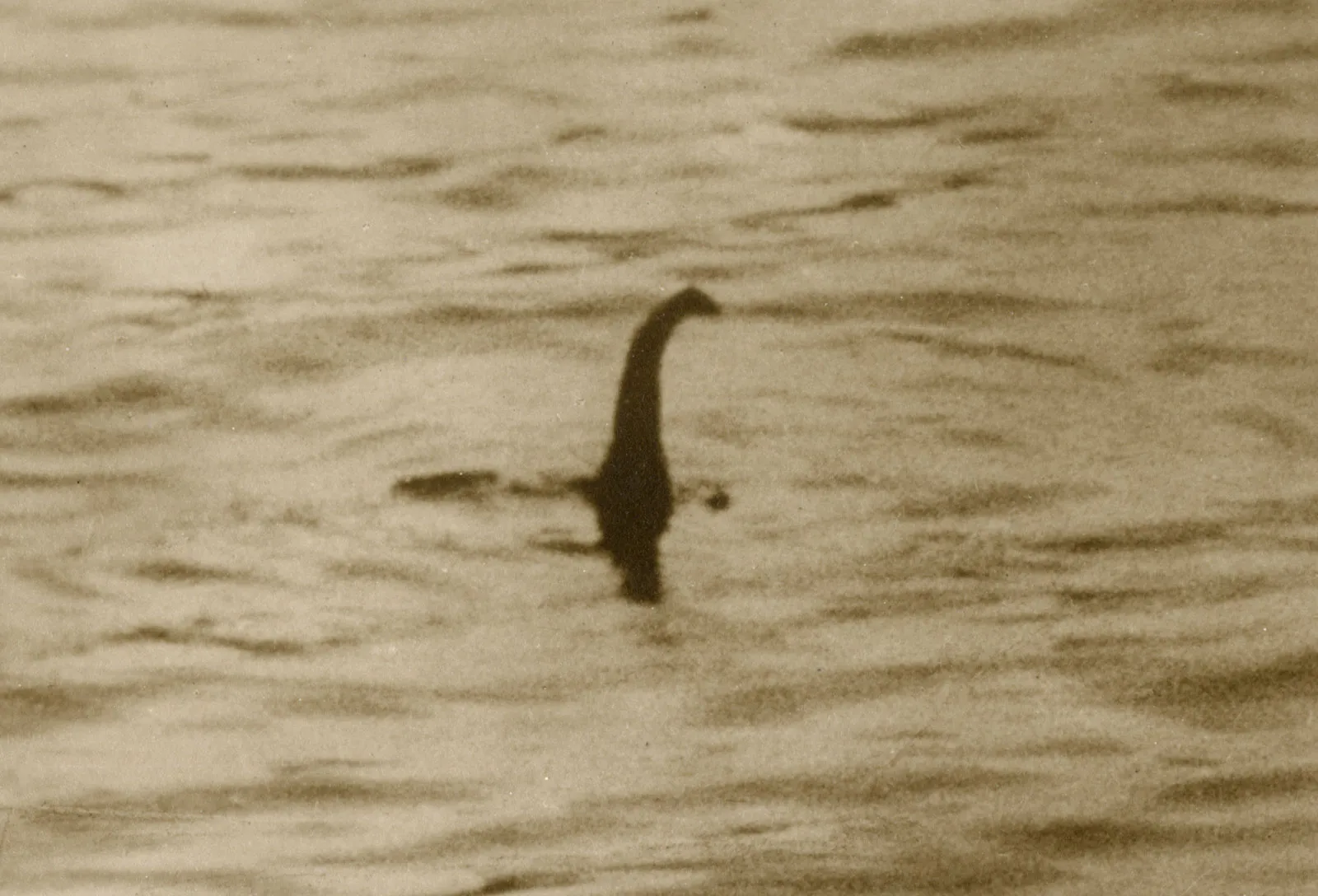 Iconic "Surgeon's Photograph" is revealed to be a hoax involving a toy submarine in 1994.
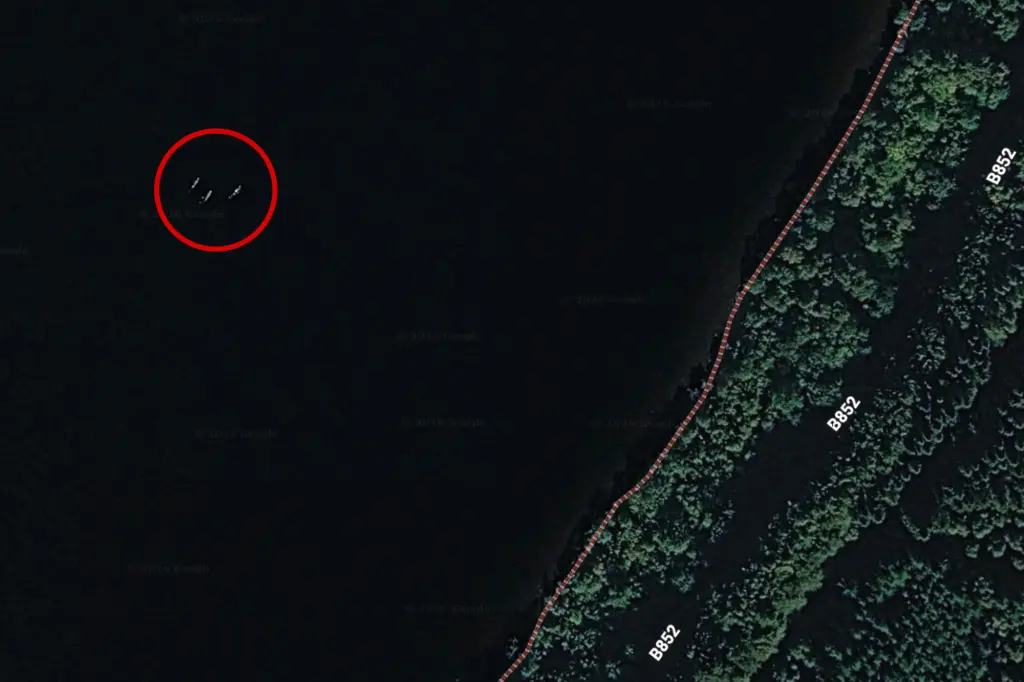 Satellite photo from 2026 showing some unidentified objects in the water.
Investigation timeline
- 2026-09-26 — Historical file submitted.
- 2026-09-26 — Historical file accepted and published.
Research notes
Historical research: Environmental DNA, Limnology, and Trophic Limitations
Limnologists emphasize that Loch Ness, despite its immense volume (holding more fresh water than all lakes in England and Wales combined), is an oligotrophic body of water with low biological productivity. The loch's cold temperatures, high peat turbidity, and limited fish population cannot support a breeding population of megafauna weighing several tons. The comprehensive 2019 environmental DNA study led by geneticist Neil Gemmell sequenced millions of organic samples from across the water column. The research detected no DNA belonging to large reptiles, marine mammals, or sharks, effectively ruling out a relict plesiosaur or whale population. Scientists conclude that sightings are primary driven by misidentified boat wakes, standing wave anomalies (seiches), waterlogged pine logs, and giant European eels (Anguilla anguilla).
Historical research: Fortean High Strangeness and Land-Sighting Anomalies
While ecological studies rule out a prehistoric reptilian population, open-minded researchers analyze persistent anomalies within Fortean, liminal, and high-strangeness frameworks.
Parapsychologists and anomalists highlight that a subset of historical accounts—specifically land sightings like the 1933 Spicer encounter—describe physical behaviors incompatible with standard limnological explanations or marine biology. These accounts report large, quadrupedal organisms moving clumsily across dry land near a freshwater enclosure. Investigators examine whether certain cryptid phenomena represent localized sensory anomalies triggered by environmental conditions, or non-physical "tulpas" generated by cultural expectation. Additionally, intermittent sonar contacts recorded at extreme depths during multi-transducer acoustic sweeps leave unresolved inquiries into unclassified transient phenomena or non-standard biological movements in deep underwater trenches.
Open research questions
A specific gap in the file. An accepted source, research note, or further-reading link closes it.
Trace the source history of Loch Ness creature claims from Adomnán's River Ness account through the modern Nessie phenomenon beginning in 1933. Identify when recurring lake-monster descriptions, photographs and familiar Nessie imagery entered the record, and distinguish contemporary reports from later folklore, reinterpretation and media amplification.
When did Adomnán's River Ness “water beast” story first become explicitly reframed as a Loch Ness Monster sighting?
Propose evidence & media, a source citation, further reading, a research note, a correction, a related case, or a series link. Staff review before anything is added. An accepted correction does not replace the file by itself.