GG-2026-066
Varginha Incident
- Phenomenon UFOs/UAPs
- Documentation
Rating B
- A — Strong dossier: several independent sources plus primary evidence (original media, records, measurements) a researcher could use without interviewing anyone.
- B — Well documented: multiple independent witnesses with at least some contemporary primary material, or one witness with substantial primary corroboration (photos, recordings, contemporaneous notes, documents).
- C — Multi-source but soft: several witnesses or a long run of reports, but mostly testimony and after-the-fact secondary sources (newspapers, folklore collections, later interviews). Little or no primary physical evidence. Regional legend clusters such as the Bridgewater Triangle land here.
- D — Thin: single witness (or one household), little or no support beyond the account. Normal for a sincere personal experience.
- E — Incomplete or not yet assessed. Every new submission starts here until staff have read it.
- Evidence & media 2 items
- Status Historic
- Location Varginha, Brazil · regional placement
- Occurred 20 January 1996
Regional marker representing Varginha, Minas Gerais, for the January 1996 incident sequence. Reported encounters and later recovery claims involve multiple locations in and around the city. This marker does not identify a specific creature encounter, crash, capture or recovery site.
This file is placed as a region or body of water, not a single exact event location.
Activity period
- Earliest claimed event 20 January 1996
- Earliest documented report 20 January 1996
- Latest documented report 1996
- Pattern Historic wave
Summary
On January 20, 1996, three residents of Varginha, Minas Gerais, Brazil, reported seeing a small, unusual figure crouched beside a wall in a vacant lot. Liliane Silva, Valquíria Silva, and Kátia Xavier described a dark brown or oily-looking body, prominent red eyes, and unusual features on the head. Their report quickly became connected with separate stories of unusual aerial activity, firefighters, military vehicles, hospital secrecy, and the alleged capture of one or more creatures. Brazilian military authorities later investigated some of those allegations and rejected an extraterrestrial recovery, offering conventional explanations for the official activity and the women's sighting. The witnesses did not accept the proposed identification. No authenticated photograph, biological sample, recovery record, or other physical evidence has publicly established that a non-human entity was captured at Varginha.
Background
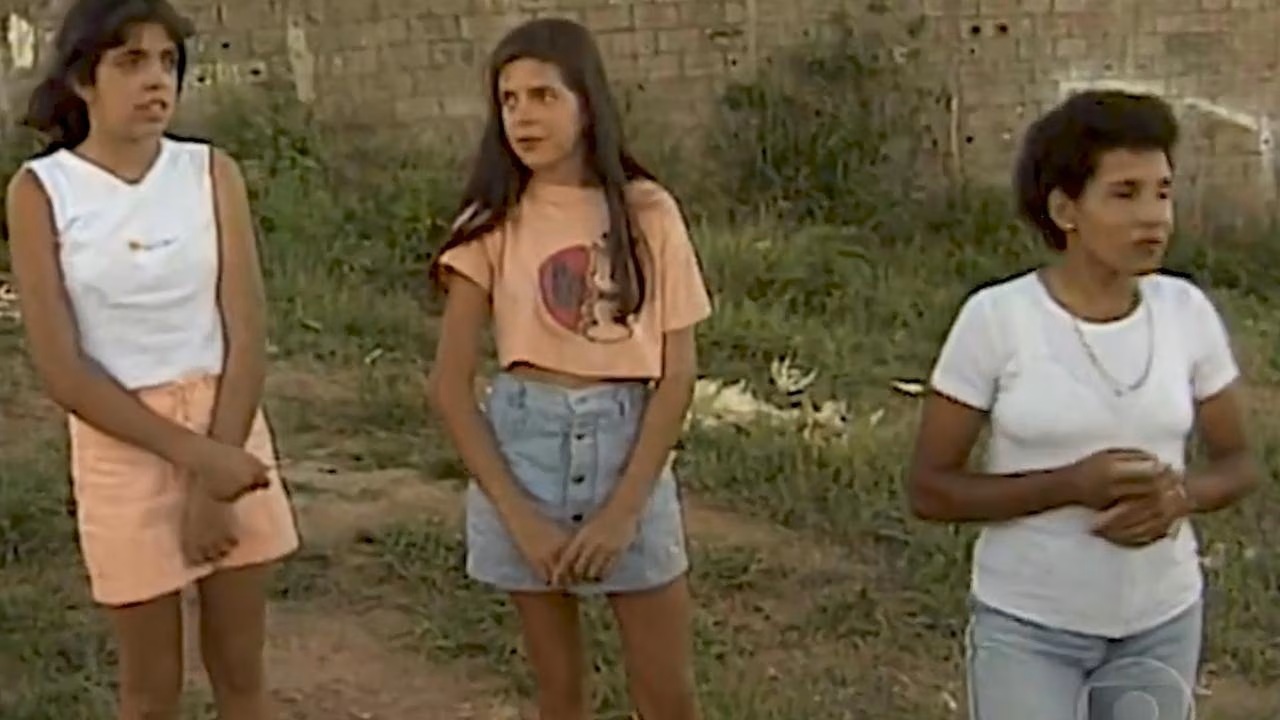
The Varginha case began with a relatively simple and unusually specific witness report. On the afternoon of January 20, 1996, Liliane Silva, Valquíria Silva, and their friend Kátia Xavier were walking through a neighborhood of Varginha when they encountered something crouched near a wall in a vacant lot.
The three witnesses described a small, human-like figure with a thin body, dark brown or oily-looking skin, prominent reddish eyes, and unusual protrusions or ridges on the head. They quickly left the area and told family members what they had seen. Their account entered Brazilian media while the incident was still recent, making this three-person observation the strongest documentary core of the later Varginha story.
What the witnesses encountered remains disputed. They were together during the observation, so this was one shared encounter rather than three completely independent sightings. No photograph or physical sample of the figure was obtained, and later claims concerning footprints or unusual odors did not produce authenticated physical evidence capable of identifying it.
The story grew rapidly beyond that original encounter.
Reports of unidentified aerial activity in the region became connected with the Varginha case, including a story about an unusual object observed before the women's encounter. Claims also appeared that the local fire department had captured a strange creature earlier on January 20 and that military personnel subsequently removed one or more bodies. These allegations became central to what was later called“Brazil's Roswell.”
Their evidentiary footing, however, is substantially weaker than that of the three women's sighting. Publicly available investigations have not produced an authenticated creature photograph, biological specimen, military recovery document, hospital record identifying an unknown organism, or transport record confirming that a non-human body was recovered. Much of the recovery narrative developed through later testimony, anonymous sources, and investigators attempting to connect separately reported events.
One particularly important figure in the later story was military police officer Marco Eli Chereze. Chereze died in February 1996, and later UFO literature connected the death with claims that Chereze had physically handled one of the alleged creatures. That association became one of Varginha's most dramatic pieces of circumstantial evidence.
The available medical record does not support the claim that Chereze died from exposure to an unknown organism. Sources reviewing the autopsy and medical documentation attribute the death to a severe infection involving known bacteria. His death is therefore a documented event that later became incorporated into the recovery narrative, not independent evidence that a creature was captured.
Military and emergency-service activity around Varginha produced another major branch of the legend. Witnesses reported vehicles, personnel, unusual movements, and activity around medical facilities. Investigators interpreted those observations as evidence of a recovery operation, while authorities offered routine explanations for military vehicle movements and denied transporting extraterrestrial bodies.
Brazilian military authorities did eventually conduct formal inquiries into allegations associated with the case. The Military Police inquiry identified as IPM 18/1997 rejected the extraterrestrial-recovery interpretation and proposed that the three witnesses had mistaken a local resident for an unusual creature under poor weather and viewing conditions.
That conclusion should not itself be overstated. The three witnesses rejected the proposed identification, and available reviews note that they were not interviewed as part of that inquiry. The official explanation is consequently part of the evidentiary record rather than a demonstrated reconstruction of exactly what the witnesses saw.
Varginha therefore contains two very different evidentiary layers.
The first is the three-witness encounter. Three named people reported seeing an unusual crouching figure on January 20, and their account was documented relatively close to the event. Exactly what they saw has not been established.
The second is the much larger recovery narrative involving unidentified craft, firefighters, captured beings, military transport, hospitals, biological contamination, and official concealment. Those claims are considerably more dramatic but lack the corresponding authenticated physical and documentary evidence that would be expected from an actual recovery operation.
The distinction matters because rejecting the elaborate recovery story does not require claiming that the three witnesses invented their encounter. Conversely, accepting that the three witnesses sincerely saw something they could not identify does not authenticate everything subsequently connected with Varginha.
That leaves the case with a smaller but still interesting mystery: three people encountered something they found sufficiently unusual to report as a strange creature, and the available record does not conclusively establish what that figure was. The much larger claim that Brazilian authorities captured one or more non-human beings remains unsupported by authenticated public physical evidence.
Witness statement
No statement on file.
Evidence & media

Varginha Alien
Artist rendition of the creature the 3 girls described.
Untitled Photo
The 3 girls in 1996 who claim to have encountered the creature.
Further reading
Continue exploring — Wikipedia, documentaries, podcasts, museum pages. Not treated as proof, and not independently verified by this archive.
Investigation timeline
- 2026-09-27 — Historical file submitted.
- 2026-09-27 — Historical file accepted and published.
Assigned GG-2026-066
Research notes
Historical research: Social Contagion, Misidentification, and Institutional Explanations
In anomalistic psychology and sociolinguistics, the Varginha case is analyzed as an example of rumor propagation, media-driven expectation bias, and perceptual misidentification.
Skeptical researchers and official military analysts emphasize that the core testimony relies heavily on coincidental, unlinked events merged into a single narrative. The three primary witnesses encountered an individual ("Mudinho") under poor lighting and rain conditions, where psychological shock transformed a recognizable human figure into an alien entity. Subsequent hospital lockdowns and military truck movements—standard operational logistics at the nearby ESA (Escola de Sargentos das Armas) military base—were interpreted by a hyper-vigilant public as an emergency containment operation. Furthermore, medical reviews of Officer Marco Chereze's death attributed his sudden passing to severe hospital-acquired infection following routine surgery rather than contact with exotic pathogens.
Historical research: Multi-Witness Convergence, Medical Anomalies, and Transport Logistics
While military inquiries offer prosaic explanations, ufologists and anomalistic researchers highlight physical and testimony-based consistency across independent accounts.
Investigative researchers, including Ubirajara Rodrigues and A.J. Gevaerd, point out that the three primary witnesses maintained their highly detailed, highly specific physical descriptions across decades of follow-up interviews, explicitly denying that they misidentified a familiar neighborhood resident. Proponent researchers emphasize secondary testimony from hospital personnel at Hospital Regional and Hospital Humanitas, who described unannounced military cordons, restricted access wings, and unusual medical transport protocols on the night of January 20. The primary research questions center on analyzing the timeline of military truck movements logged that afternoon and evaluating whether localized biological containment protocols were activated under military authority.
Open research questions
A specific gap in the file. An accepted source, research note, or further-reading link closes it.
Trace the earliest sources for the Varginha claims, including the January 20 witness encounter, alleged crash, creature recoveries, military and firefighter activity, hospital stories and the death of Marco Eli Chereze. Identify which details are supported by contemporary records or named witnesses and which first appear through later investigators, media reports or retrospective testimony.
Propose evidence & media, a source citation, further reading, a research note, a correction, a related case, or a series link. Staff review before anything is added. An accepted correction does not replace the file by itself.