GG-2026-074
Seguin Island Lighthouse
- Phenomenon Apparitions & Spirits, Physical & Poltergeist Activity, Auditory & Acoustic Events
- Documentation
Rating C
- A — Strong dossier: several independent sources plus primary evidence (original media, records, measurements) a researcher could use without interviewing anyone.
- B — Well documented: multiple independent witnesses with at least some contemporary primary material, or one witness with substantial primary corroboration (photos, recordings, contemporaneous notes, documents).
- C — Multi-source but soft: several witnesses or a long run of reports, but mostly testimony and after-the-fact secondary sources (newspapers, folklore collections, later interviews). Little or no primary physical evidence. Regional legend clusters such as the Bridgewater Triangle land here.
- D — Thin: single witness (or one household), little or no support beyond the account. Normal for a sincere personal experience.
- E — Incomplete or not yet assessed. Every new submission starts here until staff have read it.
- Evidence & media 1 item
- Status Active
- Location Seguin Island, Maine
Summary
Located at the mouth of the Kennebec River in Maine, Seguin Island Light—commissioned by George Washington in 1795—is one of the oldest and most isolated lighthouses in New England. According to regional legend, an 19th-century keeper brought a piano to the island for his wife, who played a single song incessantly until he went insane, destroyed the instrument, and killed them both. Subsequent keepers, Coast Guard personnel, and visitors have reported phantom piano music, moving objects, and footsteps.
Background
The Piano Tragedy Legend (Mid-19th Century)
Seguin Island is an isolated, 64-acre granite rock rising 180 feet above the Gulf of Maine. Due to extreme coastal fog and brutal winter weather, early lighthouse keepers lived under severe conditions of psychological isolation.
The Musical Madness: In the mid-1800s (frequently cited as the mid-1830s), a keeper purchased a piano to ease his young wife's loneliness. She learned a single sheet of music and played it repeatedly day and night. Driven to madness by the continuous, unbroken repetition, the keeper allegedly chopped the piano to pieces with an axe, murdered his wife, and took his own life.
Archival Reality: Local historians note that official U.S. Lighthouse Board employment logs from the 19th century list no recorded murders or double-suicides on Seguin Island. However, extreme isolation, medical emergencies, and psychological strain were well-documented among keepers at offshore New England stations during this era.
Timeline of Key Events
├── 1795 : Lighthouse commissioned by George Washington; original wooden tower built.
├── 1857 : Current 53-foot brick and granite tower built; First-Order Fresnel lens installed.
├── Mid-19th Century : Folk legend of the keeper, the piano, and the tragedy originates.
├── 1985 : U.S. Coast Guard decommissioned full-time keepers; automated the light.
├── 1989 : Coast Guard warrant officer reports phantom entity during light decommissioning.
└── 1990–Pres. : Friends of Seguin Island Light Station preserves the site; caretakers report anomalies.
Modern Anomalous Reports and Coast Guard Incidents
Despite the lack of primary municipal records validating the 19th-century murder legend, anomalous reports persisted among full-time U.S. Coast Guard keepers up until the station's automation in 1985:
The Decommissioning Incident (1985–1989): During the process of automating the lighthouse, a Coast Guard warrant officer tasked with packing up items spent the night alone in the keeper's quarters. He reported being awakened by a phantom figure standing at the foot of his bed dressed in 19th-century attire, who instructed him to leave the island's property intact. The following morning, a boat carrying packed equipment reportedly sank in calm harbor waters.
Modern Caretaker Accounts: Seasonal summer caretakers managed by the Friends of Seguin Island Light Station regularly report hearing disembodied piano chords echoing from the empty lower parlor, doors unlatching and slamming against heavy wind resistance, and tools moving across locked workshops.
Witness statement
No statement on file.
Evidence & media
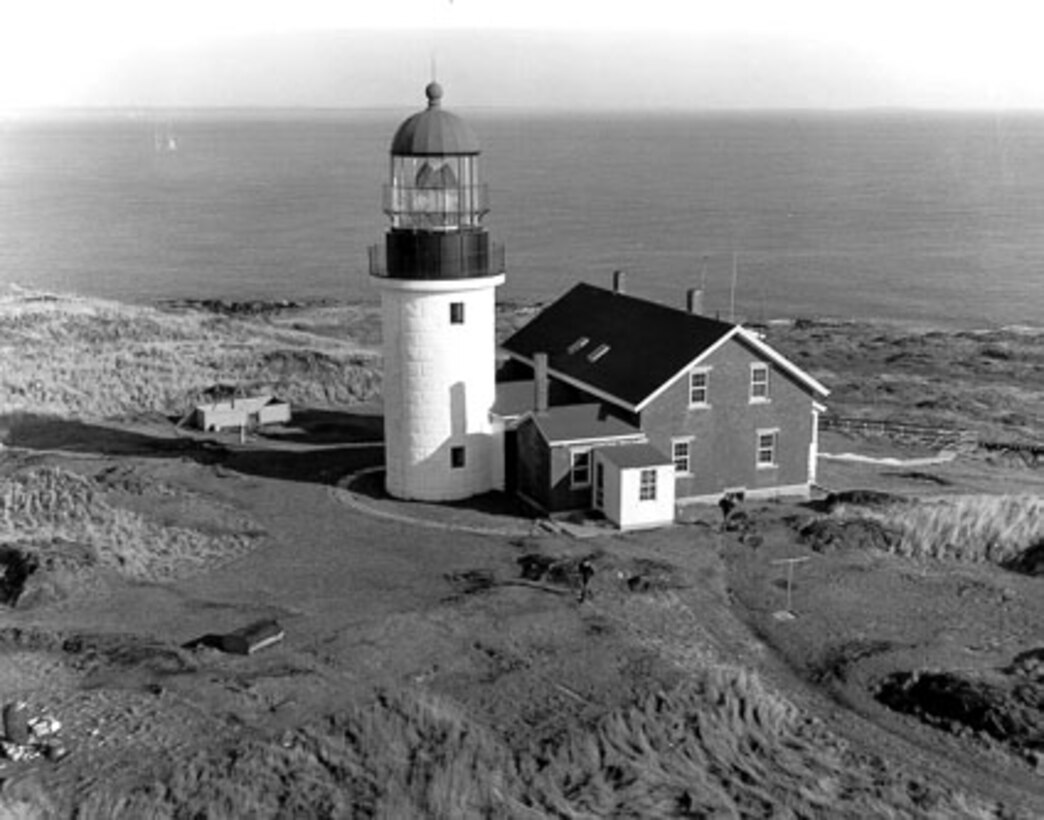 Seguin Island Light Station
Investigation timeline
- 2026-09-27 — Historical file submitted.
- 2026-09-27 — Historical file accepted and published.
Research notes
Historical research: Infrasound Resonances, High-Decibel Foghorn Oscillations, and Isolation Psychosis
From acoustic physics, architectural engineering, and environmental psychology perspectives, Seguin Island presents an extraordinary environment for natural sensory distortion and auditory hallucinations.
Built high on a bare granite bluff, the keeper's quarters and tower are continuously subjected to extreme wind shear, ocean wave crashing, and high-decibel acoustic foghorns. Acoustic engineers note that large mechanical foghorns and low-frequency wind shear through coastal rock crevices generate infrasound—sound waves below 20 Hz. Infrasound is known to induce physiological discomfort, hyper-vigilance, cold chills, and micro-vibrations in the human eye that produce shadowy visual artifacts. Furthermore, long-term maritime isolation combined with sleep deprivation caused by periodic foghorn blasts creates ideal psychological conditions for auditory sensory misinterpretation, leading individuals to process random wind oscillations through floorboards as structured musical chords.
Historical research: Auditory Apparitional Phenomena, Spatial Memory Imprinting, and Maritime Folk Traditions
Anomalistic researchers and parapsychologists evaluate the Seguin Island encounters within the framework of place-memory imprinting, auditory apparitions, and localized psychical manifestations.
Parapsychology focuses on the consistency of the auditory reports across unrelated observers—spanning 19th-century keepers, 20th-century Coast Guard servicemen, and 21st-century civilian caretakers—who independently describe identical melodic signatures matching piano key strikes rather than generalized wind noise. Anomalists examine whether extreme environmental stress paired with the unique electromagnetic and geological composition of the granite island acts as a storage medium for "stone tape" psychical imprints, or if the persistent narrative itself acts as a focus for psychokinetic activity among isolated observers.
Propose evidence & media, a source citation, further reading, a research note, a correction, a related case, or a series link. Staff review before anything is added. An accepted correction does not replace the file by itself.