GG-2026-077
Nelly Butler Apparition Case
- Phenomenon Apparitions & Spirits, Auditory & Acoustic Events
- Documentation
Rating B
- A — Strong dossier: several independent sources plus primary evidence (original media, records, measurements) a researcher could use without interviewing anyone.
- B — Well documented: multiple independent witnesses with at least some contemporary primary material, or one witness with substantial primary corroboration (photos, recordings, contemporaneous notes, documents).
- C — Multi-source but soft: several witnesses or a long run of reports, but mostly testimony and after-the-fact secondary sources (newspapers, folklore collections, later interviews). Little or no primary physical evidence. Regional legend clusters such as the Bridgewater Triangle land here.
- D — Thin: single witness (or one household), little or no support beyond the account. Normal for a sincere personal experience.
- E — Incomplete or not yet assessed. Every new submission starts here until staff have read it.
- Evidence & media 2 items
- Status Historic
- Location Sullivan & Franklin, Maine · approximate placement
- Occurred 2 January 1800
This case is associated with private or restricted property. Do not trespass, disturb residents, remove artifacts, or conduct an investigation without explicit permission.
Approximate marker representing the Sullivan and Taunton Bay area associated with the 1799–1800 Nelly Butler reports. The central events were reported at the Abner Blaisdell home near what is now Taunton Drive, but the precise historic house location has not been established for this archive.
Activity period
- Earliest claimed event 9 August 1799
- Earliest documented report 2 January 1800
- Latest documented report 14 August 1800
- Pattern Historic wave
Summary
Between 1799 and 1800, residents of Sullivan, District of Maine (now Maine), reported a series of unusual events centered on the home of Abner Blaisdell. Witnesses described mysterious sounds, disembodied voices, and later the appearance of a luminous figure identified as the spirit of Eleanor "Nelly" Butler, a young woman who had died several years earlier. The case attracted widespread local attention and was later documented through testimony collected by Reverend Abraham Cummings. It remains one of the best-known and most extensively recorded early American ghost traditions.
Background
Eleanor "Nelly" Butler died in 1796 following childbirth in the coastal settlement of Sullivan, then part of Massachusetts's District of Maine. Several years later, unusual reports began emerging from the home of Abner Blaisdell.
According to contemporary accounts, the first disturbances involved unexplained knocks, scraping sounds, and other noises reportedly coming from the cellar. As the story spread, witnesses claimed the source of the activity identified itself as the spirit of Nelly Butler.
The alleged spirit's most controversial demand concerned Nelly's widower, Captain George Butler. Witnesses reported that the apparition insisted Butler marry Lydia Blaisdell, a teenage member of the Blaisdell household. Despite local criticism and skepticism, the marriage eventually took place.
The case continued to draw attention throughout 1800. Witnesses claimed to see unusual lights, hear voices, and observe apparitions associated with the Butler spirit. Some accounts described a glowing figure appearing before groups of observers, while others focused on the sounds and messages attributed to the haunting.
The story owes much of its survival to Reverend Abraham Cummings, who investigated the reports and later published an account based on interviews and affidavits collected from participants and witnesses. His work preserved details that might otherwise have been lost and turned the Sullivan haunting into one of the best-documented supernatural traditions of early New England.
Skeptics at the time proposed fraud, ventriloquism, misidentification, religious enthusiasm, and community rumor as possible explanations. Believers viewed the events as genuine evidence of communication from the dead. No consensus emerged, and the case remained controversial even among those who witnessed it firsthand.
Today, the Nelly Butler haunting occupies a unique place in New England folklore. The existence of Nelly Butler, the community controversy, the collected witness statements, and Reverend Cummings's investigation are matters of historical record. Whether the reported voices, apparitions, and prophecies reflected supernatural events, deception, misperception, or some combination of factors remains unresolved.
Witness statement
No statement on file.
Evidence & media
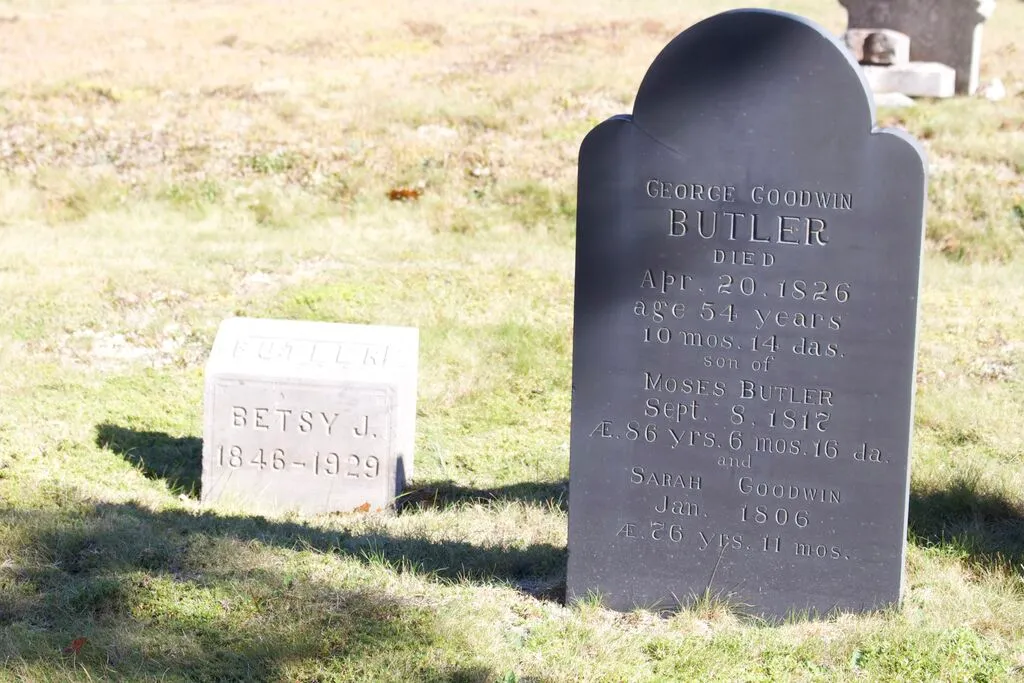
aceghost102015-2
Grave of Captain George Butler
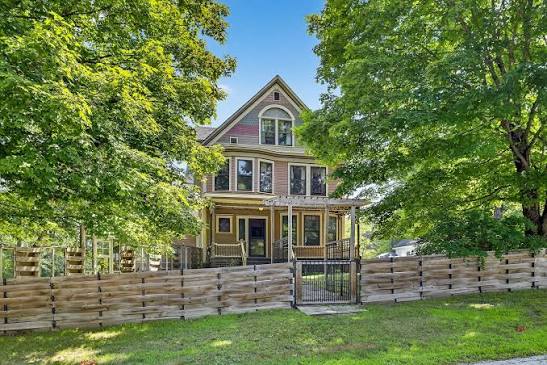
images
Butler house today.
Further reading
Continue exploring — Wikipedia, documentaries, podcasts, museum pages. Not treated as proof, and not independently verified by this archive.
Investigation timeline
- 2026-09-28 — Historical file submitted.
- 2026-09-28 — Historical file accepted and published.
Assigned GG-2026-077
Research notes
Historical research: Frontier Grief Processing, Ventriloquism Allegations, and High Maternal Mortality
From historical sociology, medical anthropology, and socio-psychological perspectives, the Nelly Butler case provides a study in frontier trauma and religious coping mechanisms in early New England.
Historians analyze the case within the context of post-Revolutionary frontier isolation and high maternal mortality rates. With no local medical infrastructure, sudden deaths during childbirth generated acute, unresolved grief across small communities. Skeptics during the 1800 investigation alleged that the Blaisdell family utilized abdominal ventriloquism, lantern shadows, and strategic costuming to arrange a favorable marriage for their young daughter. Anthropologists note that the severe mortality rates of the era created fertile social soil for collective expectation, where grief and religious revivalism synthesized into shared perceptual experiences during public night vigils.
Historical research: Luminous Entity Formation, Intangibility Metrics, and Multi-Witness Corroboration
Anomalistic researchers and parapsychologists evaluate the Nelly Butler case as one of the most rigorously attested spontaneous apparitional events in North American history.
Parapsychological analysis emphasizes the physical characteristics recorded across independent sworn affidavits: the entity consistently formed from a small, vibrating toad-sized sphere of light that expanded upward into a luminescent human silhouette. Witnesses who attempted physical contact—including Captain Butler and local skeptics—reported that their hands passed directly through the glowing figure as if moving through air or fog. The high density of sworn, signed affidavits collected from unacquainted witnesses who observed the entity in outdoor settings away from the Blaisdell residence remains a primary benchmark in early American psychical research.
Open research questions
A specific gap in the file. An accepted source, research note, or further-reading link closes it.
Compare Abraham Cummings' dated witness statements with later versions of the Nelly Butler story. Establish which claims about the knocking, voice, apparitions, marriage prediction and witnesses appear in the earliest testimony, and which entered through later retellings. Investigate contemporary allegations that the phenomena were fraud or artifice and identify what evidence witnesses offered for either interpretation.
Propose evidence & media, a source citation, further reading, a research note, a correction, a related case, or a series link. Staff review before anything is added. An accepted correction does not replace the file by itself.