GG-2026-081
Lizzie Borden House
- Phenomenon Apparitions & Spirits, Physical & Poltergeist Activity, Auditory & Acoustic Events
- Documentation
Rating C
- A — Strong dossier: several independent sources plus primary evidence (original media, records, measurements) a researcher could use without interviewing anyone.
- B — Well documented: multiple independent witnesses with at least some contemporary primary material, or one witness with substantial primary corroboration (photos, recordings, contemporaneous notes, documents).
- C — Multi-source but soft: several witnesses or a long run of reports, but mostly testimony and after-the-fact secondary sources (newspapers, folklore collections, later interviews). Little or no primary physical evidence. Regional legend clusters such as the Bridgewater Triangle land here.
- D — Thin: single witness (or one household), little or no support beyond the account. Normal for a sincere personal experience.
- E — Incomplete or not yet assessed. Every new submission starts here until staff have read it.
- Evidence & media 3 items
- Status Active
- Location Fall River, Massachusetts
- Occurred 4 August 1892
Summary
Located at 230 Second Street in Fall River, Massachusetts, the Lizzie Borden House was the site of one of the most famous unsolved double homicides in American history. On the morning of August 4, 1892, wealthy businessman Andrew Borden and his wife, Abby Borden, were brutally bludgeoned to death with a hatchet inside the residence. Andrew's 32-year-old daughter, Lizzie Borden, was arrested and tried for the murders; though acquitted in 1893 due to circumstantial evidence, public suspicion remained attached to her name for life. Operating today as a bed-and-breakfast and museum, the home is widely considered one of New England's most active hauntings, with guests and caretakers reporting full-bodied apparitions, disembodied weeping, shifting furniture, and physical touches corresponding to the exact locations of the 1892 attacks.
Background
The Murders of August 4, 1892
In 1892, the two-and-a-half-story Greek Revival residence was occupied by Andrew Borden, his second wife Abby, his adult daughters Lizzie and Emma, and their domestic servant Bridget "Maggie" Sullivan. Despite Andrew's immense wealth, the household lacked basic indoor plumbing, and family tensions were high regarding property distributions and living conditions.
Abby Borden's Murder: Sometime between 9:00 AM and 10:30 AM, Abby Borden was struck 19 times in the head with a hatchet in the second-floor guest bedroom while making the bed.
Andrew Borden's Murder: Around 11:00 AM, Andrew Borden returned from his morning errands and fell asleep on the sitting room sofa. He was struck 10 to 11 times in the face and head with a sharp bladed instrument while sleeping.
The Trial and Aftermath: Lizzie Borden emerged as the primary suspect due to conflicting alibis, a lack of forced entry, and an attempt to burn a dress in the kitchen stove days later. After a highly publicized trial in June 1893, a jury acquitted Lizzie. She and her sister moved to "Maplecroft," a mansion in Fall River's affluent Highlands neighborhood, where Lizzie lived until her death in 1927.
Timeline of Key Events
├── Aug 4, 1892 : Abby and Andrew Borden murdered inside the Second Street home.
├── Aug 11, 1892 : Lizzie Borden arrested and charged with double homicide.
├── June 20, 1893 : Jury returns a verdict of 'Not Guilty' after 1.5 hours of deliberation.
├── 1996 : 230 Second Street opens to the public as a museum and bed-and-breakfast.
└── Present : Daily tours and overnight stays yield continuous reports of anomalous phenomena.
Modern Anomalous Reports
Since converting to a commercial bed-and-breakfast in 1996, the home has generated consistent reports of poltergeist and apparitional phenomena from staff, paranormal investigators, and overnight guests:
Location-Specific Phenomena: Guests staying in the John V. Morse guest room (site of Abby's murder) report impressions on the mattress, bedsheets being pulled off sleeping individuals, and feelings of suffocation. In the downstairs sitting room, visitors report observing shadowy figures lying on the sofa replica or standing near the archway.
Auditory and Physical Manifestations: Frequent reports include disembodied footsteps on the main staircase, the smell of floral perfume or pipe tobacco, doors unlatching and swinging open on brass hinges, and disembodied weeping echoing from the upper hallway.
Witness statement
No statement on file.
Evidence & media
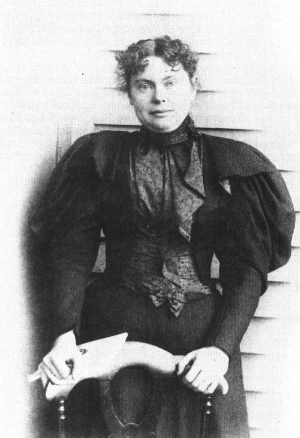 Lizzie Borden
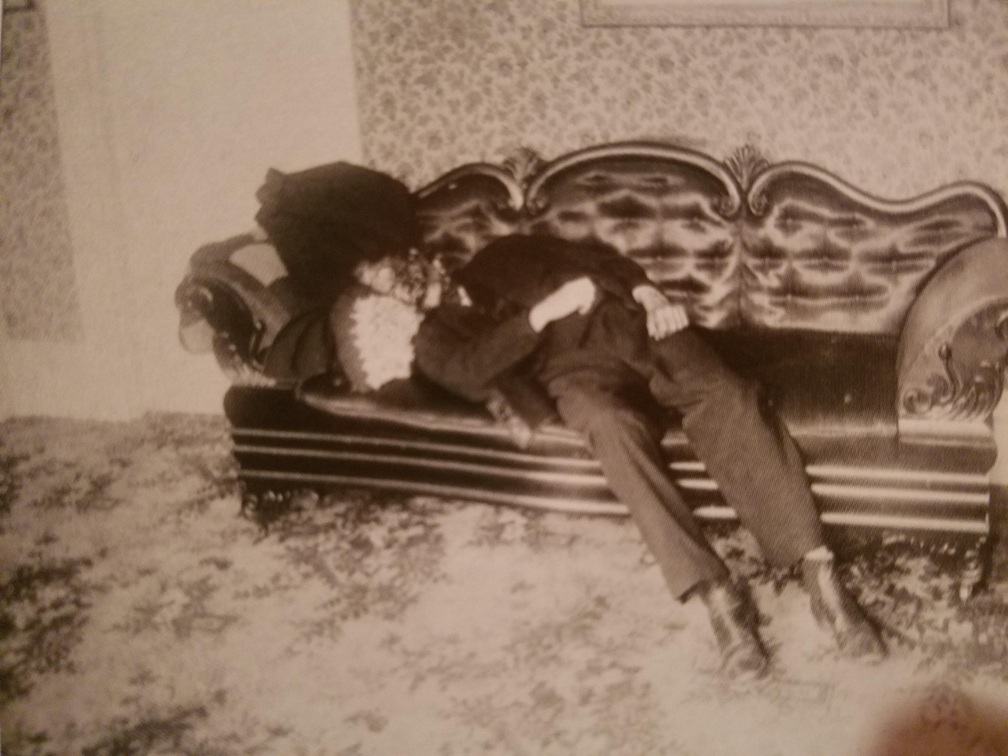 Body of Andrew Borden.
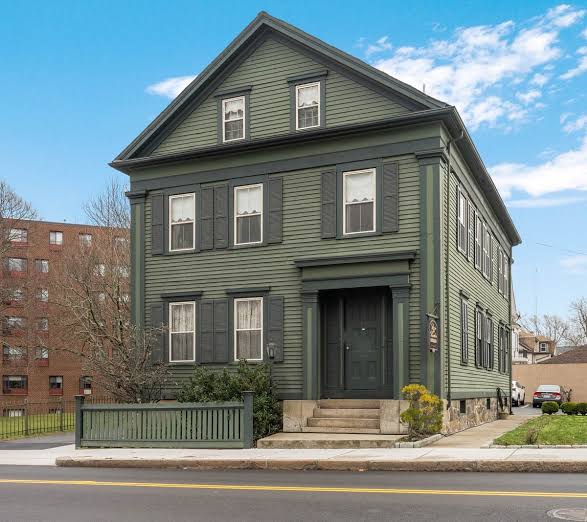 Borden house, current day, now a bed & breakfast.
Investigation timeline
- 2026-09-28 — Historical file submitted.
- 2026-09-28 — Historical file accepted and published.
Research notes
Historical research: Residual Violent Imprinting, Spatial Trauma Memory, and Multi-Investigator Anomalies
Anomalistic researchers and parapsychologists evaluate the Borden residence within the context of residual trauma imprinting, spontaneous psychokinesis (RSPK), and place-memory storage.
Parapsychology research focuses on the consistency of the spatial distribution of reports: claims remain localized specifically to the points of death (guest room and sitting room) and the basement where the murder weapons were discovered. Investigators utilizing electromagnetic field (EMF) detectors, thermal sensors, and audio monitoring devices frequently log localized temperature drops (cold spots) exceeding 10°F and electromagnetic spikes in areas free from modern electrical wiring. Field researchers examine whether the intense emotional distress surrounding the 1892 murders, combined with a century of focused human attention and collective grief, has created a persistent psychical imprint within the physical structure.
Historical research: High-Trauma Historical Enclosures, Environmental Infrasound, and Suggestion Dynamics
From environmental psychology, structural acoustics, and forensic history perspectives, the Lizzie Borden House represents a classic study in cultural suggestion and natural sensory processing.
The structural layout of 230 Second Street—a claustrophobic Victorian footprint with narrow hallways and low-slung ceilings—naturally heightens feelings of confinement and environmental awareness. Acoustic engineers note that street traffic along busy Second Street, combined with old floor joists and thermal shifts in wood framing, creates structural vibration (infrasound) known to induce anxiety, cold chills, and peripheral visual illusions. Psychologists highlight that guests staying overnight enter the environment under extreme psychological priming; high familiarity with the gruesome crime scene photos and crime details significantly increases the likelihood that ambient house settles, shadows, or hypnagogic state hallucinations are interpreted as supernatural events.
Propose evidence & media, a source citation, further reading, a research note, a correction, a related case, or a series link. Staff review before anything is added. An accepted correction does not replace the file by itself.