GG-2026-094
Oakville Blobs
- Phenomenon Unclassified & Other
- Documentation
Rating B
- A — Strong dossier: several independent sources plus primary evidence (original media, records, measurements) a researcher could use without interviewing anyone.
- B — Well documented: multiple independent witnesses with at least some contemporary primary material, or one witness with substantial primary corroboration (photos, recordings, contemporaneous notes, documents).
- C — Multi-source but soft: several witnesses or a long run of reports, but mostly testimony and after-the-fact secondary sources (newspapers, folklore collections, later interviews). Little or no primary physical evidence. Regional legend clusters such as the Bridgewater Triangle land here.
- D — Thin: single witness (or one household), little or no support beyond the account. Normal for a sincere personal experience.
- E — Incomplete or not yet assessed. Every new submission starts here until staff have read it.
- Evidence & media 1 item
- Status Historic
- Location Oakville, Washington · regional placement
- Occurred 7 August 1994
Regional marker using Oakville, Washington as a public reference point. Reports of the phenomenon were associated with multiple locations in the surrounding area rather than a single site.
This file is placed as a region or body of water, not a single exact event location.
Activity period
- Earliest claimed event 7 August 1994
- Earliest documented report August 1994
- Latest documented report August 1994
- Pattern Historic wave
Summary
The Oakville Blobs incident is an unusual environmental mystery reported in Oakville, Washington, during August 1994. Residents described a clear, gelatinous substance falling from the sky on multiple occasions, and some reported flu-like symptoms afterward. Samples of the material were examined by laboratories, but the results were inconclusive and often contradictory. Despite media attention, scientific testing, and numerous proposed explanations, the source of the substance has never been definitively established.
Background
In August 1994, residents of the small community of Oakville, Washington, began reporting the appearance of a strange gelatinous material following periods of precipitation. Witnesses described the substance as clear, jelly-like, and distributed across vehicles, rooftops, roads, and yards.
One of the first widely reported accounts came from police officer David Lacey, who stated that he encountered the material while on patrol during the early morning hours of August 7. Other residents soon reported finding similar deposits around the community.
The incident attracted additional attention when several residents later reported developing flu-like symptoms. These accounts included complaints of fatigue, nausea, dizziness, respiratory irritation, and general illness. Some witnesses believed the symptoms were connected to exposure to the material, though a direct causal relationship was never established.
Reports of additional falls of the substance continued during the following weeks. Because witnesses described multiple incidents rather than a single event, investigators considered a range of possible explanations, including atmospheric phenomena, industrial contamination, biological material, and airborne debris.
Samples of the material were collected and submitted for laboratory testing. Results varied between laboratories and investigators. Some examinations reportedly identified biological cells and common environmental bacteria, while other analyses produced less definitive findings. None of the testing established a clear origin for the substance.
One factor that has complicated later research is the limited availability of original samples. Accounts differ regarding what material was retained, discarded, or subsequently lost, making independent reexamination difficult decades after the event.
Over the years, explanations have ranged from aircraft waste and industrial discharge to biological matter associated with marine organisms, bacteria, or environmental contamination. None of these proposals has been universally accepted, and several suffer from a lack of direct supporting evidence.
Today, the Oakville Blobs incident remains one of the more unusual environmental mysteries in modern American folklore. The reported precipitation events, witness testimony, media coverage, and laboratory testing are matters of record. The source of the gelatinous substance and the relationship, if any, between the material and reported illnesses remain unresolved.
Witness statement
No statement on file.
Evidence & media
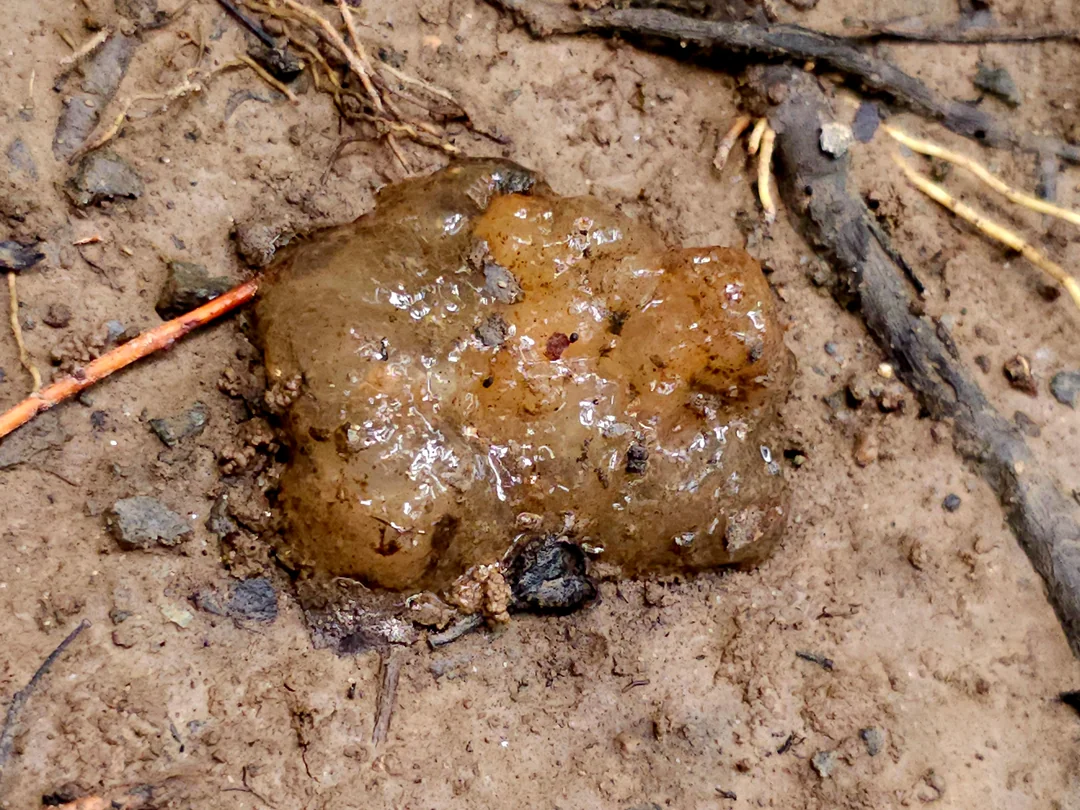
An Analysis Of The 1994 Oakville Blobs A Review Of Credible
Photo from 1994
Further reading
Continue exploring — Wikipedia, documentaries, podcasts, museum pages. Not treated as proof, and not independently verified by this archive.
Investigation timeline
- 2026-09-29 — Historical file submitted.
- 2026-09-30 — Historical file accepted and published.
Assigned GG-2026-094
Research notes
Historical research: Pseudomonas fluorescens, Gelatinous Matrices, and Historical "Star Jelly" Optics
From a biological and ecological perspective, the Oakville substance exhibits structural similarities to both natural microbial phenomena and industrial polymer hydrogels.
The identification of Pseudomonas fluorescens is notable because certain bacterial strains synthesize thick extracellular polymeric substances (EPS)—slime layers composed of polysaccharides that absorb atmospheric water and swell into gel-like matrices. Alternatively, the historical phenomenon known as "star jelly" (Astronyxa / Nostoc commune) often appears after heavy rains when terrestrial cyanobacteria or amphibian oviduct jelly (vomited by predators) hydrate rapidly. However, neither naturally occurring Nostoc nor amphibian remains explain a multi-mile airborne dispersal falling repeatedly from the cloud layer over three weeks, leaving synthetic hydrogels (such as superabsorbent agricultural polymers or cloud-seeding agents) as plausible alternative delivery mediums.
Historical research: Aerosol Dispersal Systems, Naval Gunnery Hypotheses, and Institutional Loss of Evidence
In Fortean and military history, the Oakville incident frequently intersects with Cold War-era biological weapon simulation protocols and radar-chaff experiments.
Popular theories suggest the blobs were byproduct remnants of naval bombing exercises off the Washington coast that aerosolized marine organisms (e.g., jellyfish), or secret military test dispersals using biological Simulants (such as Bacillus globigii or Serratia marcescens carriers). During the 1950s–1970s, programs like Project 112 routinely utilized aerosol sprays over civilian zones to study dispersion dynamics. While no declassified record connects the 1994 Oakville event to DoD testing, the handling of the case—specifically the total breakdown in sample retention and lack of a formal CDC epidemiological follow-up—mirrors classic institutional failures during unexpected bio-environmental crises.
Open research questions
A specific gap in the file. An accepted source, research note, or further-reading link closes it.
Can the earliest contemporary newspaper or television report about the Oakville blobs be identified and dated?
Did independent laboratory testing of the material occur, and can the original test results be located?
Propose evidence & media, a source citation, further reading, a research note, a correction, a related case, or a series link. Staff review before anything is added. An accepted correction does not replace the file by itself.