GG-2026-099
Skunk Ape
- Phenomenon Cryptids & Unknown Zoology
- Documentation
Rating C
- A — Strong dossier: several independent sources plus primary evidence (original media, records, measurements) a researcher could use without interviewing anyone.
- B — Well documented: multiple independent witnesses with at least some contemporary primary material, or one witness with substantial primary corroboration (photos, recordings, contemporaneous notes, documents).
- C — Multi-source but soft: several witnesses or a long run of reports, but mostly testimony and after-the-fact secondary sources (newspapers, folklore collections, later interviews). Little or no primary physical evidence. Regional legend clusters such as the Bridgewater Triangle land here.
- D — Thin: single witness (or one household), little or no support beyond the account. Normal for a sincere personal experience.
- E — Incomplete or not yet assessed. Every new submission starts here until staff have read it.
- Evidence & media 2 items
- Status Active
- Location Everglades region, Florida · regional placement
Regional marker using the Everglades region as a public reference point. Skunk Ape reports are associated with numerous locations across southern Florida rather than a single encounter site.
This file is placed as a region or body of water, not a single exact event location.
Activity period
- Earliest claimed event 1818
- Earliest documented report 1818
- Latest documented report Ongoing
- Pattern Recurring
Summary
The Skunk Ape is a cryptid reported primarily from the swamps, forests, and wetlands of southern Florida. Witnesses describe a large, ape-like biped often associated with a strong unpleasant odor, giving rise to the creature's popular name. Reports of similar beings appear in both Indigenous traditions and modern sighting claims, with public interest increasing during the late twentieth century. Despite numerous sightings, photographs, and investigations, no verified specimen or conclusive evidence has been produced, and the phenomenon remains a subject of folklore, cryptozoology, and regional legend.
Background
Reports of large, hairy, humanlike creatures in southern Florida date back many years and are often compared to Bigfoot traditions found elsewhere in North America. The creature became known as the "Skunk Ape" because witnesses frequently reported a strong odor preceding or accompanying sightings.
Researchers and folklorists have noted that some Indigenous traditions of the region include stories involving large, elusive humanoid beings inhabiting remote wilderness areas. Modern Skunk Ape reports emerged primarily during the twentieth century and became especially prominent during the 1970s, when newspapers, law-enforcement agencies, and local residents documented numerous sightings across South Florida.
Witness descriptions vary, but many accounts depict a large, hairy biped observed in swamps, forests, or along roadways. Reports often include references to unusual odors, vocalizations, footprints, or brief visual encounters. As with many cryptid traditions, no single description is shared by all witnesses.
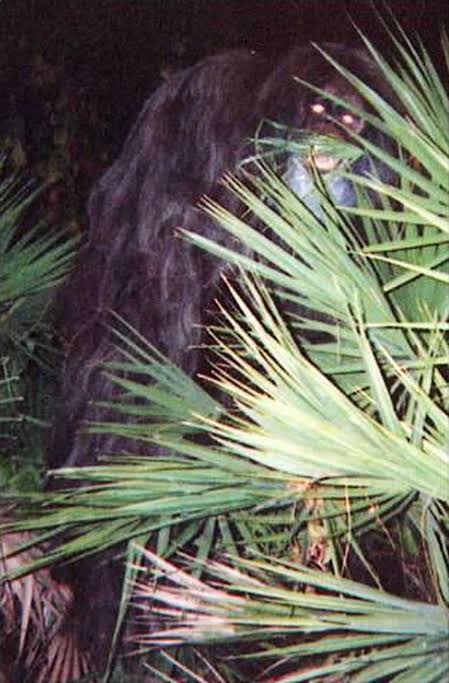
One of the most influential episodes in the history of the phenomenon occurred in 2000, when the Sarasota County Sheriff's Office received anonymous photographs showing a dark, apparently hairy figure partially concealed in palmetto vegetation. The images, commonly known as the Myakka Skunk Ape photographs, became some of the most widely circulated cryptid photographs of the modern era. Debate continues regarding what the images depict, with explanations ranging from an unknown animal to a misidentified orangutan, costume, or hoax.
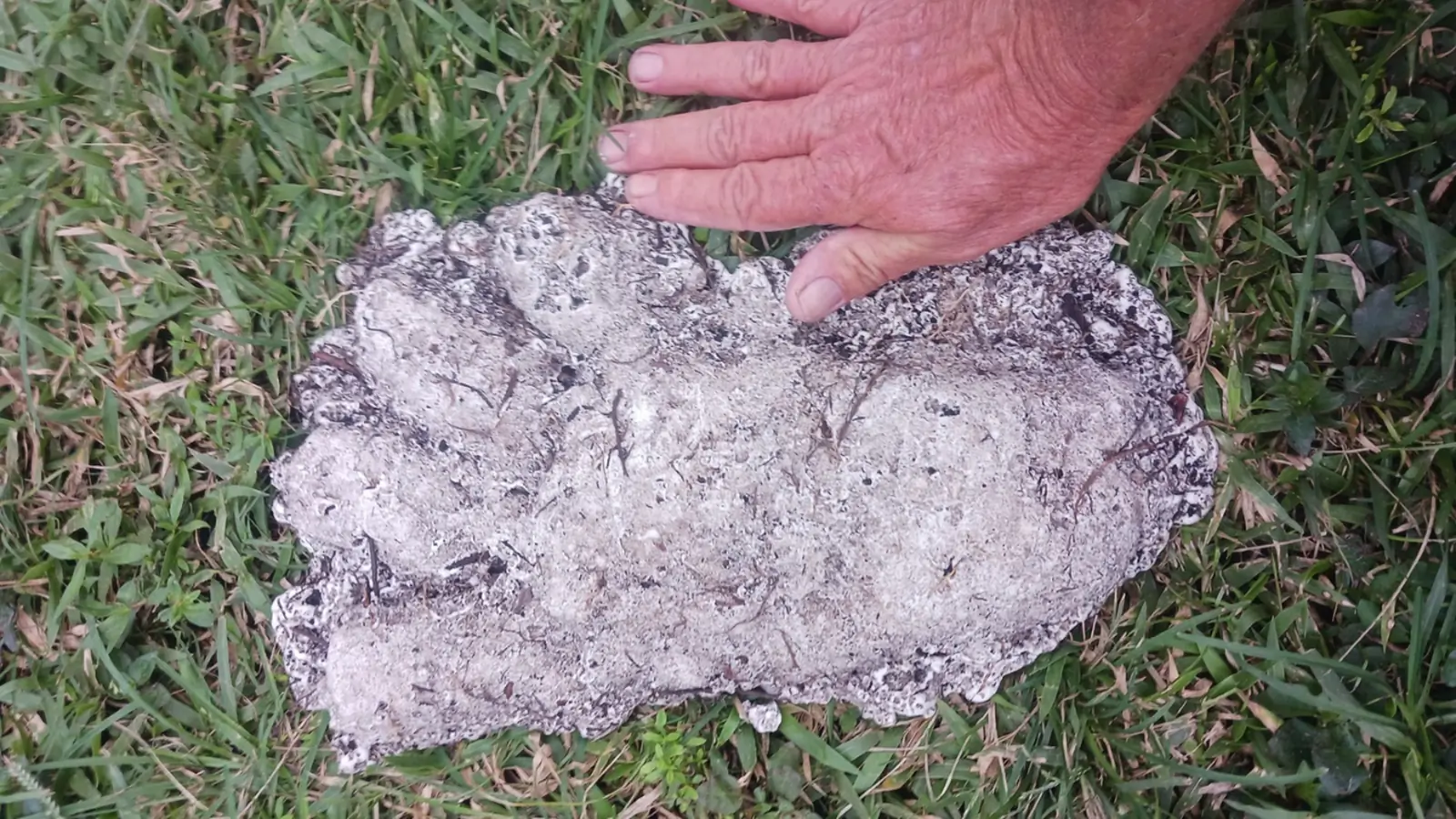
The Skunk Ape has also been the subject of field investigations by enthusiasts and researchers, including Dave Shealy, who has documented reports, collected footprint casts, and promoted research into the phenomenon for decades. Despite these efforts, no physical evidence has achieved broad acceptance within the scientific community.
Skeptical explanations for Skunk Ape sightings include misidentified wildlife, particularly Florida black bears observed under unusual conditions, escaped exotic animals, hoaxes, and the influence of local folklore. Supporters of the phenomenon argue that recurring reports from remote areas warrant continued investigation.
Today, the Skunk Ape occupies a prominent place in Florida folklore and cryptid culture. The sightings, photographs, witness reports, and investigations are well documented. Whether those reports reflect misidentification, folklore, hoaxes, or an unknown animal remains unresolved.
Witness statement
No statement on file.
Evidence & media
images
Dec 2000, picture sent to police depicted what appeared to be a hairy beast the author said had repeatedly visited her back porch to steal apples.
Untitled Photo
An alleged footprint of a Skunk Ape that Dave Shealy claims to have found.
Further reading
Continue exploring — Wikipedia, documentaries, podcasts, museum pages. Not treated as proof, and not independently verified by this archive.
Investigation timeline
- 2026-09-30 — Historical file submitted.
- 2026-09-30 — Historical file accepted and published.
Assigned GG-2026-099
Research notes
Historical research: Ecological Carrying Capacity, Primatology, and Misidentification Candidates
From a zoological and ecological standpoint, the existence of an undiscovered breeding population of large primates in South Florida faces severe biological constraints.
Primate physiology requires significant land range, high caloric intake, and genetic diversity to sustain a viable population over centuries. Florida's ecosystem lacks native hominids or apes; however, the state has a well-documented history of escaped exotic wildlife. During the mid-to-late 20th century, thousands of primates (such as rhesus macaques, chimpanzees, and orangutans) were imported for research, roadside attractions, and the pet trade—many escaping into the wild during major hurricanes (e.g., Hurricane Andrew in 1992). Primatologists note that an escaped, displaced orangutan or large chimp living in the warm, wet climate of the Everglades would closely mirror the physical appearance, vocalizations, and solitary behavior attributed to the Skunk Ape.
Historical research: Olfactory Misattribution, Wetland Methane Outgassing, and Regional Identity
From an anthropological perspective, the Skunk Ape serves as a quintessential example of regional identity and environmental folklore.The defining characteristic of the Skunk Ape—its overpowering smell—is chemically linked to the wetland environment. The Florida Everglades' deep peat beds routinely release trapped hydrogen sulfide ($H_2S$) and methane gas when disturbed. A witness encountering an unexpected animal (such as a Florida black bear, Ursus americanus floridanus, mangy or covered in swamp muck) while simultaneously inhaling a pocket of marsh gas experienced a combined sensory overload. This sensory pairing creates a vivid, memorable narrative that reinforces regional "swamp lore" and tourism folklore.
Open research questions
A specific gap in the file. An accepted source, research note, or further-reading link closes it.
Can the claimed 1818 Apalachicola-area newspaper report describing a Skunk Ape-like creature be located, bibliographically identified, and verified as contemporary?
Can modern Skunk Ape traditions be linked to specific earlier Indigenous or frontier-era accounts?
Propose evidence & media, a source citation, further reading, a research note, a correction, a related case, or a series link. Staff review before anything is added. An accepted correction does not replace the file by itself.