Activity period
- Earliest claimed event 8 January 1981
- Earliest documented report 9 January 1981
- Latest documented report 9 January 1981
- Pattern Single event
Summary
The Trans-en-Provence Incident is one of the most extensively investigated physical-trace UFO cases on record. On January 8, 1981, Renato Nicolaï reported observing a metallic object land briefly on his property near Trans-en-Provence, France, before departing. The event was reported promptly to authorities and investigated by GEPAN, the French government's official UFO research unit. Scientific examinations documented ground traces and unusual effects on nearby vegetation, making the case a frequently cited example of a UFO report accompanied by physical evidence. The cause of the reported traces remains debated.
Background
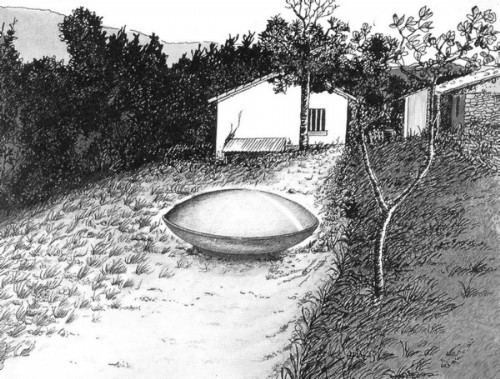
On January 8, 1981, Renato Nicolaï was working on his property near Trans-en-Provence in southeastern France when he reported observing an unusual object descend into a nearby terraced orchard. According to Nicolaï, the object appeared metallic, landed briefly, and departed after less than a minute.
The witness described the object as gray and disc-like, with a raised central section. He reported hearing a faint whistling sound during the event and observing dust displaced as the object departed. The sighting occurred in daylight and was reported promptly to local authorities.
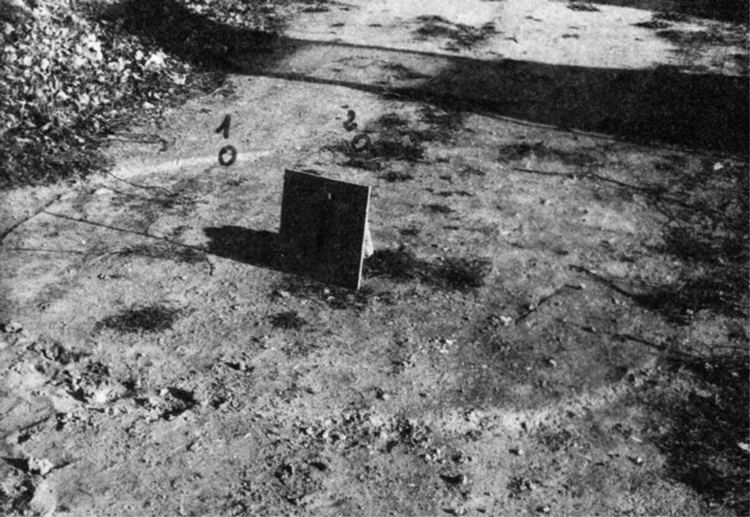
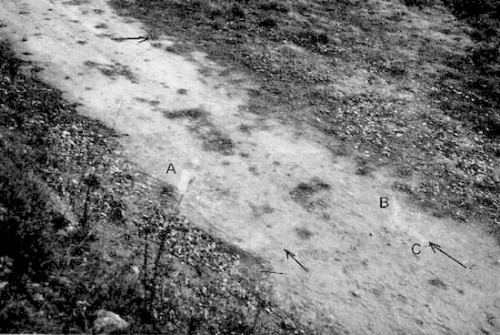
The case attracted attention because investigators documented physical traces at the reported landing location. Officers from the French Gendarmerie examined the site shortly after the event and recorded a circular ground impression and areas of disturbed soil.
The incident was subsequently investigated by GEPAN, the French government's official program for studying unidentified aerial phenomena. Researchers collected soil samples and vegetation from the site and compared them with control samples taken from nearby areas.
According to published findings, investigators documented evidence of soil compression and unusual effects on vegetation growing near the reported landing location. Laboratory analyses identified changes in plant biochemistry that appeared more pronounced near the center of the trace area than in surrounding control samples. Researchers also examined the possibility of heat and mechanical stress as contributing factors.
The investigation did not identify a conventional source for the reported traces that satisfied all researchers involved. At the same time, the physical evidence did not allow investigators to determine the exact nature of the object described by the witness.
Unlike many UFO reports that rely solely on testimony, the Trans-en-Provence case became notable because it combined a prompt witness report with a government-led field investigation and laboratory testing. For this reason, it remains one of the most frequently cited physical-trace cases in the history of official UFO research.
Today, the sighting, the trace evidence, and the subsequent scientific investigation are matters of record. The cause of the reported traces and the identity of the object observed by Nicolaï remain subjects of debate.
Witness statement
No statement on file.
Evidence & media
Trans En Provence Case 7A0f989f 595A 40Fc 8A9a Ba9d6def370 Resize 750
Ground compression trace photographed by GEPAN investigators.
Trans En Provence Case 85D9e868 30F2 4367 879E 646E918167a Resize 750
Ground compression trace photographed by GEPAN investigators.
Trans En Provence Case Ca861563 7974 4Bb0 B04f B02e1ff62d5 Resize 750
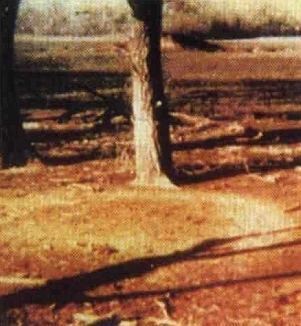
Ground compression trace photographed by GEPAN investigators.
Trans En Provence Case A38bd496 8Be8 4Dce 88E0 6Fdd3d9fa85 Resize 750
Artist rendition of the craft per the witness description.
Further reading
Continue exploring — Wikipedia, documentaries, podcasts, museum pages. Not treated as proof, and not independently verified by this archive.
Investigation timeline
- 2026-09-30 — Historical file submitted.
- 2026-09-30 — Historical file accepted and published.
Assigned GG-2026-103
Research notes
Historical research: Micro-Indentation Hardness, Tribological Friction Marks, and Thermal Effects
From a physical chemistry and civil engineering perspective, soil samples from the touchdown zone exhibited extreme mechanical stress.
Analysis conducted by the official French laboratories (SFP and CNRS) revealed that the circular ring was produced by a combination of heavy friction and mechanical pressure. Micro-penetrometer testing showed the earth within the ring had been compacted under a localized weight estimated between 4 to 5 metric tons, with shear stress scraping iron oxide particles from surrounding pebbles. Furthermore, striation patterns indicated the contact surface had undergone rotational friction while heated to temperatures between 300°C and 600°C—heat sufficient to bake the soil matrix without scorching organic roots beneath the surface layer.
Historical research: Chlorophyll Breakdown, Photosynthetic System Alteration, and Distance Decay Profiles
From a plant physiology standpoint, the analysis led by Professor Michel Bounias at INRA (Institut National de la Recherche Agronomique) yielded unique empirical data.Bounias analyzed the concentration of photosynthetic pigments (Chlorophyll A and B) and free amino acids in wild alfalfa plants collected from the site. The findings demonstrated a precise, mathematical correlation between distance from the trace center and biological trauma:Plants collected from the immediate rim lost up to 80% of their chlorophyll content.The age-dependent enzyme activity of the leaves had been artificially accelerated, mimicking extreme biological aging within seconds of exposure.The physiological damage decayed smoothly as a function of 1/r2 (inverse-square law) out to 10 meters, indicating exposure to an intense, localized electromagnetic or ionizing radiation field coming from a point source at ground level.
Open research questions
A specific gap in the file. An accepted source, research note, or further-reading link closes it.
Can the complete chain of custody for the soil and vegetation samples collected on 9 January and 17 February 1981 be reconstructed from the surviving Gendarmerie, GEPAN, and laboratory records?
What physical evidence collected at the site remains available for independent review?
Propose evidence & media, a source citation, further reading, a research note, a correction, a related case, or a series link. Staff review before anything is added. An accepted correction does not replace the file by itself.