GG-2026-125
Chupacabra
- Phenomenon Cryptids & Unknown Zoology
- Documentation
Rating C
- A — Strong dossier: several independent sources plus primary evidence (original media, records, measurements) a researcher could use without interviewing anyone.
- B — Well documented: multiple independent witnesses with at least some contemporary primary material, or one witness with substantial primary corroboration (photos, recordings, contemporaneous notes, documents).
- C — Multi-source but soft: several witnesses or a long run of reports, but mostly testimony and after-the-fact secondary sources (newspapers, folklore collections, later interviews). Little or no primary physical evidence. Regional legend clusters such as the Bridgewater Triangle land here.
- D — Thin: single witness (or one household), little or no support beyond the account. Normal for a sincere personal experience.
- E — Incomplete or not yet assessed. Every new submission starts here until staff have read it.
- Evidence & media 2 items
- Status Historic
- Location Puerto Rico, Mexico
- Occurred 1995
Summary
The Chupacabra (Spanish for "goat-sucker") is a modern cryptid legend that erupted in March 1995 when multiple livestock animals were discovered dead with puncture wounds and reported drained of blood near Canóvanas, Puerto Rico. Coined by comedian and broadcaster Silverio Pérez, the name initially described a bipedal, reptilian creature with spines along its back and glowing red eyes—a visual template heavily influenced by contemporaneous science-fiction cinema. As the legend migrated via international media into Mexico, Central America, and the southern United States, the description mutated dramatically into an entirely different biological entity: a hairless, mangy, four-legged canine. Wildlife biologists and forensic evaluations have systematically identified these mainland specimens as ordinary canids (such as coyotes or stray dogs) suffering from severe sarcoptic mange, making the Chupacabra a premier case study in how mass media, cultural anxiety, and biological anomalies manufacture a modern monster.
Background
The Puerto Rican Outbreak (1995–1996)
The Catalyst: In March 1995, eight sheep were found dead in Canóvanas, Puerto Rico, each exhibiting mysterious circular puncture wounds and alleged total blood loss. Similar incidents quickly multiplied across the island, affecting goats, rabbits, and poultry.
The Original Description: Local eyewitnesses—most notably Madelyne Tolentino—described a bipedal creature standing 3 to 4 feet tall, with an oval head, large red eyes, long thin arms, and a prominent row of sharp spines running down its back.
The Media Explosion: Radio and television broadcasts fueled a localized panic. The government, local police, and agricultural agencies faced intense public pressure to capture an unknown predator as reports flooded in by the hundreds.
The Continental Mutation & The Canine Shift (Late 1990s–2000s)
The Migration to Texas and Mexico: As the legend traveled northward through television and internet reporting, the description underwent a radical morphological split. Sightings in Texas and Latin America abandoned the bipedal "alien" template entirely.
The Hairless Canine Era: Ranchers and farmers began capturing or shooting strange, hairless, bluish-gray quadrupeds with hunched backs and elongated snouts that prowled around ranches preying on livestock. Rather than an extraterrestrial entity, the physical specimens recovered on the mainland presented a distinct biological profile.
Evolutionary Timeline of the Chupacabra
├── Feb 1975 : "El Vampiro de Moca" — Early isolated livestock deaths and bat-like reports in Puerto Rico.
├── March 1995 : Outbreak in Canóvanas, Puerto Rico; term "Chupacabra" coined by Silverio Pérez.
├── Late 1995 : Media dissemination establishes the bipedal, spiky "reptilian" archetype.
├── 1997–2000s : Legend migrates to Texas and Mexico; morphs into the hairless, canine archetype.
└── Present : DNA tests and veterinary necropsies identify specimens as mange-infected coyotes/dogs.
Witness statement
No statement on file.
Evidence & media
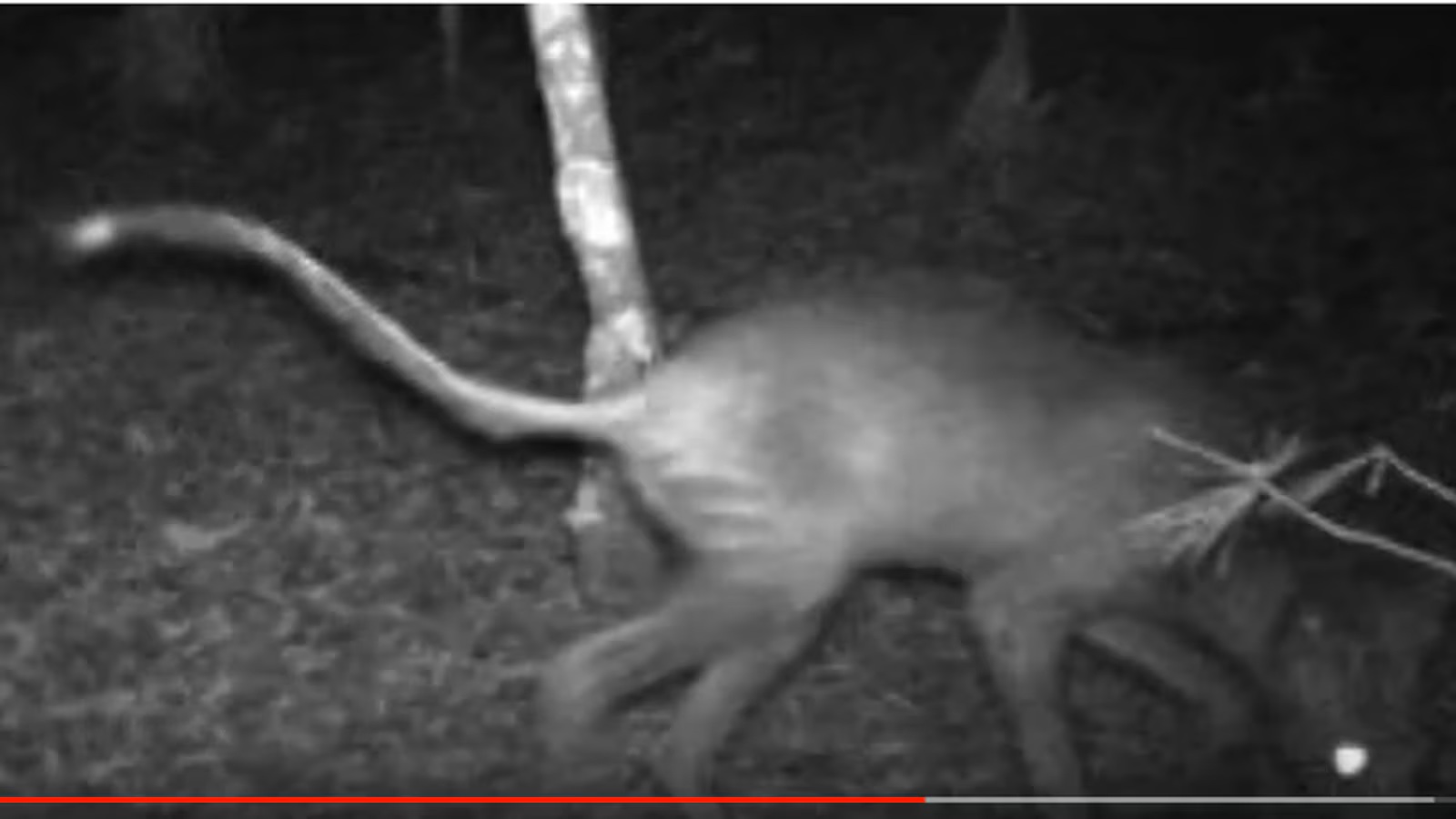 2018 photo was taken as part of a state camera trap program known as North Carolina Candid Critters, which captures images of animals roaming the state's wooded areas at night.
 El Chupacabras, a Modern Mystery | Monstrum
Investigation timeline
- 2026-10-11 — Historical file submitted.
- 2026-10-12 — Historical file accepted and published.
Research notes
Historical research: The Psychological & Cinematic Blueprint
Investigative researcher Benjamin Radford spent years tracing the roots of the phenomenon, uncovering a crucial psychological link to the origin of the Puerto Rican archetype:
The Species Connection: Key eyewitness Madelyne Tolentino had watched the sci-fi horror film Species (featuring an alien creature designed by H.R. Giger with a bipedal frame, gray skin, and dorsal spines) shortly before her encounter.
Template Priming: Folklore analysis demonstrates how human memory under stress reaches for the closest available visual template from popular culture to make sense of an ambiguous stimulus. Once broadcast on the news, that specific cinematic template became the standardized image millions of people subsequently "witnessed."
The Veterinary & Biological Reality
When physical carcasses of the "Texas Chupacabra" were submitted to university laboratories and state wildlife departments for DNA testing, a consistent medical explanation emerged:
Sarcoptic Mange: The animals were invariably coyotes or domestic dogs heavily infected by the mite Sarcoptes scabiei. Severe infestations cause hair loss, hyperpigmentation, skin thickening (elephant skin), and extreme debilitation, making it difficult for the animal to hunt normal wild prey and driving them toward easy farm targets like penned livestock and poultry.
Post-Mortem Bleeding Misconceptions: The belief that carcasses were "drained of blood" is easily explained by standard taphonomy; when predators puncture skin and blood pools internally or settles post-mortem, or when blood drains from open wounds and mixes with pale tissue, it creates the optical illusion of total desanguination.
Propose evidence & media, a source citation, further reading, a research note, a related case, or a series link. Staff review before anything is added.