GG-2026-136
Colares UFO Wave / Operation Saucer
- Phenomenon UFOs/UAPs, Physiological & Biological Effects
- Documentation
Rating A
- A — Strong dossier: several independent sources plus primary evidence (original media, records, measurements) a researcher could use without interviewing anyone.
- B — Well documented: multiple independent witnesses with at least some contemporary primary material, or one witness with substantial primary corroboration (photos, recordings, contemporaneous notes, documents).
- C — Multi-source but soft: several witnesses or a long run of reports, but mostly testimony and after-the-fact secondary sources (newspapers, folklore collections, later interviews). Little or no primary physical evidence. Regional legend clusters such as the Bridgewater Triangle land here.
- D — Thin: single witness (or one household), little or no support beyond the account. Normal for a sincere personal experience.
- E — Incomplete or not yet assessed. Every new submission starts here until staff have read it.
- Evidence & media 6 items
- Status Historic
- Location Colares and surrounding coastal communities, Pará · regional placement
- Occurred 1977
Regional marker centered on the municipality of Colares. Reports associated with the UFO wave occurred across Colares, Vigia, Santo Antônio do Tauá, Baía do Sol, and other nearby communities rather than a single encounter location.
This file is placed as a region or body of water, not a single exact event location.
Activity period
- Earliest claimed event Early 1977
- Earliest documented report Late 1977
- Latest documented report 1978
- Pattern Historic wave
Summary
The Colares UFO Wave was a mass sighting and encounter flap that occurred in Pará, Brazil, during 1977 and into 1978. Residents of Colares and neighboring communities reported recurring luminous aerial objects, locally called "Chupa-Chupa," which were allegedly associated with beams of light, burns, weakness, and other physiological effects. The scale of the reports prompted the Brazilian Air Force to launch Operation Saucer (Operação Prato), one of the largest official UFO investigations ever conducted in South America. The operation generated photographs, reports, witness interviews, and military observation records. Despite extensive documentation, no generally accepted explanation for the entire wave has emerged.
Background
During 1977, residents of Colares and surrounding communities in Pará began reporting unusual aerial lights appearing over villages, rivers, beaches, and fishing areas. Witnesses described luminous objects of varying shapes and sizes operating primarily at night. Local residents eventually adopted the term "Chupa-Chupa" to describe the phenomenon.
As reports increased, some witnesses claimed the lights projected beams that caused burns, fatigue, dizziness, weakness, puncture-like marks, or temporary paralysis. Local physician Wellaide Cecim Carvalho reportedly treated numerous residents who attributed injuries or symptoms to encounters with the lights. The reported effects became a major reason the case attracted widespread attention.
Fear spread through several communities. Residents organized night watches, lit bonfires, launched fireworks, and altered daily routines. Local officials eventually requested assistance from federal authorities due to public concern.
In response, the Brazilian Air Force launched Operation Saucer (Operação Prato). Led by Captain Uyrangê Hollanda and personnel from the 1st Regional Air Command, the operation documented sightings, interviewed witnesses, collected reports, and conducted nighttime observations. Surviving records confirm that military personnel photographed unidentified lights and compiled extensive documentation regarding the reports.
The operation generated one of the largest documentary archives associated with a UFO wave in South America. Publicly released materials include observation logs, maps, witness interviews, military communications, and photographs. However, the surviving record is incomplete, and claims about the total amount of film, photographs, and documentation vary among sources.
Interpretation and Legacy
The Colares events remain controversial because three separate elements are well documented:
1. A widespread wave of reports occurred.
2. Medical complaints and injuries were reported by residents.
3. The Brazilian Air Force conducted a real investigation and preserved official records.
Where debate begins is in the interpretation of those facts. Supporters argue that the combination of military involvement, photographs, witness testimony, and reported injuries makes Colares one of the strongest UFO cases on record. Skeptics note that the official operation ultimately did not identify an extraordinary craft and that no single explanation has been proven linking all reported injuries and observations to a common cause.
Today, Colares remains one of the most studied UFO waves in the world and is frequently cited alongside large-scale cases such as the Belgian UFO Wave and the Washington UFO Incident.
Witness statement
No statement on file.
Evidence & media
 Brazilian Air Force Captain Uyrangê Hollanda on the hostile UFO encounters in Colares, 1977
 Colares Part 1: They Came From the Sea and Sky
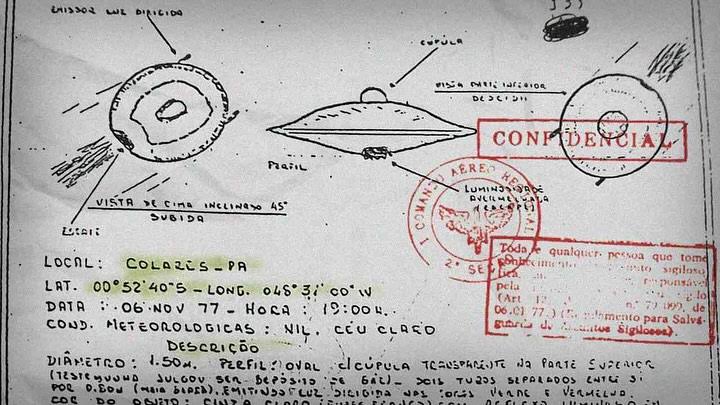 Witness-based object sketch included in Operation Saucer documentation, Colares, Pará, Brazil (1977).
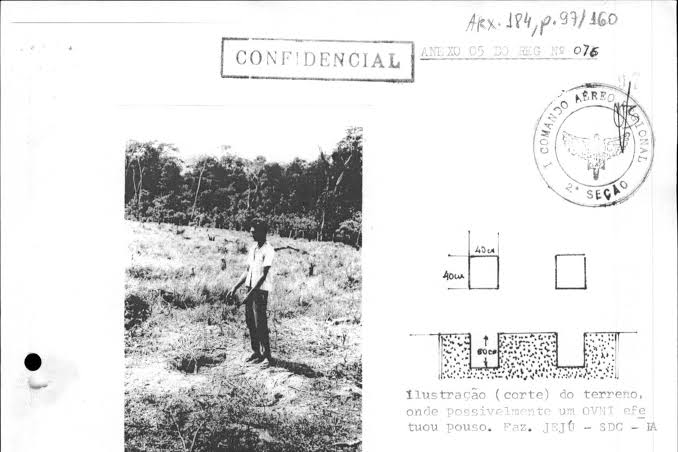 Operation Saucer field investigation document depicting a reported landing site, Colares region, Pará, Brazil (1977).
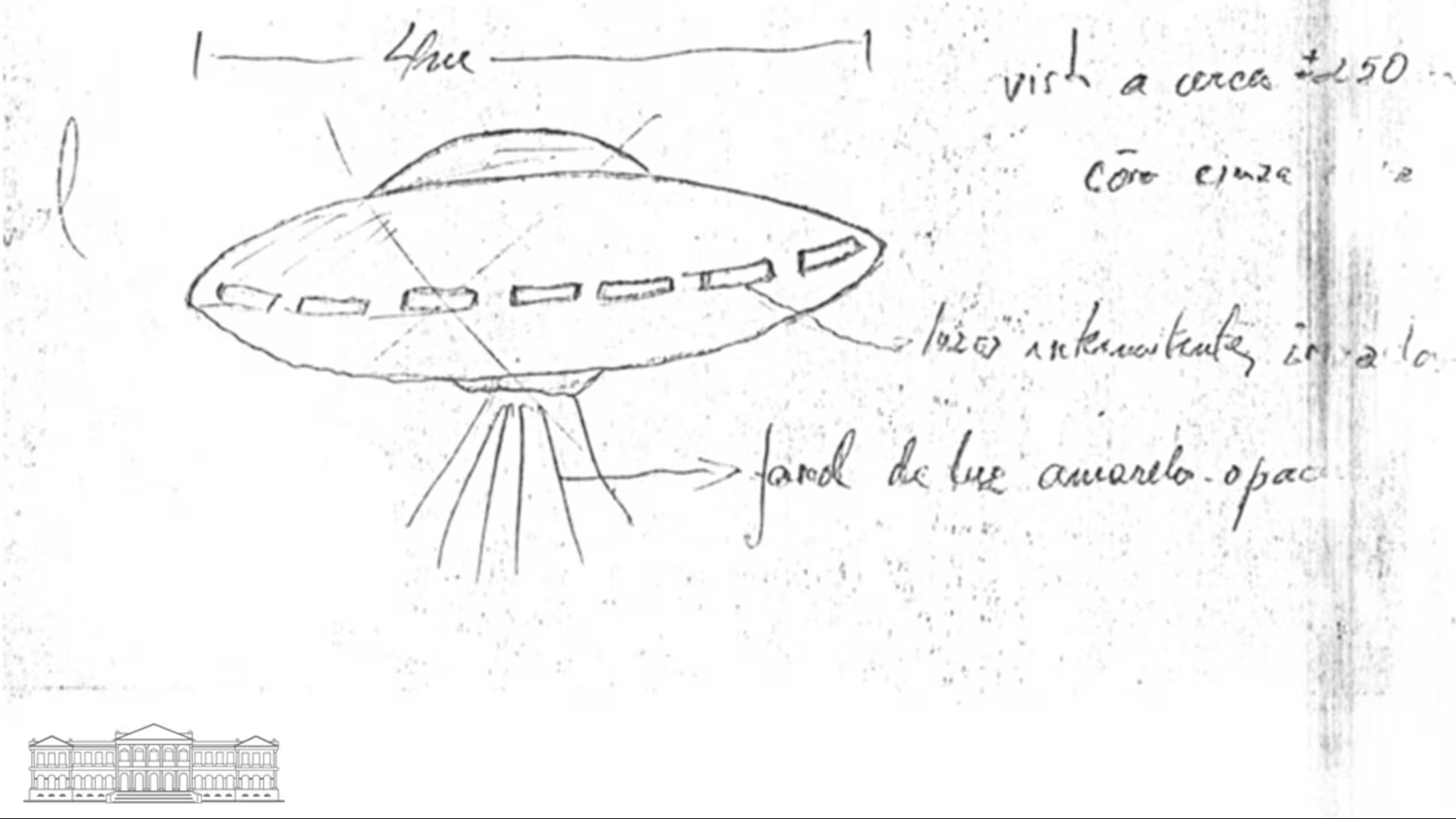 Witness-based object illustration preserved within Operation Saucer (Operação Prato) documentation, Pará, Brazil, 1977. The specific witness and artist responsible for the drawing have not been independently verified.
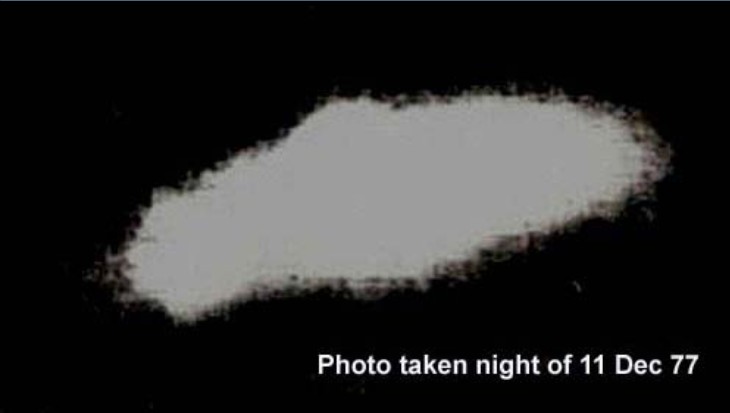
Investigation timeline
- 2026-10-30 — Historical file submitted.
- 2026-10-30 — Historical file accepted and published.
Research notes
No curated research notes.
Propose evidence & media, a source citation, further reading, a research note, a correction, a related case, or a series link. Staff review before anything is added. An accepted correction does not replace the file by itself.