Activity period
- Earliest claimed event November 1922
- Earliest documented report November 1922
- Latest documented report 1930
- Pattern Historic wave
Summary
The Curse of Tutankhamun is a famous legend claiming that misfortune, illness, or death befell individuals associated with the discovery and excavation of the tomb of the Egyptian pharaoh Tutankhamun. The story emerged following the 1922 discovery of the tomb by Howard Carter and the death of expedition patron Lord Carnarvon in 1923. Newspapers and popular writers connected subsequent deaths and accidents to an alleged ancient curse, creating one of the most enduring archaeological mysteries and folklore traditions of the twentieth century.
Background
On November 4, 1922, Howard Carter discovered the entrance to Tutankhamun's tomb (KV62) in the Valley of the Kings after years of excavation. The largely intact tomb quickly became one of the most significant archaeological discoveries in history.
Public fascination intensified after the death of George Herbert, 5th Earl of Carnarvon (Lord Carnarvon), who financed the excavation. Carnarvon died in Cairo on April 5, 1923, following complications from an infected mosquito bite. Newspapers around the world linked his death to supposed warnings and legends concerning those who disturbed ancient Egyptian tombs.
Over the following years, journalists and writers compiled lists of deaths, illnesses, accidents, and misfortunes involving people connected directly or indirectly with the excavation. These incidents gradually evolved into the narrative known as the "Curse of Tutankhamun."
However, many key members of the excavation team lived for decades afterward. Howard Carter himself survived until 1939, seventeen years after the tomb's discovery. Statistical studies performed later found no unusual mortality rate among those directly involved in opening the tomb.
Interpretation and Legacy
The Curse of Tutankhamun occupies a unique position between documented history and popular folklore.
What is well documented:
a. Discovery of the tomb.
b. Death of Lord Carnarvon in 1923.
c. Extensive international newspaper coverage.
d. The emergence and spread of curse stories through the media.
What remains debated:
a. Whether any genuine curse tradition was associated with the tomb prior to discovery.
b. Whether specific warnings or inscriptions were exaggerated by the press.
c. The extent to which newspapers manufactured or amplified the curse narrative for public interest.
The legend helped fuel modern interest in Egyptian archaeology, mummy fiction, occult speculation, and curse narratives. It remains one of the most famous examples of a historical event evolving into global folklore.
Witness statement
No statement on file.
Evidence & media
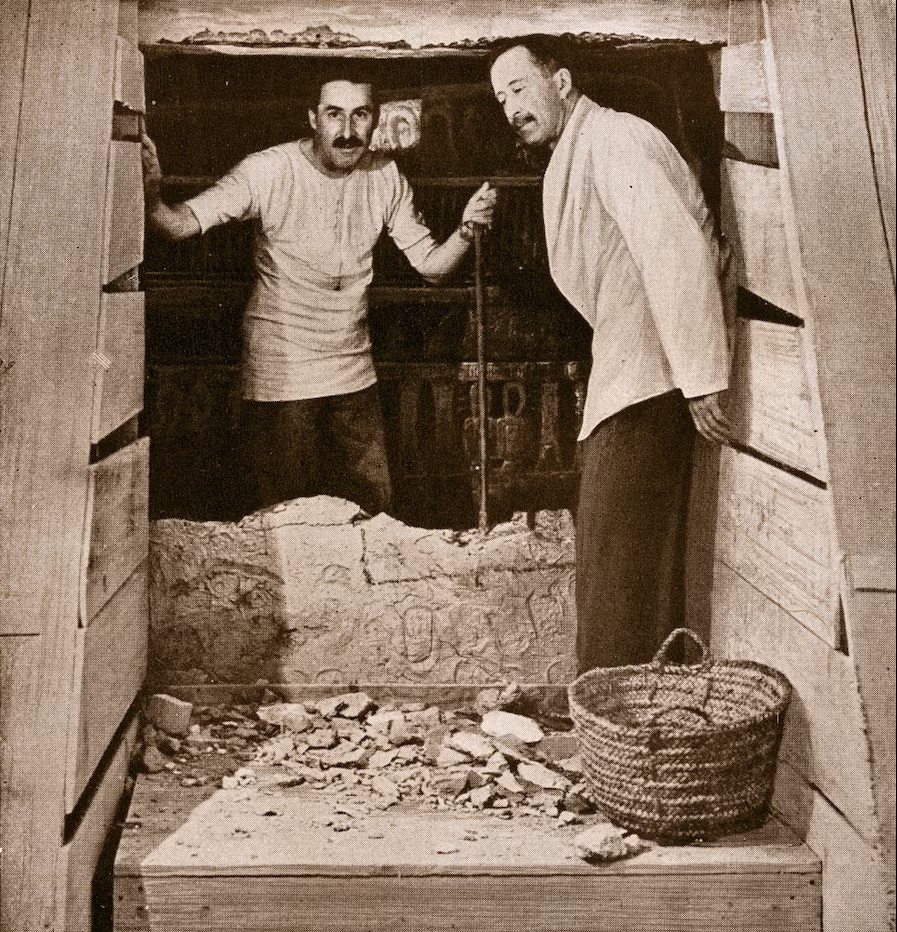
Howard Carter (left) and Lord Carnarvon enter the burial chamber inside Tut's tomb in 1922.
Status: Verified
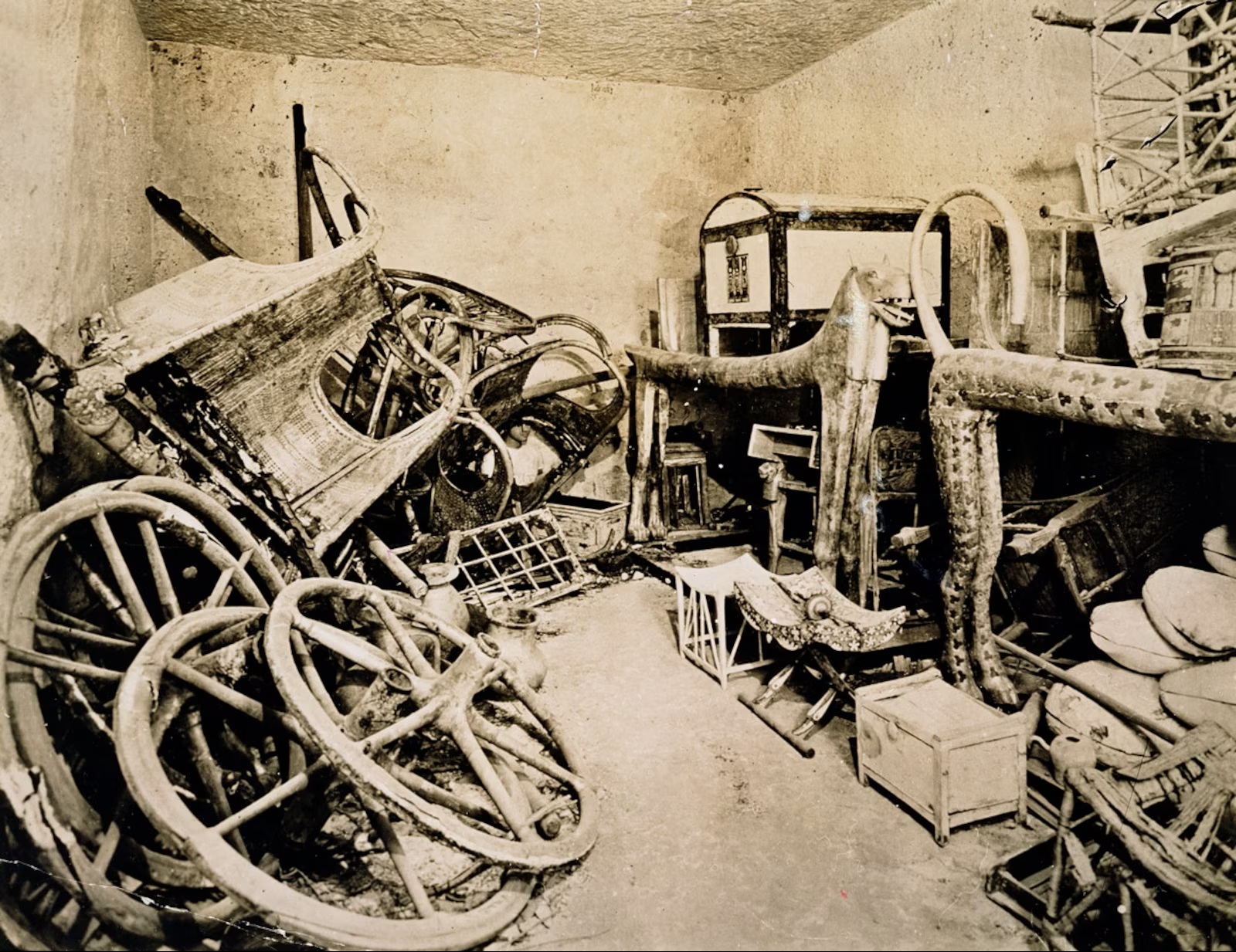
In 1922, the antechamber contained more than 600 items, including chariots (left) and golden beds shaped like animals (right).
Status: Verified
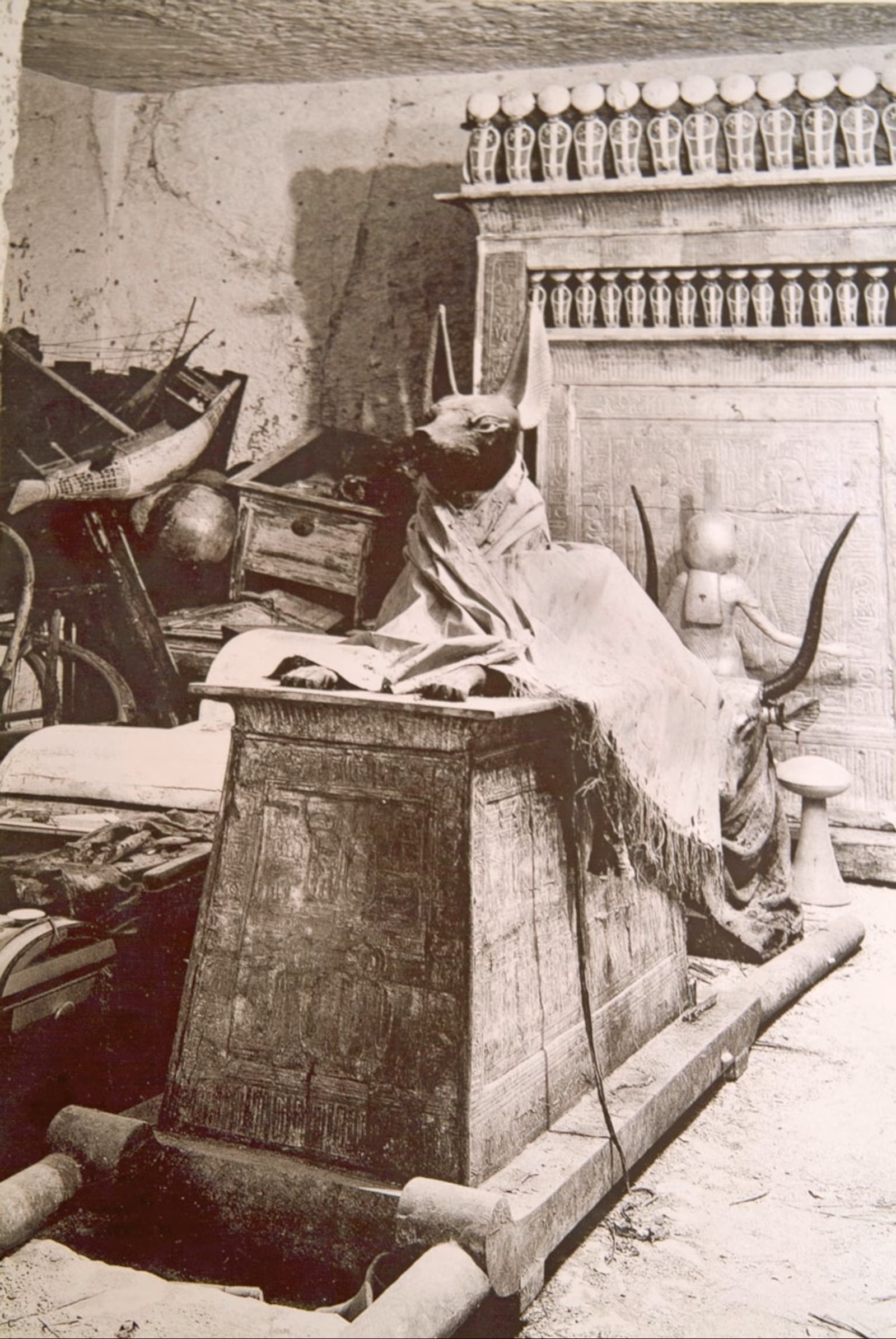
Anubis shrine photographed inside Tutankhamun's tomb during Howard Carter's excavation. The funerary shrine stood near the entrance to the treasury chamber within KV62.
Status: Verified
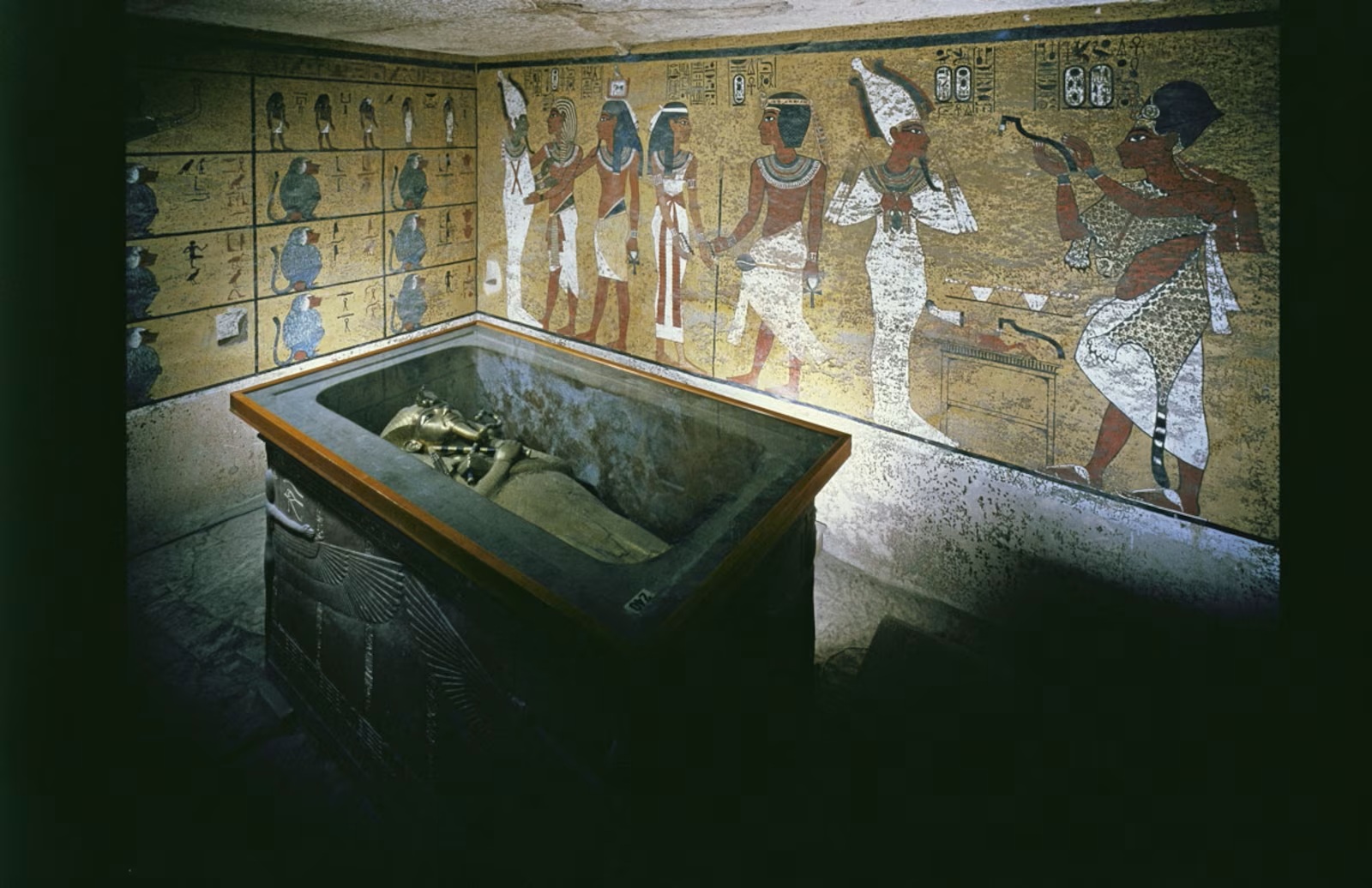
More than a century after Howard Carter's discovery, Tutankhamun's mummified remains still rest within his tomb (KV62) in Egypt's Valley of the Kings.
Status: Verified
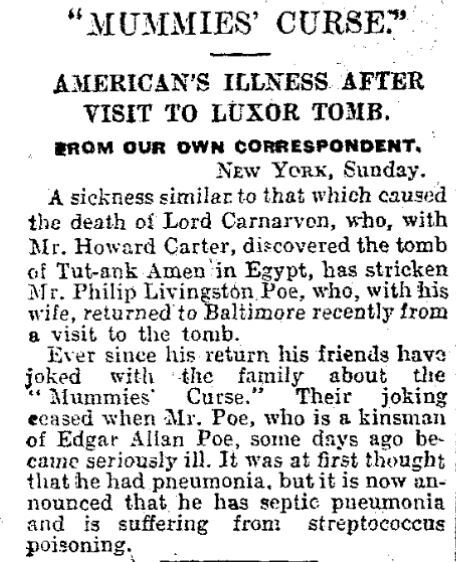
An article from July 2nd, 1923 entitled "Mummies' Curse", describing the sickness of Philip Livingston Poe after visiting King Tutankhamun's tomb.
Status: Verified
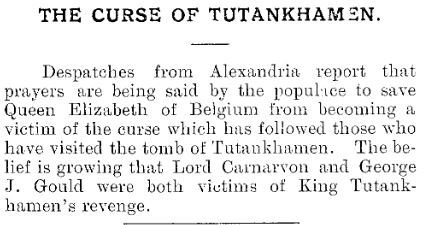
Article from May 29, 1923 mentioning the growing belief that Lord Carnarvon and George J. Gould were victims of a curse.
Status: Verified
Investigation timeline
- 2026-11-01 — Historical file submitted.
- 2026-11-01 — Research question opened: Which elements of the curse story can be traced to contemporary newspapers versus later retellings?
- 2026-11-01 — Research question opened: Did any authentic ancient Egyptian texts associated with Tutankhamun's tomb contain curse language?
- 2026-11-01 — Historical file accepted and published.
Research notes
No curated research notes.
Open research questions
A specific gap in the file. An accepted source, research note, or further-reading link closes it.
Which elements of the curse story can be traced to contemporary newspapers versus later retellings?
Did any authentic ancient Egyptian texts associated with Tutankhamun's tomb contain curse language?
Propose evidence & media, a source citation, further reading, a research note, a correction, a related case, or a series link. Staff review before anything is added. An accepted correction does not replace the file by itself.