Activity period
- Earliest claimed event 27 September 1934
- Earliest documented report November 1934
- Latest documented report December 1934
- Pattern Historic wave
Summary
In late 1934, residents of an apartment building in Zaragoza, Spain, reported hearing an unexplained voice that appeared to come from a kitchen stove or chimney. The voice reportedly laughed, answered questions, addressed people entering the apartment, and became enough of a public sensation to attract crowds, newspaper coverage, police, technical investigators, and judicial attention. Investigators searched the building and examined possible pathways through which a concealed speaker might operate, while suspicion eventually focused on household employee Pascuala Alcocer. Authorities later proposed “unconscious ventriloquism” as an explanation, although the mechanism was not demonstrated conclusively. Contemporary press coverage establishes that the voice and investigation became a genuine public controversy, but no authenticated recording or physical evidence survives that identifies what produced the reported speech.
Background
The Zaragoza Goblin, commonly called the Duende de Zaragoza or Duende de la Hornilla, developed during the autumn of 1934 in an apartment building in Zaragoza, Spain. Reports place the first unexplained laughter or vocal sounds on September 27, when residents heard noises they could not identify within the building.
The phenomenon became substantially more prominent in November. Household employee Pascuala Alcocer reportedly heard a voice while working near the kitchen stove, after which other people were said to hear similar speech apparently emerging from the stove or chimney. Unlike an indistinct knock or unexplained noise, the reported voice appeared responsive: witnesses said it answered questions, addressed visitors, laughed, and commented on events taking place inside the apartment.
As neighbors and visitors reported hearing the voice, word spread throughout Zaragoza. Newspaper coverage rapidly transformed the apartment into a public spectacle, drawing crowds and eventually requiring official attention. Reports also traveled outside Spain, with international newspapers following the developing story.
Police investigated the building in an effort to determine whether someone was using the chimney or another hidden route to create the voice. Accounts describe inspections of the apartment and adjoining structure, including searches of walls, floors, pipes, and the stove or chimney system. The investigation did not produce an immediately obvious concealed speaker or mechanical device.
Investigators and witnesses also reported attempts to speak directly with the phenomenon. Newspapers reproduced exchanges in which the supposed voice answered questions or made comments about people present. These reports became one of the most memorable elements of the case, but surviving newspaper accounts document what witnesses and reporters said occurred rather than providing an authenticated audio record of the voice itself. A recent source-led review of surviving material reported finding no authenticated recording of the alleged phenomenon.
Suspicion eventually focused on Pascuala Alcocer, whose presence was frequently associated with the reported speech. Authorities later promoted an explanation involving unconscious ventriloquism, proposing that Alcocer might somehow have produced the voice without consciously realizing it. Contemporary and later accounts differ over how firmly officials believed this explanation, and the proposed mechanism was not demonstrated in a way that conclusively reconstructs the reported events.
That makes Alcocer's role an important but unresolved part of the historical case. Association between a phenomenon and one person can guide investigation, but association alone does not establish the mechanism producing it. Likewise, an official preference for an explanation does not become proof merely because the investigation eventually closed.
The public atmosphere surrounding the incident introduces another evidentiary complication. Large crowds, intense newspaper interest, repeated questioning, and rapidly circulating stories created ideal conditions for rumor and embellishment. Later retellings can therefore contain details that should not automatically be projected back into the strongest contemporary record.
The surviving press itself requires careful handling. Newspapers provide valuable near-contemporary documentation that the Zaragoza phenomenon was being publicly reported and actively investigated, but sensational coverage was part of the environment in which the story developed. Establishing that a newspaper printed a particular exchange or incident establishes its place in the historical narrative, not necessarily that the reported event occurred exactly as described.
The reported outbreak eventually ended, leaving no physical source that could later be subjected to modern examination. The original apartment building was subsequently demolished, further limiting attempts to reconstruct its acoustics or determine whether the physical structure could have contributed to the phenomenon.
The Zaragoza Goblin is therefore particularly valuable as a documented historic auditory-phenomena case. Numerous people reported hearing an apparently responsive voice, contemporary newspapers covered the incident extensively, and authorities conducted a genuine investigation.
Witness statement
No statement on file.
Evidence & media
 The Voice in the Stove | Zaragoza's Unfinished Case
Status: Verified
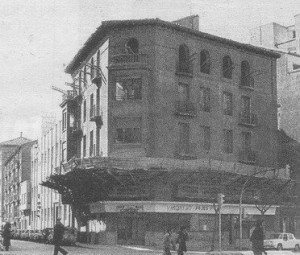
The apartment building on Gascón de Gotor Street where reports of the Zaragoza Goblin originated in 1934. The structure was later demolished in 1977.
Status: Verified
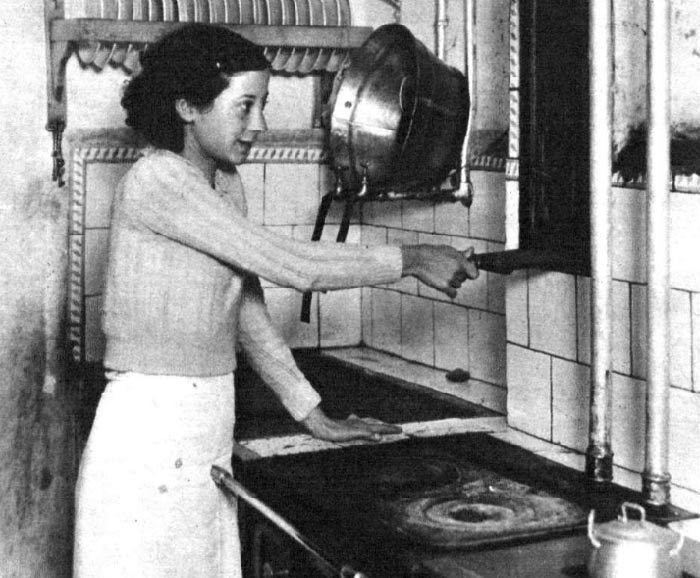
A young girl, often identified as Pascuala Alcocer, poses beside the chimney where witnesses claimed the mysterious voice originated.
Status: Verified
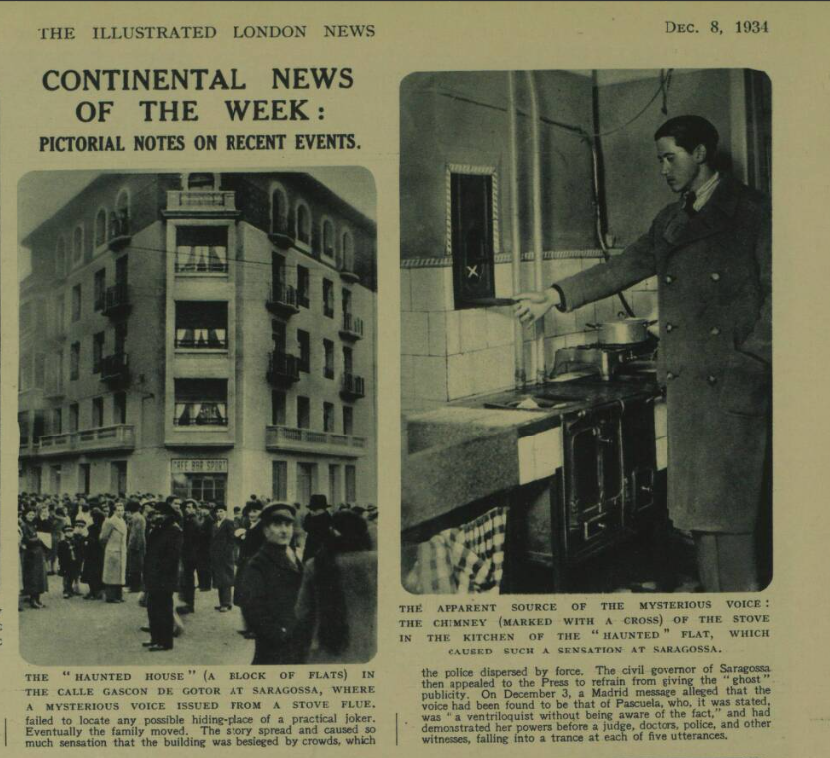
Illustrated London News - Dec 8, 1934
Status: Verified
Further reading
Continue exploring — Wikipedia, documentaries, podcasts, museum pages. Not treated as proof, and not independently verified by this archive.
Investigation timeline
- 2026-11-01 — Historical file submitted.
- 2026-11-01 — Research question opened: What records survive from the official investigation?
- 2026-11-01 — Research question opened: How reliable are the surviving newspaper accounts?
- 2026-11-01 — Research question opened: Did witnesses independently verify hearing the voice, or were reports influenced by publicity?
- 2026-11-02 — Historical file accepted and published.
Assigned GG-2026-142
Research notes
No curated research notes.
Open research questions
A specific gap in the file. An accepted source, research note, or further-reading link closes it.
Which original police, judicial, engineering, or municipal records from the 1934 Zaragoza investigation survive, and where are they archived?
Which details in the Zaragoza Goblin story can be traced independently across contemporary 1934 newspaper reports, and which appear only in later retellings?
Which witnesses were documented as hearing the reported voice before major press coverage, and which accounts emerged after the case became a public sensation?
Propose evidence & media, a source citation, further reading, a research note, a correction, a related case, or a series link. Staff review before anything is added. An accepted correction does not replace the file by itself.