GG-2026-150
Xiaoshan Airport Air-Traffic Disruption
- Phenomenon UFOs/UAPs
- Documentation
Rating B
- A — Strong dossier: several independent sources plus primary evidence (original media, records, measurements) a researcher could use without interviewing anyone.
- B — Well documented: multiple independent witnesses with at least some contemporary primary material, or one witness with substantial primary corroboration (photos, recordings, contemporaneous notes, documents).
- C — Multi-source but soft: several witnesses or a long run of reports, but mostly testimony and after-the-fact secondary sources (newspapers, folklore collections, later interviews). Little or no primary physical evidence. Regional legend clusters such as the Bridgewater Triangle land here.
- D — Thin: single witness (or one household), little or no support beyond the account. Normal for a sincere personal experience.
- E — Incomplete or not yet assessed. Every new submission starts here until staff have read it.
- Evidence & media 3 items
- Status Historic
- Location Hangzhou, China
- Occurred 7 July 2010
The event centered on the controlled airspace surrounding Hangzhou Xiaoshan International Airport, one of eastern China's major transportation hubs. The disruption affected active airport operations rather than a remote observation site.
Activity period
- Earliest claimed event 7 July 2010
- Earliest documented report 7 July 2010
- Latest documented report 7 July 2010
- Pattern Single event
Summary
On the evening of July 7, 2010, operations at Hangzhou Xiaoshan International Airport were temporarily suspended after reports of an unidentified aerial object near the airport. Flights were delayed or diverted, affecting thousands of passengers. The disruption is well documented and officially acknowledged, but the identity of the triggering object remains unresolved in publicly available records.
Background
Shortly before 9:00 p.m. on July 7, 2010, air traffic controllers at Hangzhou Xiaoshan International Airport received reports of an unidentified object in airspace near the airport. Authorities responded by halting departures and diverting arriving aircraft to alternate airports, including Ningbo and Wuxi. Airport operations remained restricted for roughly an hour before normal procedures resumed. Contemporary reporting indicates that at least a dozen arriving flights were diverted and several departures delayed, affecting more than 2,000 passengers.
The incident quickly became international news because it involved a major commercial airport rather than an isolated witness report. Unlike many UFO cases that begin with a private sighting, the Xiaoshan event produced an observable operational consequence: a temporary disruption of civilian air traffic. That fact is not disputed. What remains unclear is the identity of the object that triggered the response.
As news spread, numerous photographs began circulating online showing luminous objects and streaks above Hangzhou. These images were widely presented as evidence of the event. Subsequent reviews, however, found that many of the most famous photographs did not originate from airport personnel and could not be securely tied to the actual object involved in the disruption. Several were later assessed as ordinary aircraft, long-exposure effects, or unrelated imagery. No authenticated public photograph of the initiating target has been conclusively identified.
Public explanations varied in the months following the event. Some reports suggested an unauthorized aircraft operating without permission. Others pointed toward military activity or testing. Additional commentators proposed conventional aviation or atmospheric explanations. No publicly released final government report has been located that conclusively identifies the object or fully reconstructs the event. Because of this, the operational disruption itself is well documented, while the nature of the triggering object remains uncertain.
The case remains one of the most cited modern Chinese UFO incidents because it combines official acknowledgment of air-traffic disruption with a lack of publicly available resolution. The central historical fact is not that an extraterrestrial craft was observed. The central fact is that airport authorities considered the unidentified target significant enough to alter flight operations at a major international airport.
Witness statement
No statement on file.
Evidence & media
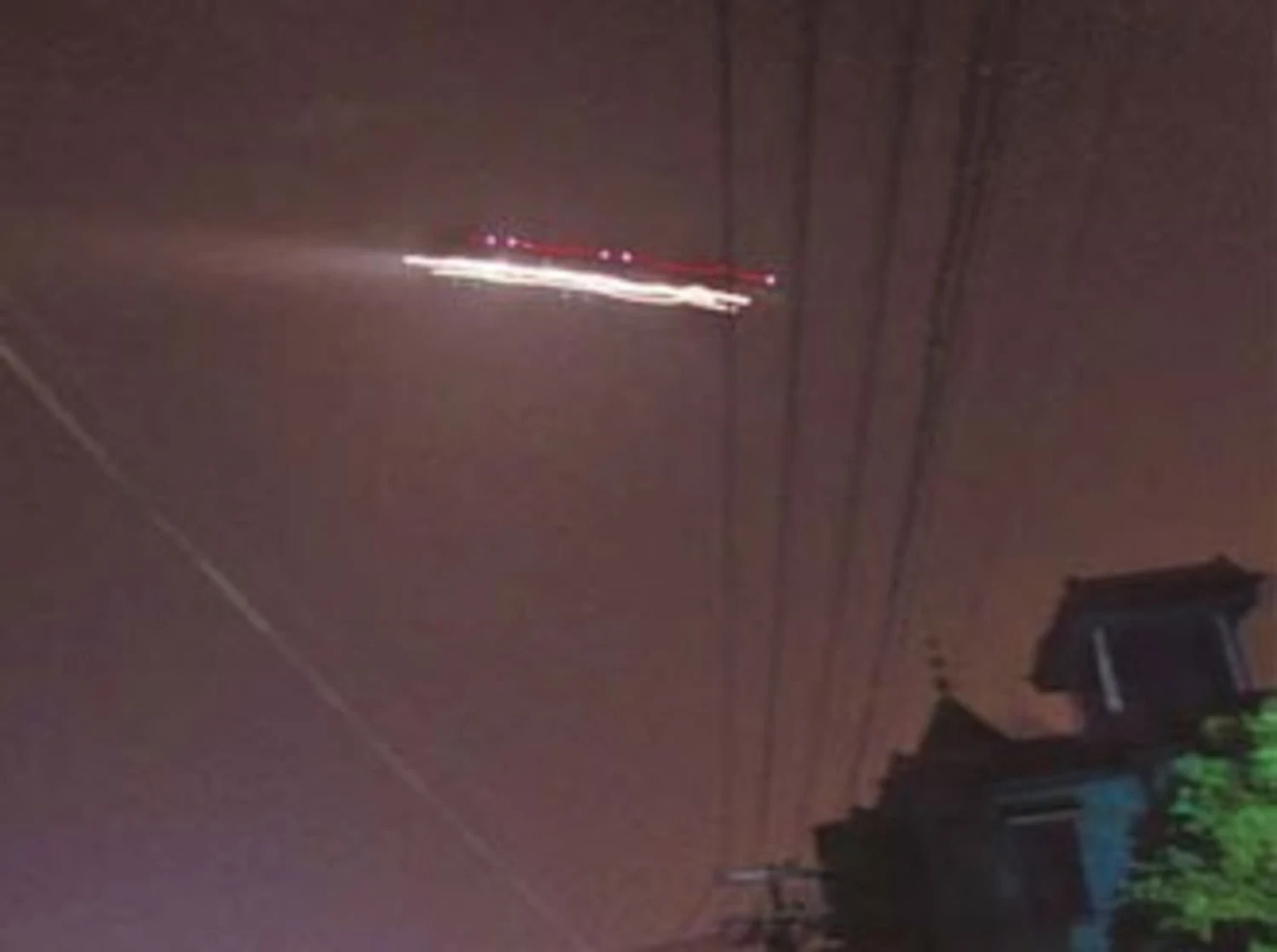
Reported Xiaoshan Incident Photograph
One of the best-known images associated with the Xiaoshan Airport incident. The photograph was widely reproduced in media coverage and online discussions, but its direct connection to the unidentified object reported near the airport remains disputed.
Status: Attributed
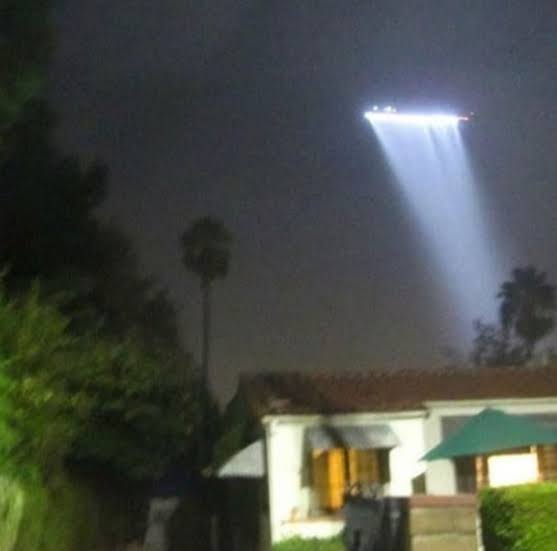
Associated Xiaoshan Incident Photograph
Photograph circulated in connection with the July 7, 2010 Xiaoshan Airport incident. The image became widely reproduced in media reports and UFO discussions following the temporary disruption of air traffic near Hangzhou Xiaoshan International Airport. Researchers have noted that the provenance of many images linked to the incident remains uncertain, and the photograph has not been conclusively connected to the unidentified object reported by aviation authorities.
Status: Attributed
 UFO shuts down Hangzhou Xiaoshan airport, China, July 7, 2010
Various news reports of the Xiaoshan Airport incident in 2010.
Status: Attributed
Investigation timeline
- 2026-11-03 — Historical file submitted.
- 2026-11-03 — Research question opened: Can original air-traffic control recordings from July 7, 2010 be located and authenticated?
- 2026-11-03 — Research question opened: What internal findings, if any, resulted from the subsequent Chinese investigation?
- 2026-11-03 — Research question opened: Were radar tracks associated with the unidentified object preserved by aviation authorities?
- 2026-11-03 — Historical file accepted and published.
Assigned GG-2026-150
Research notes
No curated research notes.
Open research questions
A specific gap in the file. An accepted source, research note, or further-reading link closes it.
Can original air-traffic control recordings from July 7, 2010 be located and authenticated?
What internal findings, if any, resulted from the subsequent Chinese investigation?
Were radar tracks associated with the unidentified object preserved by aviation authorities?
Propose evidence & media, a source citation, further reading, a research note, a correction, a related case, or a series link. Staff review before anything is added. An accepted correction does not replace the file by itself.