Activity period
- Earliest claimed event 1798
- Earliest documented report Unknown
- Latest documented report Unknown
- Pattern Historic wave
Summary
The Lokrum Curse is a Croatian folklore tradition associated with Lokrum Island near Dubrovnik. According to legend, Benedictine monks who were forced to abandon their monastery on the island conducted a final nighttime procession carrying candles upside down, allowing wax to drip onto the ground while pronouncing a curse against anyone who would claim the island for personal pleasure. Over time, a series of misfortunes affecting later owners and prominent figures connected with the island became associated with the alleged curse. While the monastery, the monks, and many of the tragedies are historically documented, the curse itself remains a matter of folklore rather than verifiable historical fact.
Background
Lokrum Island lies just offshore from Dubrovnik and has been associated with religious life for nearly a thousand years. Historical sources record that a Benedictine monastery was established on the island in 1023. The monastery became an important religious institution connected to the broader Benedictine network and to the medieval Republic of Ragusa, the predecessor of modern Dubrovnik.
For centuries, Benedictine monks lived and worked on Lokrum. The monastery expanded over time, and surviving ruins remain among the island's most significant historical features. Historical records documenting the existence of the monastery survive, and its presence on the island is not disputed.
Political and administrative upheavals around the turn of the nineteenth century brought the centuries-long Benedictine presence on Lokrum to an end. Later accounts of the curse commonly place the monastery's dissolution or the monks' expulsion in 1798, although historical summaries differ on the chronology and some place the Benedictines' final departure from the island in 1808. The end of the monastic community belongs to the documented political history of Lokrum, while the alleged farewell ritual and curse survive primarily through later tradition.
According to later folklore, the monks did not leave quietly. Tradition holds that on the night before their departure they gathered for a final procession. Carrying candles upside down so that wax would fall to the ground, they supposedly walked around the island while pronouncing a curse against those responsible for their removal and anyone who would later claim Lokrum for personal benefit. The most commonly quoted form of the curse declares that anyone who possesses Lokrum for personal pleasure will be damned.
The legend gained strength through the nineteenth and twentieth centuries as island ownership changed hands. A succession of financial losses, deaths, political setbacks, and personal tragedies affecting various owners and associated figures were gradually incorporated into the narrative. Among the most frequently cited examples are the death of Archduke Maximilian in Mexico, the assassination of Empress Elisabeth of Austria, and the death of Crown Prince Rudolf. These events are historical, but their connection to a curse is interpretive and folkloric.
As stories accumulated, Lokrum developed a reputation as one of the Adriatic's cursed islands. The legend spread through local storytelling, tourism literature, and historical retellings. The curse became inseparable from the island's identity despite the absence of contemporary evidence documenting the alleged ritual itself.
Today, Lokrum occupies an unusual place in regional folklore. Unlike many curse traditions attached to fictional locations or anonymous figures, the Lokrum story revolves around a verifiable monastery, identifiable historical individuals, and a specific place that visitors can still explore. The result is a blend of documented history and supernatural folklore that continues to attract both researchers and tourists.
Witness statement
No statement on file.
Evidence & media

Lokrum Island, Dubrovnik
Status: Verified
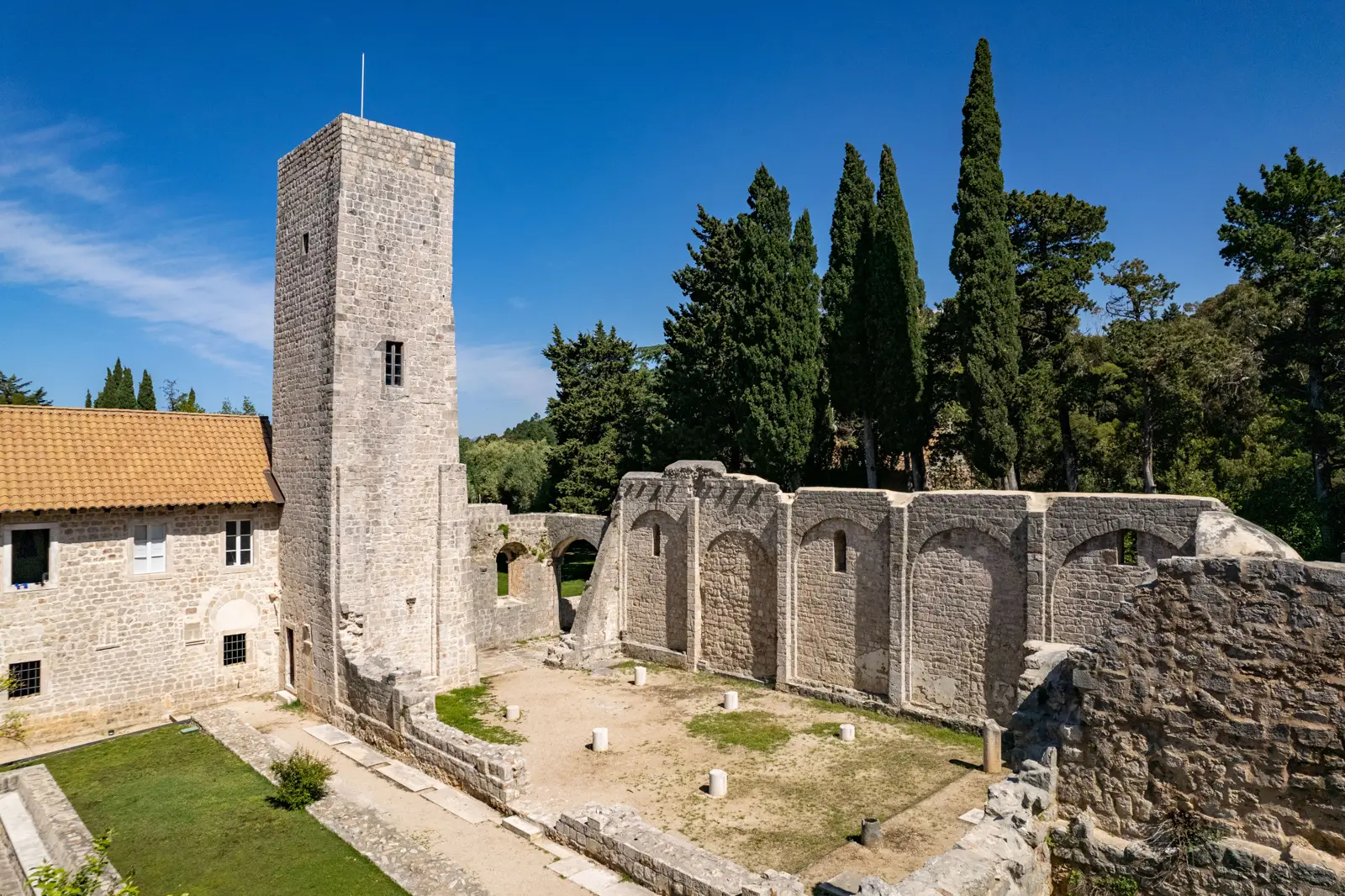
Ruins of the Lokrum Island Monastery today
Status: Verified
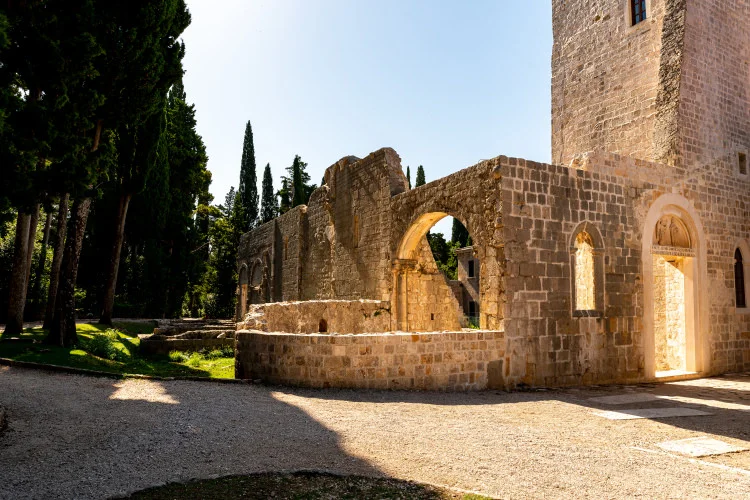
Ruins of the Lokrum Island Monastery today
Status: Verified
Further reading
Continue exploring — Wikipedia, documentaries, podcasts, museum pages. Not treated as proof, and not independently verified by this archive.
Investigation timeline
- 2026-11-08 — Historical file submitted.
- 2026-11-08 — Research question opened
What is the earliest surviving written source describing the alleged curse ritual?
- 2026-11-08 — Research question opened
Did any contemporary account from the monastery's dissolution mention a ceremonial farewell procession?
- 2026-11-08 — Research question opened
When did the association between the curse and the Habsburg tragedies first appear in writing?
- 2026-11-08 — Research question opened
How much of the modern legend developed through tourism literature versus local oral tradition?
- 2026-11-08 — Research question opened
Are there surviving monastery records that document the final years of the Benedictine presence on Lokrum?
- 2026-11-09 — Historical file accepted and published.
Assigned GG-2026-181
Research notes
No curated research notes.
Open research questions
A specific gap in the file. An accepted source, research note, or further-reading link closes it.
What is the earliest surviving written source describing the alleged curse ritual?
Did any contemporary account from the monastery's dissolution mention a ceremonial farewell procession?
When did the association between the curse and the Habsburg tragedies first appear in writing?
How much of the modern legend developed through tourism literature versus local oral tradition?
Are there surviving monastery records that document the final years of the Benedictine presence on Lokrum?
Propose evidence & media, a source citation, further reading, a research note, a correction, a related case, or a series link. Staff review before anything is added. An accepted correction does not replace the file by itself.