Activity period
- Earliest claimed event 1923
- Earliest documented report Unknown
- Latest documented report 11 August 1996
- Pattern Recurring
Summary
(1911-1996) was a Bulgarian mystic, healer, and alleged clairvoyant who became one of the most influential prophetic figures in Eastern Europe. Blind from a young age, she claimed to receive information through supernatural means and gained a reputation for predicting personal events, political developments, disasters, and future world affairs. Thousands of visitors reportedly sought her advice over the course of her life, including ordinary citizens, government officials, scientists, and cultural figures. Her later years were closely associated with Rupite, a volcanic region in southwestern Bulgaria that she believed possessed unusual spiritual significance. Following her death, Baba Vanga became the subject of extensive folklore, media coverage, and continuing debate regarding the authenticity and accuracy of her alleged predictions.
Background
Vangeliya Pandeva Gushterova was born in 1911 in Strumica, then part of the Ottoman Empire and now in North Macedonia. Accounts of her early life vary, but most biographies describe a relatively ordinary rural childhood before an event during adolescence that later became central to her life story.
According to the commonly repeated account, Vanga was caught in a violent storm or whirlwind that threw her into a field and left her eyes filled with sand and debris. Her eyesight subsequently deteriorated and she became blind. The episode is an important part of her traditional biography, but contemporary meteorological records or independent accounts confirming the extraordinary storm narrative have not been established. Later biographies nevertheless treated the loss of her sight as a turning point after which claims of unusual perception and foreknowledge became associated with her.
By the Second World War era, Vanga had developed a growing reputation as a healer, clairvoyant, and source of information about missing or absent people. Visitors traveled to consult her about relatives, illnesses, wartime uncertainty, and personal problems. Over subsequent decades her reputation expanded throughout Bulgaria and elsewhere in Eastern Europe, with accounts describing consultations by ordinary citizens as well as prominent political and cultural figures.
Vanga occupied an unusual position during Bulgaria's communist period. The state's official ideology rejected religion, occultism, and supernatural belief, yet public interest in her persisted and her activities attracted journalists, researchers, officials, and other observers. This attention documents the scale of her reputation and the social phenomenon surrounding her, but it does not itself establish the paranormal explanations attributed to her abilities.
In later life Vanga became closely associated with Rupite, an area near Petrich characterized by volcanic geology and thermal springs. She attached spiritual significance to the location and spent her later years there. She also supported the construction of the St. Petka Bulgarian memorial church at Rupite, established in 1994 with funding she provided. The church, her house, and her grave later became important components of the public and commemorative landscape associated with her life.
The most difficult part of the Baba Vanga record concerns her alleged predictions. Thousands of consultations and statements have been attributed to her, but establishing precisely what she said, when she said it, and how faithfully it was preserved is difficult. Many famous predictions now circulating under her name appear in secondary or posthumous accounts rather than authenticated records created before the predicted events. Translation, paraphrase, retrospective interpretation, and repeated media retellings further complicate attempts to distinguish documented statements from later additions.
This does not erase Vanga's historical importance. Contemporary reporting and the scale of visitation surrounding her demonstrate that she had acquired a significant reputation during her own lifetime, rather than becoming famous only after her death. What remains unresolved is how much of the enormous prophetic catalog now attributed to her can be traced to statements reliably documented before the events they supposedly predicted.
Baba Vanga died in 1996. Since then, her reputation has continued to expand through books, documentaries, news coverage, websites, and annually circulating prediction lists. Regardless of whether her reported abilities are interpreted as paranormal, psychological, folkloric, or cultural, Vanga remains one of the most influential prophetic figures of modern Eastern European folklore.
Witness statement
No statement on file.
Evidence & media
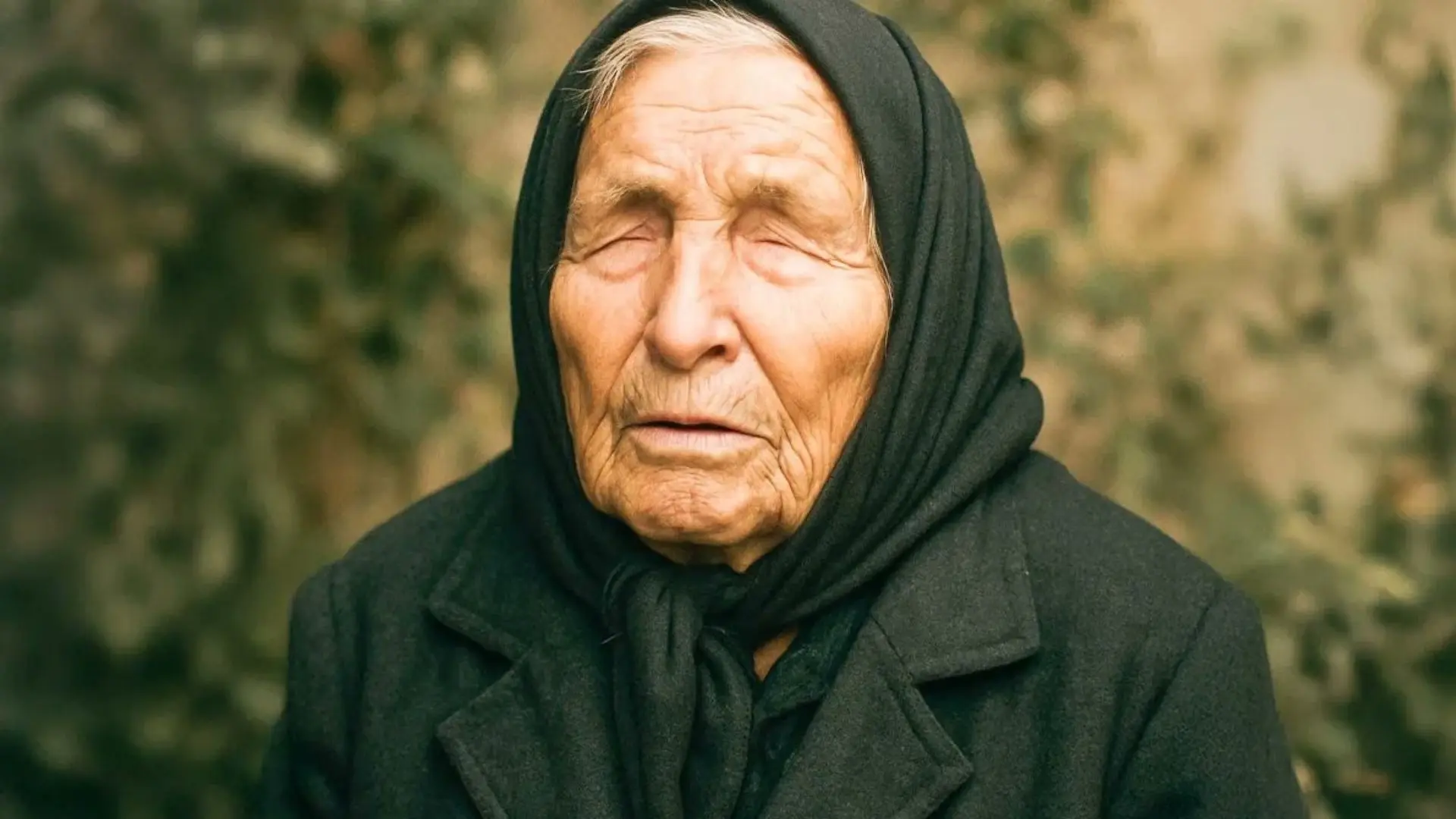
Baba Vanga in Later Life
Portrait photograph of Baba Vanga during her later years. The date of the photograph has not been independently verified.
Status: Attributed
Further reading
Continue exploring — Wikipedia, documentaries, podcasts, museum pages. Not treated as proof, and not independently verified by this archive.
Investigation timeline
- 2026-11-08 — Historical file submitted.
- 2026-11-08 — Research question opened
Which predictions attributed to Baba Vanga can be verified through contemporaneous documentation?
- 2026-11-08 — Research question opened
Can a reliable catalog of authenticated statements attributed to Baba Vanga be established?
- 2026-11-08 — Research question opened
How many widely circulated predictions first appeared only after her death?
- 2026-11-09 — Historical file accepted and published.
Assigned GG-2026-182
Research notes
Historical research: The Verification Problem
Unlike many paranormal case files centered on a single event, Baba Vanga's reputation rests largely upon thousands of individual consultations spread across decades. This creates a unique research challenge. A witness may sincerely report that Vanga predicted an event, yet determining exactly what was said and when it was said often proves difficult.
Many of the most famous predictions attributed to Baba Vanga emerged years after the events they supposedly foretold. Researchers attempting verification frequently encounter secondhand retellings, translated accounts, media summaries, and conflicting versions of the same prophecy. As a result, distinguishing between documented predictions and legendary additions remains one of the central challenges of Vanga research.
At the same time, the sheer scale of her influence cannot be ignored. The number of visitors, the longevity of her reputation, and the continuing significance of Rupite demonstrate that Baba Vanga became far more than a local fortune teller. Regardless of one's conclusions regarding paranormal abilities, she represents a major cultural phenomenon whose influence persists decades after her death.
Open research questions
A specific gap in the file. An accepted source, research note, or further-reading link closes it.
Which predictions attributed to Baba Vanga can be verified through contemporaneous documentation?
Can a reliable catalog of authenticated statements attributed to Baba Vanga be established?
How many widely circulated predictions first appeared only after her death?
Propose evidence & media, a source citation, further reading, a research note, a correction, a related case, or a series link. Staff review before anything is added. An accepted correction does not replace the file by itself.