GG-2026-191
House of Death
- Phenomenon Apparitions & Spirits, Physical & Poltergeist Activity
- Documentation
Rating C
- A — Strong dossier: several independent sources plus primary evidence (original media, records, measurements) a researcher could use without interviewing anyone.
- B — Well documented: multiple independent witnesses with at least some contemporary primary material, or one witness with substantial primary corroboration (photos, recordings, contemporaneous notes, documents).
- C — Multi-source but soft: several witnesses or a long run of reports, but mostly testimony and after-the-fact secondary sources (newspapers, folklore collections, later interviews). Little or no primary physical evidence. Regional legend clusters such as the Bridgewater Triangle land here.
- D — Thin: single witness (or one household), little or no support beyond the account. Normal for a sincere personal experience.
- E — Incomplete or not yet assessed. Every new submission starts here until staff have read it.
- Evidence & media 4 items
- Status Resolved
- Location New York City, New York · exact location withheld
This case is associated with private or restricted property. Do not trespass, disturb residents, remove artifacts, or conduct an investigation without explicit permission.
Activity period
- Earliest claimed event Circa 1930
- Earliest documented report Unknown
- Latest documented report Unknown
- Pattern Recurring
Summary
The House of Death is the nickname given to a nineteenth-century Greenwich Village townhouse at 14 West 10th Street that developed one of New York City's best-known residential haunting traditions. The building's documented history includes a brief 1900–1901 residence by author Samuel Clemens, better known as Mark Twain, while later accounts describe apparitions, unexplained footsteps, shadow-like figures, moving objects and other unusual experiences reported by successive occupants. Writer Jan Bryant Bartell became one of the property's most important named witnesses after moving there in 1957 and later describing alleged paranormal experiences in her memoir Spindrift: Spray from a Psychic Sea. Twain's supposed apparition became the house's signature ghost, although he did not die there and the chronology of the earliest Twain-related accounts remains poorly documented. The building and its notable occupants are historical facts, while the paranormal tradition rests primarily on witness testimony, later publications and repeated urban folklore rather than independently verified physical evidence.
Background
The building now widely known as the House of Death stands on West 10th Street in Greenwich Village, within one of Manhattan's best-preserved nineteenth-century residential neighborhoods. Constructed during the nineteenth century as a private townhouse, the property belonged to the affluent residential world that developed around Washington Square. Among families associated with the address were relatives of businessman and philanthropist James Boorman Johnston, whose family participated in New York's commercial and cultural life. The building was later converted from a single-family residence into multiple apartments in 1937.
The property's most famous historical resident was Samuel Langhorne Clemens, better known by the pen name Mark Twain. Clemens lived at 14 West 10th Street during 1900–1901, by which time he was already one of the best-known American writers of his generation. His residence at the address is documented history and later became central to the building's supernatural reputation. The much stronger claim that Clemens himself experienced paranormal activity in the house is less secure. A frequently repeated story says that he saw a piece of fireplace kindling move inexplicably, fired a pistol at it and discovered drops of blood without finding an animal or intruder. The anecdote appears extensively in modern haunting literature, but no corresponding Twain letter, diary entry or other contemporary documentation has been established in the sources currently reviewed.
The earliest recognizable apparition tradition presently associated with the building appears to involve a mother and daughter who reportedly lived there during the 1930s. In a story preserved through later accounts, one of them encountered an older white-haired figure near a window who identified himself as “Clemens” before disappearing. The episode became important to the later identification of Mark Twain as the house's signature ghost. Gothic.Black has not yet located a contemporary 1930s account of the encounter, however, so the date should presently be treated as the date claimed for the event rather than the date of its earliest known documentation.
The building's conversion into multiple apartments during the 1930s changed both its interior and the number of people passing through the property. Later accounts describe footsteps in apparently empty rooms, human figures, shadows, unusual sensations, moving objects and other unexplained experiences. Stories eventually accumulated around a supposed group of roughly twenty-two ghosts, although that number is repeated much more confidently in popular literature than the identities or documentary histories of twenty-two distinct apparitions can presently support. Gothic.Black therefore treats the number as part of the modern House of Death narrative rather than a verified census of separate reported entities.
The strongest individual contributor to the twentieth-century haunting tradition was writer and performer Jan Bryant Bartell, who moved into the property with her husband in 1957. Bartell reported unusual sensations, apparent presences, disturbing shadows and other experiences during the years she lived there. She subsequently documented those experiences in Spindrift: Spray from a Psychic Sea, published in 1974. Because Bartell left a substantial written account under her own name, her experiences occupy a different evidentiary position from anonymous stories later repeated by ghost-tour and paranormal websites. Her testimony establishes what she claimed to experience; it does not independently establish a supernatural explanation for those events.
Later paranormal literature expanded the building's alleged population beyond Twain. Reports include an unidentified woman in white, a child, an apparently spectral cat and shadow-like human forms. Some sources state that paranormal investigators also reported impressions or experiences corresponding with these traditions. The provenance of individual claims varies substantially, however, and repeated appearance in modern articles should not be mistaken for multiple independent witnesses. Establishing the earliest traceable version of each recurring apparition is necessary before treating these figures as separate long-running traditions.
A real tragedy occurred in the building in 1987 when six-year-old Lisa Steinberg was fatally assaulted by Joel Steinberg inside an apartment at the property. Police discovered Lisa critically injured along with another young child living under appalling conditions. Lisa died several days later, and Joel Steinberg was subsequently convicted of first-degree manslaughter. This crime is part of the documented history of the address, but it occurred decades after several important haunting accounts had already developed. It therefore should not be used retrospectively as the origin of the paranormal tradition.
The nickname “House of Death” itself deserves similar caution. Modern sources routinely apply the name to 14 West 10th Street and connect it with claims of numerous deaths, apparitions and the Steinberg case. What remains less clear is exactly when the nickname first entered documented public use. Establishing that date matters because a later name can easily be projected backward until it appears that residents in much earlier periods already knew the building by the same ominous reputation.
The architecture also complicates attempts to interpret reported experiences. The townhouse has been substantially altered from its nineteenth-century single-family configuration, particularly through conversion into multiple apartments. Interior walls, doors, plumbing, heating systems, neighboring residential activity and ordinary acoustic transmission through an old multi-unit structure provide potential conventional sources for footsteps, voices, movement and other ambiguous experiences. Exact historical floor plans would therefore be useful when comparing older accounts with the building's changing physical configuration.
The House of Death today remains an occupied private residence rather than a public museum or paranormal investigation site. Its exterior and historical identity may be widely documented, but current residents should not be treated as participants in the building's ghost tradition merely because they occupy a famous address. Gothic.Black therefore treats the property as a historical case requiring privacy-conscious map handling and does not encourage visits, investigation or attempts to contact occupants.
The case ultimately contains two records of very different strength. Mark Twain's residence, the building's nineteenth-century origins, its conversion to apartments, Jan Bryant Bartell's authorship and the 1987 Steinberg crime belong to the documented history of the property. The supposed Twain apparition, moving-kindling story, woman in white, multiple spirits and other supernatural claims rely primarily on later testimony and folklore whose individual origins remain uneven. The central research problem is determining how early each supernatural claim can actually be traced and how much of the familiar House of Death narrative emerged through later repetition rather than contemporary reporting.
Witness statement
No statement on file.
Evidence & media
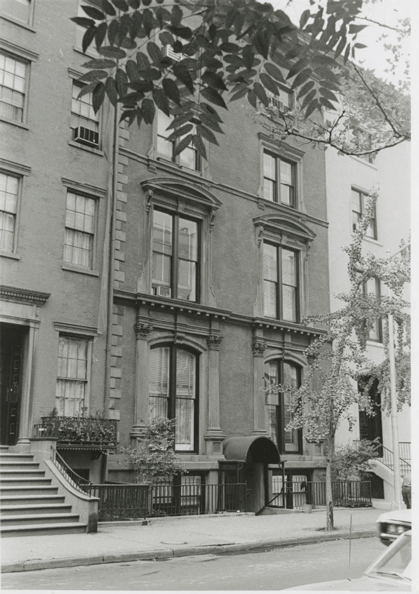
House of Death (1970)
Archival view of 14 West 10th Street in Greenwich Village, photographed in 1970. The image documents the residential building during the period in which writer Jan Bryant Bartell's experiences helped establish its modern haunting reputation.
Status: Verified
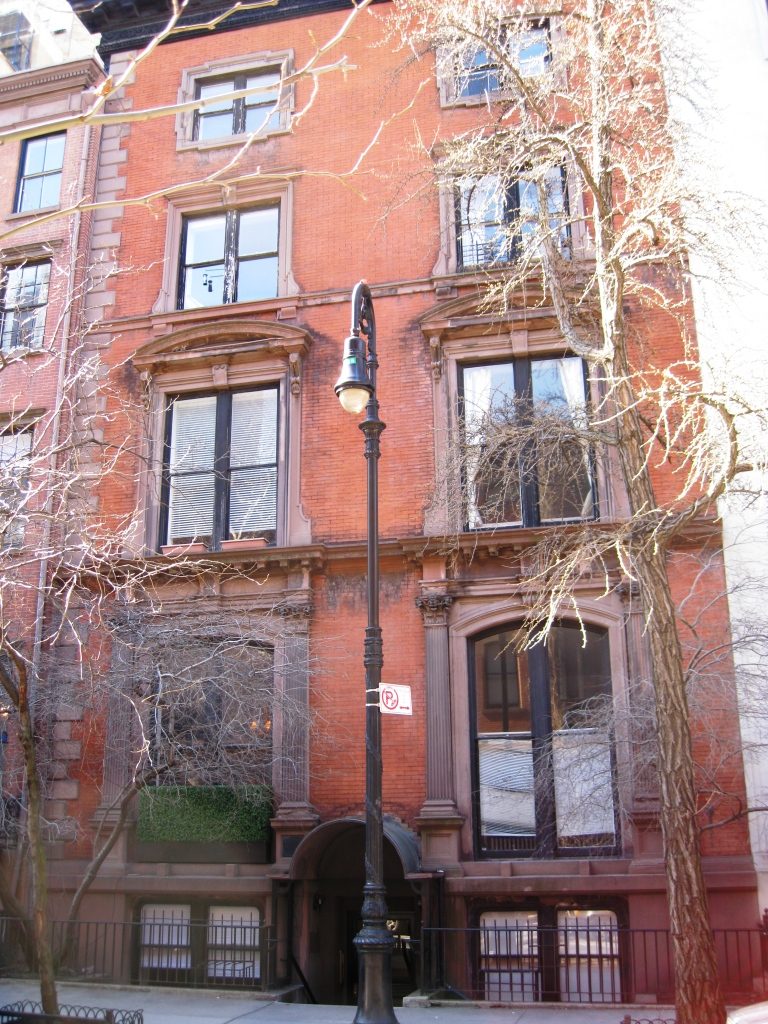
House of Death (Modern View)
Modern exterior view of the Greenwich Village townhouse associated with the House of Death tradition. The building remains an occupied private residence; the photograph documents the historic location rather than evidence of reported paranormal activity.
Status: Verified
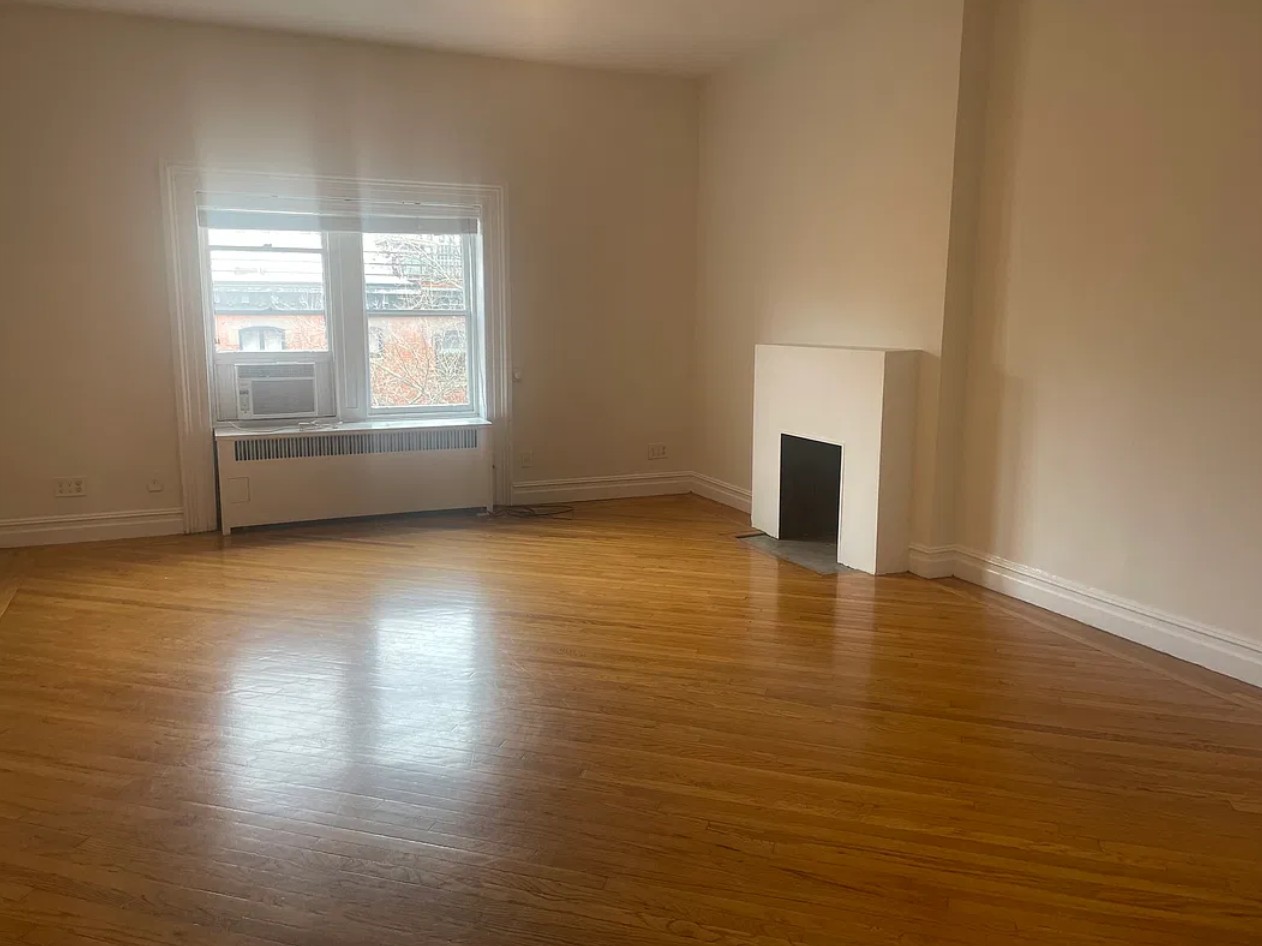
Apartment Interior, 14 West 10th Street
Interior of a residential unit photographed during a rental listing. The image documents the modern multi-unit configuration of the historic townhouse; it is not associated with a specific reported paranormal event.
Status: Verified
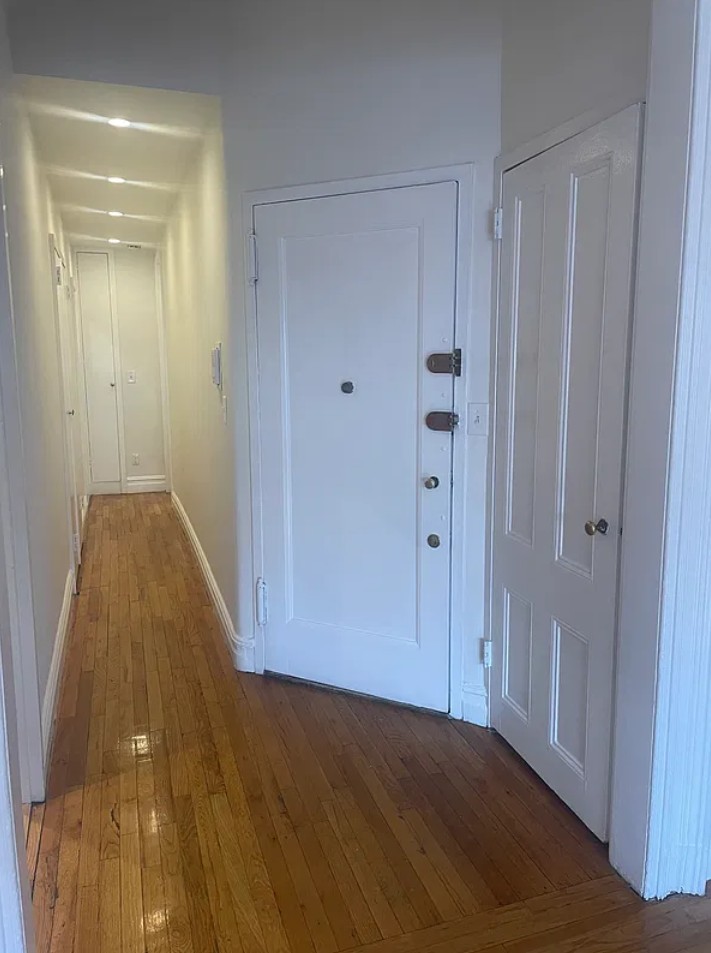
Apartment Interior, 14 West 10th Street – Hallway
Hallway within a residential unit photographed during a rental listing. The image documents the building's modern interior configuration following conversion from a nineteenth-century townhouse into multiple apartments; it does not document paranormal activity.
Status: Verified
Further reading
Continue exploring — Wikipedia, documentaries, podcasts, museum pages. Not treated as proof, and not independently verified by this archive.
Investigation timeline
- 2026-11-10 — Historical file submitted.
- 2026-11-10 — Research question opened
What is the earliest traceable paranormal report specifically associated with 14 West 10th Street?
- 2026-11-10 — Research question opened
When did the nickname "House of Death" first enter documented public use?
- 2026-11-10 — Research question opened
Which apparition reports can be linked to identifiable witnesses, dates, and contemporary records?
- 2026-11-10 — Research question opened
When did the tradition of Mark Twain's ghost first appear in print, and what are the earliest surviving accounts?
- 2026-11-10 — Location precision revised from Exact to Approximate.
- 2026-11-10 — Research question opened
What is the earliest traceable source for the story that Mark Twain witnessed moving fireplace kindling and fired a pistol at it while living at 14 West 10th Street?
- 2026-11-10 — Location precision revised from Approximate to Withheld.
- 2026-11-10 — Historical file accepted and published.
Assigned GG-2026-191
Research notes
Historical research: Mark Twain and the House of Death Tradition
No figure is more closely associated with the House of Death than Mark Twain. Although Twain lived at the property for only a relatively brief period, many modern accounts identify him as the building's most frequently reported apparition. Stories describing witnesses encountering Twain's spirit on staircases, in hallways, and near windows form the core of the house's modern haunting narrative.
An interesting complication is that Twain did not die in the building. This distinguishes House of Death traditions from many ghost legends in which the reported apparition is directly connected to a death on the property. Instead, the alleged haunting appears to derive from Twain's brief residency, his cultural significance, and the subsequent repetition of witness accounts over many decades.
The chronology of these reports remains an important research question. Modern sources routinely reference sightings of Twain, but determining exactly when the tradition emerged may reveal how the legend developed. It is possible that later media coverage amplified earlier stories, gradually establishing Twain as the building's signature ghost.
Whether the reports represent paranormal experiences, folklore, misidentifications, or some combination of all three remains unresolved. What is documented is the persistence of the legend itself. More than a century after Twain's residency, his name continues to define the public reputation of one of New York City's most famous haunted addresses.
Open research questions
A specific gap in the file. An accepted source, research note, or further-reading link closes it.
What is the earliest traceable paranormal report specifically associated with 14 West 10th Street?
When did the nickname "House of Death" first enter documented public use?
Which apparition reports can be linked to identifiable witnesses, dates, and contemporary records?
When did the tradition of Mark Twain's ghost first appear in print, and what are the earliest surviving accounts?
What is the earliest traceable source for the story that Mark Twain witnessed moving fireplace kindling and fired a pistol at it while living at 14 West 10th Street?
Propose evidence & media, a source citation, further reading, a research note, a correction, a related case, or a series link. Staff review before anything is added. An accepted correction does not replace the file by itself.