GG-2026-198
Royal Philip Fortress
- Phenomenon Apparitions & Spirits, Auditory & Acoustic Events, Folklore & Cultural Encounters
- Documentation
Rating C
- A — Strong dossier: several independent sources plus primary evidence (original media, records, measurements) a researcher could use without interviewing anyone.
- B — Well documented: multiple independent witnesses with at least some contemporary primary material, or one witness with substantial primary corroboration (photos, recordings, contemporaneous notes, documents).
- C — Multi-source but soft: several witnesses or a long run of reports, but mostly testimony and after-the-fact secondary sources (newspapers, folklore collections, later interviews). Little or no primary physical evidence. Regional legend clusters such as the Bridgewater Triangle land here.
- D — Thin: single witness (or one household), little or no support beyond the account. Normal for a sincere personal experience.
- E — Incomplete or not yet assessed. Every new submission starts here until staff have read it.
- Evidence & media 2 items
- Status Historic
- Location Callao, Province of Callao, Peru
Exact public marker identifying the Real Felipe Fortress, the historic military complex associated with the haunting traditions in this file. Reported experiences involve multiple towers, passages, cells and other areas within the fortress rather than a single incident location. Visitors should remain within areas open through the museum and authorized tours.
Activity period
- Earliest claimed event Unknown
- Earliest documented report Unknown
- Latest documented report Unknown
- Pattern Recurring
Summary
The Real Felipe Fortress in Callao is an immense eighteenth-century military stronghold surrounded by traditions of apparitions, unexplained footsteps, voices and other unusual experiences. Construction began in 1747 after the catastrophic 1746 earthquake and tsunami devastated Callao, and the fortress subsequently played important roles in colonial defense, Peru's struggle for independence and nineteenth-century military conflict. Modern supernatural traditions include phantom soldiers, cries or whispers associated with former detention areas, apparitions in the King's and Queen's Towers and other stories promoted through local folklore and nighttime tours. Some popular paranormal accounts attempt to identify specific spirits with historical occupants, but several of those identifications contain demonstrable historical errors or lack traceable contemporary records. Real Felipe therefore provides an exceptionally well-documented military setting for a persistent haunting tradition whose specific supernatural claims remain much less securely documented.
Background
The Real Felipe Fortress dominates the historic port of Callao on Peru's central Pacific coast. During the Spanish colonial period, Callao served as the principal maritime gateway to Lima and one of the most strategically important ports on the Pacific coast of South America. Wealth moving between Spain and its American possessions made the port an important defensive concern, particularly because piracy, privateering and warfare repeatedly threatened Spanish shipping and coastal settlements.
A major turning point came on 1746-10-28, when a catastrophic earthquake and tsunami devastated Lima and almost completely destroyed Callao. The disaster eliminated much of the port's existing defensive infrastructure and demonstrated its vulnerability. Viceroy José Antonio Manso de Velasco subsequently ordered construction of a new permanent fortress, using a design associated with French mathematician and engineer Louis Godin. Construction began in 1747 and the principal works were completed in 1774 under Viceroy Manuel de Amat y Junyent, with additional defensive work continuing afterward.
The completed fortress took the form of an irregular pentagon enclosed by massive stone walls and five bastions. Among its most recognizable structures are the Torreón del Rey and Torreón de la Reina, substantial fortified towers designed as part of the site's defensive system. Ammunition storage, living quarters, military facilities, courtyards and detention spaces made the fortress effectively a self-contained defensive complex capable of supporting a sizable garrison.
Real Felipe subsequently participated in many of the military upheavals accompanying the end of Spanish colonial rule. Coastal attacks and blockade attempts occurred during the independence period, and after José de San Martín entered Lima the fortress was renamed Castillo de la Independencia. It later returned to royalist hands during the troubled final stages of the independence conflict and became the center of the last major Spanish resistance in Peru. The fortress finally capitulated in January 1826, ending Spanish military control there after a prolonged siege. Its original Real Felipe name was restored in 1925.
The prolonged military history involved artillery bombardment, imprisonment, disease, deprivation and death, particularly during periods of siege. Those documented conditions provide the historical foundation upon which later ghost traditions developed. They do not, however, establish that particular apparitions represent particular dead soldiers or prisoners. As with other historic military sites, the factual existence of violence and death should be distinguished from attempts to assign identities to later unexplained experiences.
One prominent group of traditions involves apparitions identified as soldiers. Visitors and paranormal writers describe shadow-like military figures, footsteps through apparently empty sections of the fort and human forms seen around the ramparts or towers. Stories particularly associate the Torreón de la Reina with a soldier who supposedly became terrified during a battle and died after jumping from the tower. Later visitors are sometimes said to experience an apparition or an overwhelming sensation near the site. The story is widespread in modern paranormal material, but Gothic.Black has not located the contemporary military or death record needed to establish the supposed soldier's identity or the circumstances of the alleged suicide.
Another tradition concerns the Torreón del Rey and its drawbridge, where a figure commonly described as a woman in white is said to appear. The familiar version places the apparition around midnight and treats it as one of Real Felipe's recurring entities. What remains considerably less clear is when the story entered the written record and whether the figure was originally attached to any identifiable historical person. Without an early account or named witness chronology, Gothic.Black treats the Lady in White as a documented component of modern fortress folklore rather than an identified historical apparition.
Stories also surround the fortress's former detention areas and underground spaces. Modern accounts describe cries, whispers, footsteps, sudden cold sensations and feelings of presence around cells and passages associated with prisoners. These reports fit readily with the site's documented military and custodial history, but that historical compatibility should not be mistaken for evidence of causation. Stone passages, enclosed chambers, visitors elsewhere in the complex, air movement and unusual acoustics offer conventional mechanisms capable of producing ambiguous sounds and sensations within a large fortress.
A particularly useful warning comes from supernatural stories involving Viceroy Manuel de Amat y Junyent. Some modern paranormal accounts claim that Amat was imprisoned at Real Felipe, spent his final days there or continues to haunt the fortress. That narrative conflicts with the historical record. Amat was the viceroy under whose administration major work on the fortress was completed; he later returned to Spain. Gothic.Black therefore does not repeat the supposed imprisoned-viceroy ghost as established history. Its circulation is instead evidence of how dramatically paranormal storytelling can detach an alleged spirit from the biography of the historical person assigned to it.
Real Felipe remained an important military site through later Peruvian history and survives today as the Museo del Ejército Fortaleza Real Felipe. The complex preserves military architecture, weapons, uniforms and material connected with Peru's military past. Its survival provides researchers with the original physical environment in which the haunting traditions are situated, rather than requiring reconstruction from a demolished or radically relocated site.
The paranormal reputation has itself become part of the fortress's modern cultural life. Nighttime tours focused on history, mystery and legend are commercially available, while television programs and paranormal investigators have visited the site. This continued interest demonstrates that Real Felipe's supernatural traditions remain culturally active. It does not demonstrate continuing paranormal activity under Gothic.Black's evidentiary standard, because the presently reviewed material does not provide a sufficiently documented modern occurrence within the last ten years to justify an Active classification.
Real Felipe consequently presents two records of very different strength. Its construction, defensive architecture, battles, sieges and military functions are extensively documented and central to Peruvian history. Its apparitions, phantom soldiers, unexplained voices and named ghosts belong to a much softer body of witness tradition and folklore. The key research task is to establish when those supernatural narratives first entered the written record, determine whether particular reports can be traced to named witnesses, and prevent later ghost storytelling from rewriting the biographies of real people connected with the fortress.
Witness statement
No statement on file.
Evidence & media
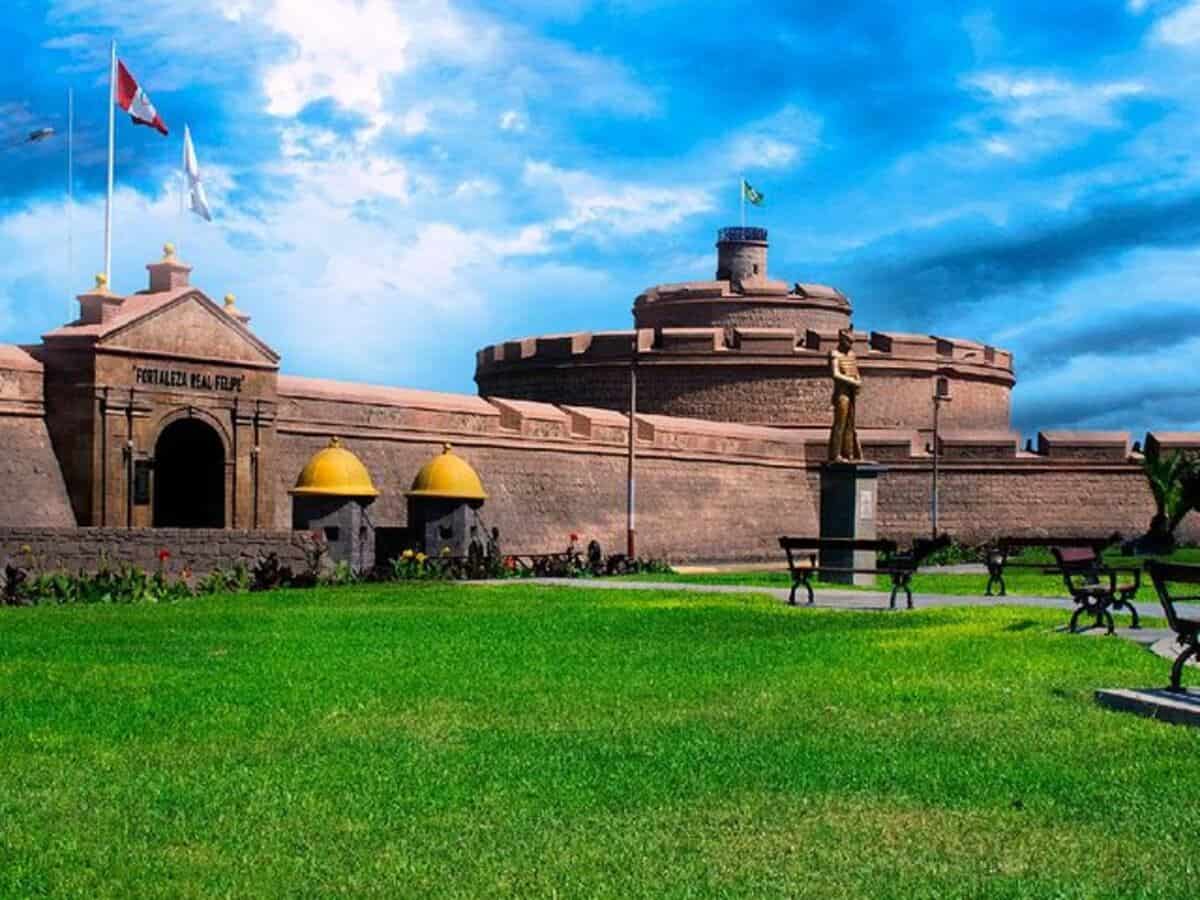
Real Felipe Fortress – Main Entrance and Fortifications
Exterior view of Real Felipe Fortress in Callao, showing the main entrance, defensive walls and one of the fortress's major towers. Construction began in 1747 following the destruction of Callao in the 1746 earthquake and tsunami. The photograph documents the historic military setting associated with later apparition and haunting traditions, not paranormal activity.
Status: Verified
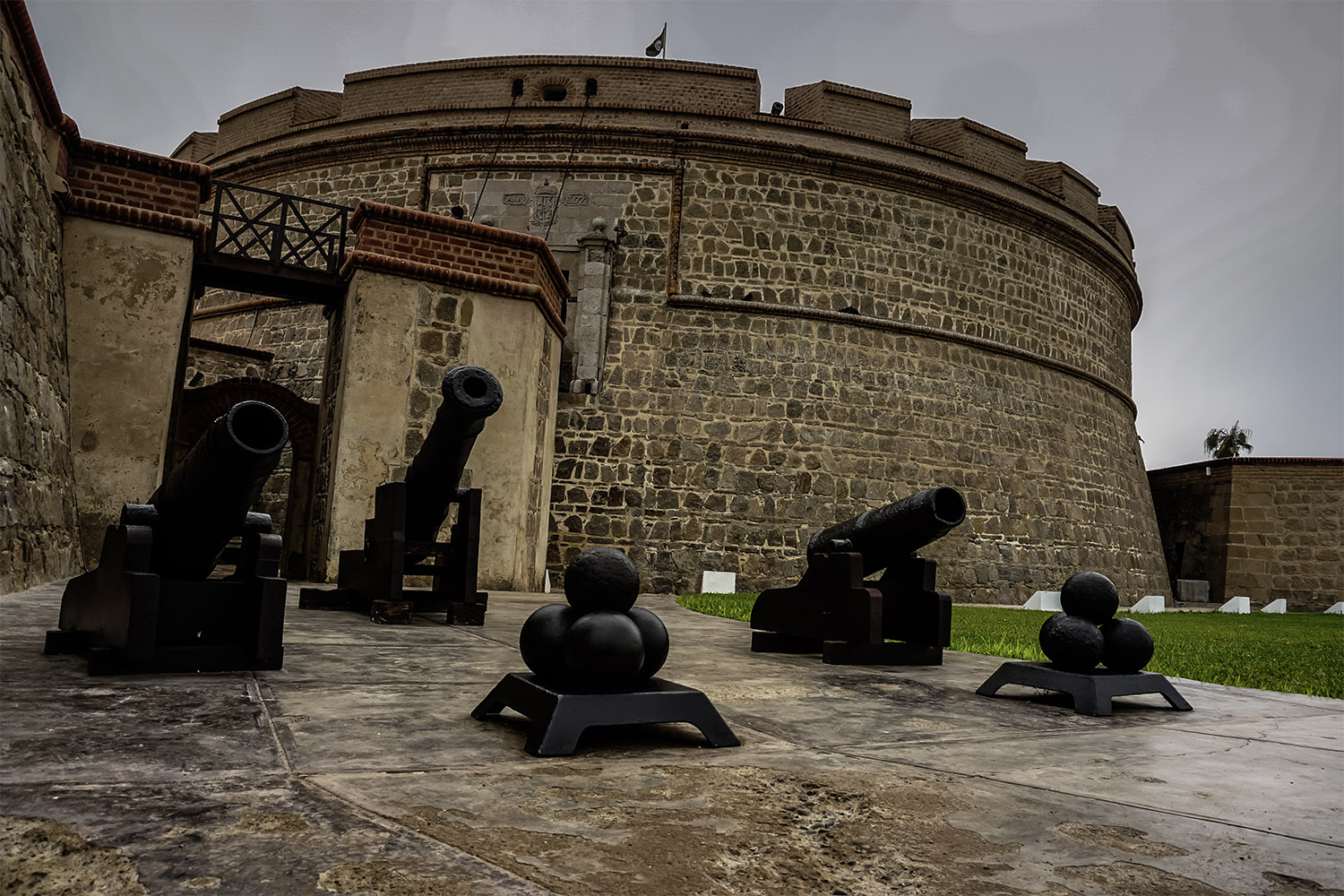
Real Felipe Fortress – Artillery and Defensive Tower
Historic artillery displayed within Real Felipe Fortress beside one of the complex's massive defensive towers. The surviving military architecture reflects the fortress's long defensive history and provides the physical setting for later traditions involving phantom soldiers, unexplained footsteps and apparitions. The photograph documents the historic site rather than the reported phenomena.
Status: Verified
Further reading
Continue exploring — Wikipedia, documentaries, podcasts, museum pages. Not treated as proof, and not independently verified by this archive.
Investigation timeline
- 2026-11-10 — Historical file submitted.
- 2026-11-10 — Research question opened
What is the earliest surviving written source describing paranormal activity at Real Felipe Fortress?
- 2026-11-10 — Research question opened
Can the alleged soldier suicide associated with the Torreón de la Reina be connected to an identifiable historical person or military record?
- 2026-11-10 — Research question opened
When does the Lady in White associated with the Torreón del Rey first appear in the written record?
- 2026-11-10 — Research question opened
When did the historically inaccurate story that Viceroy Manuel de Amat was imprisoned at Real Felipe enter the paranormal tradition?
- 2026-11-10 — Research question opened
Do museum or military archives contain incident reports concerning unexplained sounds, sightings or visitor experiences within the fortress?
- 2026-11-10 — Historical file accepted and published.
Assigned GG-2026-198
Research notes
Historical research: When a Ghost Is Given the Wrong Biography
The story claiming that Viceroy Manuel de Amat y Junyent was imprisoned at the Real Felipe Fortress demonstrates an important failure mode in historic haunting traditions. Amat is genuinely connected with the fortress, but as the viceroy under whose administration its construction progressed toward completion, not as a prisoner who died within its walls.
Once a historically recognizable name becomes attached to a ghost story, repeated versions can create the appearance of corroboration even when they ultimately derive from the same inaccurate narrative. The presence of a genuine historical figure does not rescue the historical accuracy of the supernatural biography assigned to the alleged apparition.
Future research should apply the same method to the fortress's other named spirits: first establish that the person existed, then independently establish the person's relationship with Real Felipe, then determine when that individual was first identified with a reported apparition. Only after those steps should a named ghost identity be treated as anything more than later attribution.
Open research questions
A specific gap in the file. An accepted source, research note, or further-reading link closes it.
What is the earliest surviving written source describing paranormal activity at Real Felipe Fortress?
Can the alleged soldier suicide associated with the Torreón de la Reina be connected to an identifiable historical person or military record?
When does the Lady in White associated with the Torreón del Rey first appear in the written record?
When did the historically inaccurate story that Viceroy Manuel de Amat was imprisoned at Real Felipe enter the paranormal tradition?
Do museum or military archives contain incident reports concerning unexplained sounds, sightings or visitor experiences within the fortress?
Propose evidence & media, a source citation, further reading, a research note, a correction, a related case, or a series link. Staff review before anything is added. An accepted correction does not replace the file by itself.