Activity period
- Earliest claimed event Circa 1810
- Earliest documented report Unknown
- Latest documented report Ongoing
- Pattern Recurring
Summary
The Morris-Jumel Mansion is Manhattan's oldest surviving house and one of New York City's better-documented historic haunting traditions. Built in 1765 for Roger Morris and later used by George Washington as a military headquarters during the Revolutionary War, the mansion subsequently became the long-term home of Stephen Jumel and Eliza Jumel. Reports associated with the property include apparitions, footsteps, voices, shadows and unexplained physical disturbances, with the best-known story involving school visitors in the 1960s who reportedly encountered a figure later identified from a portrait as Eliza Jumel. Unlike many historic haunting sites whose modern reputation rests largely on tourism literature, current mansion personnel continue to report unusual experiences and maintain records of activity, supporting an Active classification under Gothic.Black's documentation standard. The extensive testimony establishes a persistent and unusually well-recorded haunting tradition, while the identities and supernatural causes assigned to individual experiences remain unverified.
Background
The Morris-Jumel Mansion stands in Roger Morris Park in the Washington Heights section of Manhattan. Constructed in 1765 for British military officer Roger Morris and Mary Philipse Morris, the house occupied a commanding position over what was then largely countryside north of New York City. The surviving residence is generally regarded as Manhattan's oldest existing house and today operates as a historic house museum.
During the American Revolution, the mansion acquired one of its most important historical associations. George Washington used the property as a military headquarters during the New York campaign of 1776, while the building later passed through British and Hessian military use. That Revolutionary history is extensively documented and later supplied several identifiable historical figures around whom supernatural traditions could develop.
In 1810, merchant Stephen Jumel purchased the property with Eliza Jumel, who would become the historical resident most closely associated with its later haunting reputation. Later accounts state that Eliza Jumel herself considered the mansion haunted when the couple acquired it, sometimes adding that the alleged haunting affected negotiations over its purchase. Modern mansion personnel consequently trace the site's paranormal tradition to approximately 1810. Gothic.Black has not yet located a surviving contemporary 1810 document independently recording that claim, however, so the date is better treated as the earliest presently claimed period of activity rather than a securely established documentary starting point.
Eliza Jumel became one of the most unusual social figures associated with nineteenth-century New York. Coming from comparatively poor origins, she accumulated substantial wealth and remained closely connected with the mansion for decades. After Stephen Jumel's death in 1832, she briefly married former United States vice president Aaron Burr in 1833. Eliza Jumel ultimately died in 1865, but her long residence and distinctive public reputation made her the obvious identity later assigned to an unidentified female apparition at the house.
The mansion opened as a museum in the early twentieth century, and reports of unusual experiences continued among visitors and staff. The best-known individual apparition story dates from the 1960s, when a visiting school group reportedly encountered an older figure who appeared on a balcony and told the children to be quiet. According to later accounts, the curator arrived afterward, stated that the locked building had been empty, and the children then identified the person they had seen with a portrait of Eliza Jumel. The story is unusually specific for a historic-house apparition tradition, but the identification remains retrospective: witnesses first reported seeing a person and subsequently associated that person with Eliza Jumel.
Other traditions attach additional identities to reported figures. Modern accounts include a Hessian soldier, an unidentified servant, Aaron Burr and even George Washington. As with the Eliza Jumel identification, the historical reality of these people or their connection with the mansion does not independently establish that a later apparition represents them. Stories concerning a supposedly dead Hessian soldier or servant require their own documentary histories rather than borrowing credibility from the mansion's well-established Revolutionary and domestic past.
Paranormal investigation became a more visible part of the mansion's modern history during the twentieth century. Investigator and author Hans Holzer conducted séances at the property, including work during the 1960s that later became closely associated with the Eliza Jumel tradition. Such investigation is historically relevant because it contributed substantially to the public development of the mansion's haunted reputation, but séance testimony and mediumistic interpretation remain claims rather than independent confirmation of historical identities or supernatural causes.
Unlike many historic properties whose haunting reputations survive principally through older books and ghost tours, Morris-Jumel Mansion continues to produce reports involving museum personnel and visitors. In a 2023 interview with ABC7 New York, a museum public-programs manager described continuing reports of whispers, footsteps, shadows and unexplained physical disturbances. A 2026 interview with mansion programming personnel described continued paranormal investigation and a journal used to preserve experiences reported at the property. This continuing institutional record is sufficient for Gothic.Black to classify the phenomenon as Active while remaining neutral about the cause of those experiences.
The building itself remains essential context when evaluating those reports. Historic rooms, furniture, stairs, floors, doors and acoustics can produce ordinary movement and sounds capable of acquiring unusual interpretations, while visitors arriving specifically because of the mansion's haunted reputation may be primed to interpret ambiguous events through the existing folklore. Conversely, the survival of the original location allows repeated claims involving particular rooms or physical effects to be investigated rather than reconstructed from a demolished site.
The Morris-Jumel Mansion therefore offers an unusually useful haunting dossier. Its architectural history, Revolutionary associations and major residents are extensively documented, while the paranormal tradition has identifiable historical episodes, named witnesses or institutional representatives, twentieth-century investigation and continuing reports. That strength of documentation justifies a relatively high Gothic.Black rating without implying that apparitions, spirits or any particular historical identity have been independently established. The central research problem is determining when specific traditions first appeared, which modern experiences recur independently in the same locations, and where historical fact ends and later supernatural attribution begins.
Witness statement
No statement on file.
Evidence & media
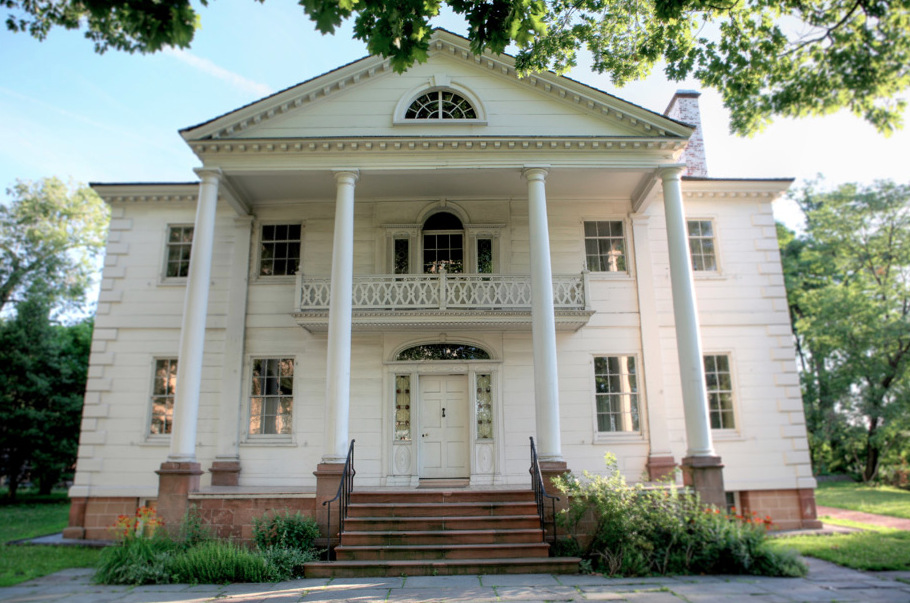
Morris–Jumel Mansion Exterior (Contemporary View)
Front exterior view of Morris–Jumel Mansion in Upper Manhattan. Constructed in 1765, the mansion served as a private residence and, during the American Revolution, briefly functioned as headquarters for George Washington. Today it operates as a historic house museum.
Status: Verified
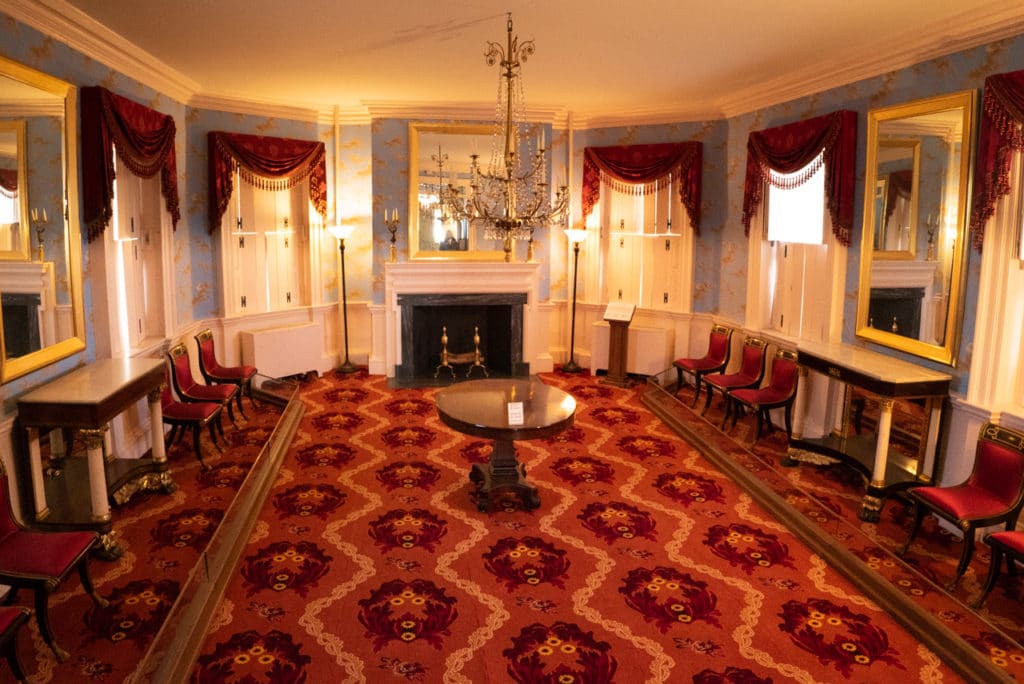
Octagon Room, Morris–Jumel Mansion
The Octagon Room inside Morris–Jumel Mansion. The distinctive shape and preserved period furnishings make it one of the mansion's most recognizable interior spaces. Reports of unusual experiences throughout the house are often associated with rooms that retain strong connections to the property's historic occupants.
Status: Verified
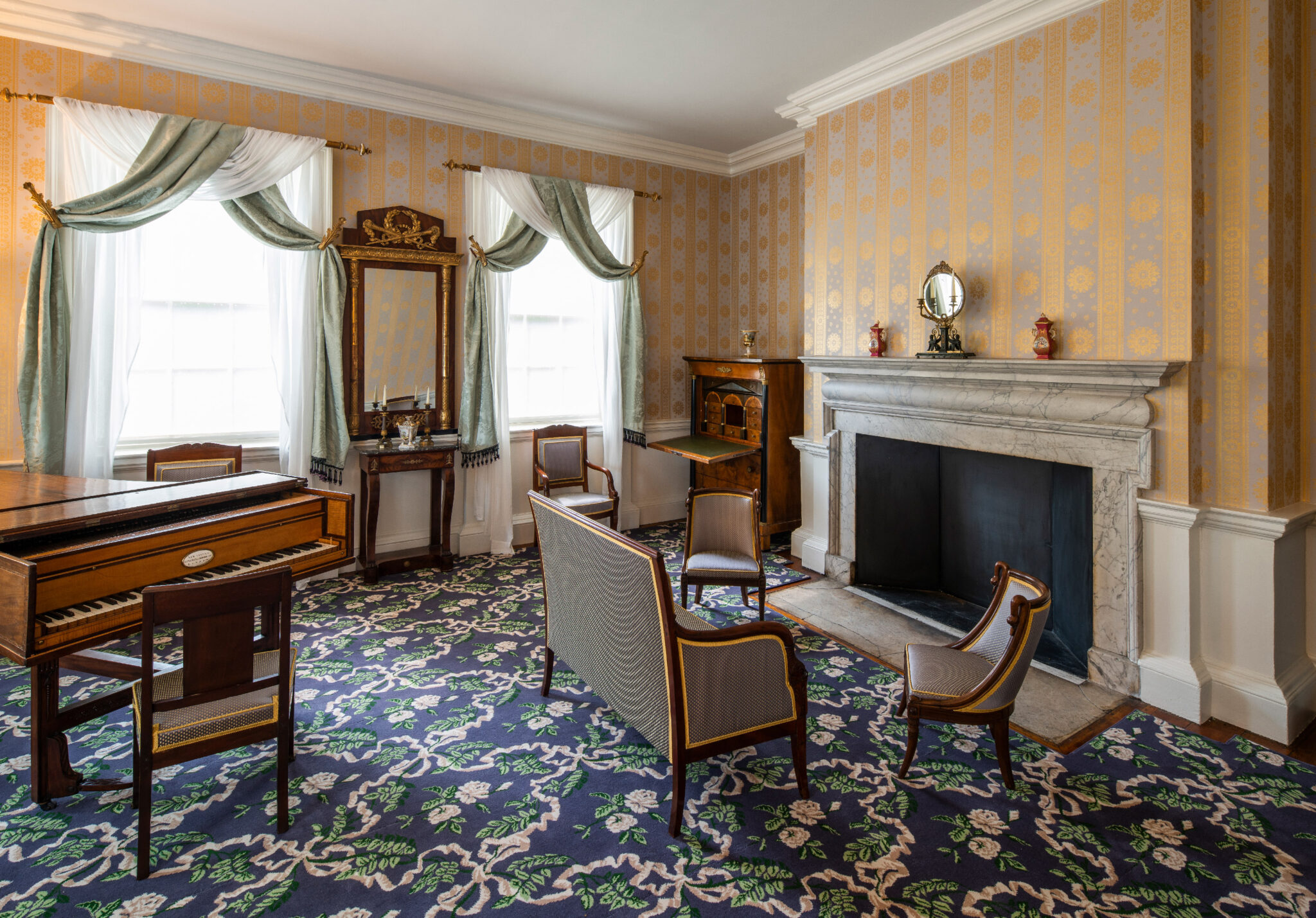
French Parlor, Morris–Jumel Mansion
The French Parlor at Morris–Jumel Mansion. The room contains period furnishings, decorative wall coverings, and architectural elements reflecting the mansion's long history as one of Manhattan's oldest surviving residences. Preserved spaces such as this contribute significantly to the mansion's historical character and are frequently featured during museum tours.
Status: Verified
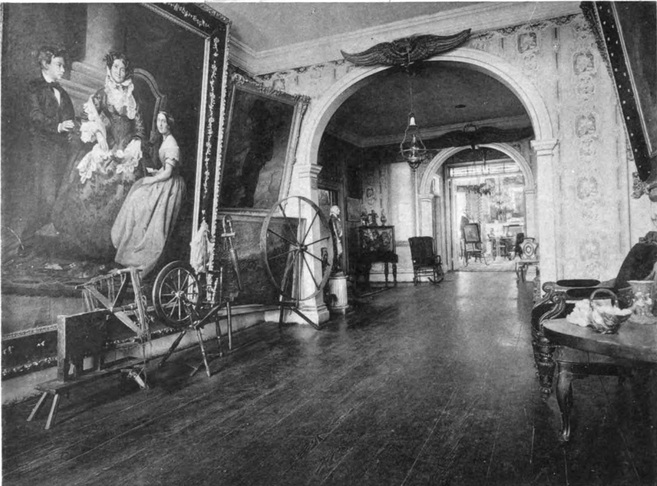
Hallway of the Morris–Jumel Mansion (1887)
Hallway of Morris–Jumel Mansion photographed in 1887 and later published in William H. Shelton's The Jumel Mansion (1916). The photograph provides a rare historic view of the mansion's interior, including period furnishings, artwork, and architectural features associated with the property's nineteenth-century occupancy.
Status: Verified
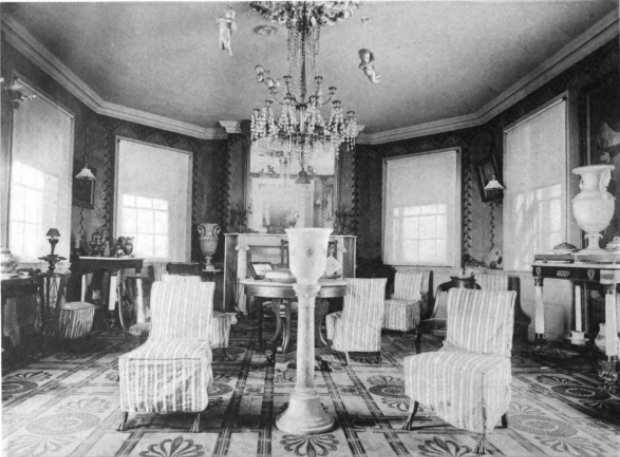
Octagon Room, Morris–Jumel Mansion (Circa 1887)
Octagon Room of Morris–Jumel Mansion, photographed circa 1887 and later reproduced in William H. Shelton's The Jumel Mansion (1916). The distinctive octagonal room was among the mansion's most recognizable interior spaces and contained period furnishings, decorative artwork, and architectural details associated with the residence's nineteenth-century occupancy. Historic images such as this provide valuable documentation of the mansion prior to its modern museum restoration and preservation effor
Status: Verified
Further reading
Continue exploring — Wikipedia, documentaries, podcasts, museum pages. Not treated as proof, and not independently verified by this archive.
Investigation timeline
- 2026-11-11 — Historical file submitted.
- 2026-11-11 — Research question opened
What is the earliest traceable haunting report associated with the Morris–Jumel Mansion?
- 2026-11-11 — Research question opened
When did Eliza Jumel first become identified as the mansion's primary apparition?
- 2026-11-11 — Research question opened
Which reported paranormal experiences can be linked to documented witness accounts?
- 2026-11-11 — Research question opened
How have museum tours and media coverage influenced the mansion's haunted reputation?
- 2026-11-11 — Research question opened
Are particular rooms within the mansion associated with recurring reports over multiple decades?
- 2026-11-11 — Historical file accepted and published.
Assigned GG-2026-200
Research notes
Historical research: Eliza Jumel and the Mansion's Ghost Tradition
No figure is more strongly connected to the paranormal folklore of the Morris–Jumel Mansion than Eliza Jumel. A wealthy and influential socialite, Eliza occupied the mansion during some of the most significant years of its nineteenth-century history and remains one of the property's most recognizable historical residents.
Modern haunting traditions frequently describe encounters with a woman believed to be Eliza moving through the mansion's halls and rooms. Reports vary considerably, with witnesses describing apparitions, unusual sensations, and unexplained encounters connected to areas of the house associated with her life.
An important research question concerns when these reports first emerged. Historical residency and later ghost tradition are not automatically the same thing. Determining when Eliza became associated with specific paranormal claims may help clarify the development of the mansion's folklore.
The key question is not simply whether visitors report a female apparition, but when that figure first became identified as Eliza Jumel. Early reports describing an unidentified person and later accounts naming Eliza should be treated as separate stages in the development of the tradition.
Open research questions
A specific gap in the file. An accepted source, research note, or further-reading link closes it.
What is the earliest traceable haunting report associated with the Morris–Jumel Mansion?
When did Eliza Jumel first become identified as the mansion's primary apparition?
Which reported paranormal experiences can be linked to documented witness accounts?
How have museum tours and media coverage influenced the mansion's haunted reputation?
Are particular rooms within the mansion associated with recurring reports over multiple decades?
Propose evidence & media, a source citation, further reading, a research note, a correction, a related case, or a series link. Staff review before anything is added. An accepted correction does not replace the file by itself.