GG-2026-205
Storsjöodjuret
- Phenomenon Cryptids & Unknown Zoology, Folklore & Cultural Encounters
- Documentation
Rating C
- A — Strong dossier: several independent sources plus primary evidence (original media, records, measurements) a researcher could use without interviewing anyone.
- B — Well documented: multiple independent witnesses with at least some contemporary primary material, or one witness with substantial primary corroboration (photos, recordings, contemporaneous notes, documents).
- C — Multi-source but soft: several witnesses or a long run of reports, but mostly testimony and after-the-fact secondary sources (newspapers, folklore collections, later interviews). Little or no primary physical evidence. Regional legend clusters such as the Bridgewater Triangle land here.
- D — Thin: single witness (or one household), little or no support beyond the account. Normal for a sincere personal experience.
- E — Incomplete or not yet assessed. Every new submission starts here until staff have read it.
- Evidence & media 2 items
- Status Historic
- Location Östersund, Jämtland County, Sweden · regional placement
Regional marker representing Lake Storsjön in Jämtland, the broad geographic setting of the Storsjöodjuret tradition and reported sightings. Accounts span multiple shores, communities and areas of the lake over several centuries; the marker does not identify an exact encounter or claimed creature location.
This file is placed as a region or body of water, not a single exact event location.
Activity period
- Earliest claimed event Circa 1635
- Earliest documented report 1635
- Latest documented report Unknown
- Pattern Recurring
Summary
Storsjöodjuret, literally the “Great Lake Monster,” is a legendary aquatic creature associated with Lake Storsjön in Jämtland, central Sweden. A written tradition involving a great serpent in the lake survives from 1635, while more recognizable eyewitness reports developed during the nineteenth century and eventually inspired an organized 1894 attempt to capture the animal with financial support from King Oscar II. Later witnesses have variously described serpentine bodies, humps, long necks, dark or grey coloration, and dog- or cat-like heads, although the descriptions are inconsistent and no verified specimen or diagnostic physical evidence has established an unknown species. The creature became so firmly embedded in regional culture that Jämtland authorities formally protected it from capture or harm in 1986, a regulation later challenged because the supposed species had never been scientifically verified and eventually revoked. Storsjöodjuret therefore represents an unusually well-documented intersection of old Swedish lake folklore, recurring eyewitness claims, cryptozoological investigation and regional cultural identity without confirmed evidence that an unknown large animal inhabits Storsjön.
Background
Lake Storsjön lies in Jämtland in central Sweden beside the city of Östersund. The lake reaches depths of approximately 90 metres and contains islands including Frösön, whose history became closely intertwined with the creature tradition. Stories of an unusual animal or serpent in Storsjön predate the modern cryptozoological idea of searching for an undiscovered species and instead developed within a much older Scandinavian folkloric landscape.
The earliest known written tradition dates to 1635. In a manuscript attributed to the clergyman Morten or Mogens Pedersen, the legendary rune-master Kettil Runske is said to have bound a great serpent within the lake through a magical inscription associated with the Frösö Runestone. A related tradition describes two trolls, Jata and Kata, brewing something in a cauldron until a strange creature with a black serpentine body and cat-like head emerged, entered the lake and grew to enormous size. Kettil Runske eventually subdued the creature with a spell supposedly represented on the runestone.
The Frösö Runestone itself is real, but the serpent represented on it should not be treated as archaeological evidence for Storsjöodjuret. Like many Scandinavian runestones, its inscription is contained within a stylized serpentine design, and its historical importance concerns the Christianization of Jämtland rather than documentation of an unknown lake animal. The later legend's interpretation of that serpent as the magically bound monster is therefore folklore attached to a genuine historical monument.
By the nineteenth century, the record increasingly shifted from mythological storytelling toward eyewitness-style claims. A newspaper report from July 1857 described workers at the Forssbacka ironworks seeing a creature whose head was described as black, gleaming and approximately the size of a large cat's head. Other sightings followed, and by the 1890s interest had developed sufficiently that the creature was increasingly discussed as a potentially physical animal rather than solely as a being of legend.
A particularly influential report occurred in 1893, when two young witnesses named Karin and Märta reportedly saw an animal near the water while washing clothes. Later accounts describe a rounded, hard-looking head resembling that of a dog, prominent ears, large eyes, powerful rear limbs or fins and a substantial tail. The creature reportedly moved rapidly toward shore after stones were thrown in its direction. Details vary among surviving versions, including disagreement over the precise body of water associated with the encounter, which illustrates the need to distinguish the original account from later standardized cryptid descriptions.
Growing public enthusiasm led residents of Östersund to establish a company in 1894 whose purpose was literally to catch the monster. The enterprise received support from King Oscar II and developed a substantial trap intended for use in the lake, reportedly baited with a pig. The effort failed to capture an unknown animal. The surviving trap later became part of the regional museum record, making the episode an unusually tangible example of nineteenth-century attempts to turn lake-monster folklore into zoological investigation.
Naturalist Peter Olsson subsequently collected eyewitness testimony and published twenty-two reports in 1899. Olsson favored the possibility that witnesses were encountering some form of unidentified aquatic mammal. This period is important because it marks a transition in interpretation: a creature that had existed within seventeenth-century magical and folkloric narratives was increasingly being approached through the language of natural history and unknown zoology.
Descriptions accumulated during the twentieth century but never resolved into a consistent anatomical profile. Witnesses variously described long serpentine bodies, multiple humps, long or short necks and heads compared with dogs, cats or other known animals. Reported sizes also vary substantially. Such differences do not prove that every witness was mistaken, but they create significant difficulty for attempts to reconstruct one biological species from the accumulated testimony.
Known animals and environmental conditions provide possible explanations for at least some reports. Swimming moose, groups of waterfowl, fish activity, logs, waves and wakes can all produce unexpected shapes in large bodies of water, particularly when observers lack a reliable reference for distance. Atmospheric and lighting conditions can further distort the apparent size or shape of an object near the surface. Those explanations should be applied incident by incident rather than used to declare every historical observation solved.
Storsjöodjuret achieved an unusually formal status in 1986 when the Jämtland County Administrative Board enacted regulations prohibiting the killing, injuring or capture of living animals identified as Storsjöodjuret and prohibiting damage to its eggs, roe or nest. Whatever the intent behind the decision, the legal protection was real rather than an invented “weird laws” story.
The regulation eventually produced an equally unusual legal challenge. In 2002, an applicant requested permission to collect Storsjöodjuret eggs and breed the creature. The environmental court rejected the request while questioning how a regulatory authority could protect a species that science had not verified. Sweden's Parliamentary Ombudsman subsequently examined the issue, and the protection was ultimately revoked after authorities reconsidered the regulation. The episode demonstrates how deeply a folkloric creature had become embedded within regional institutions without establishing that the underlying animal existed.
Technological searches continued into the twenty-first century. In 2008, cameras and thermal equipment were installed around the lake in an attempt to record anomalous activity. A film crew later publicized imagery interpreted as a heat-producing object moving through the water. Such recordings may document something moving within the lake, but without sufficient diagnostic detail they cannot distinguish an unknown animal from known wildlife, debris or other ordinary sources. A thermal target is evidence of a thermal target, not automatically evidence of Storsjöodjuret.
The creature today is inseparable from regional culture and tourism. Jamtli, Jämtland's county museum, preserves the history of the monster, including the nineteenth-century capture effort and accumulated sighting tradition. Viewing areas and other tourist infrastructure have also been established around the lake, while representations of Storsjöodjuret appear throughout the region. This cultural visibility documents the persistence of the tradition but should not be confused with continuing verified creature activity.
Storsjöodjuret therefore has two overlapping histories. One is the documented evolution of an old lake-serpent tradition through folklore, newspapers, organized hunts, natural-history speculation, legal protection and modern tourism. The other is the zoological proposition that an unidentified large animal inhabits Lake Storsjön. The first is unusually well documented. The second remains unsupported by a diagnostic photograph, specimen, genetic sample or other physical evidence capable of establishing a previously unknown species.
Witness statement
No statement on file.
Evidence & media
 Sweden's Great Lake Monster: The Untold Mystery of Storsjöodjuret
Documentary-style exploration of the Storsjöodjuret legend, examining historical accounts, eyewitness reports, local folklore, modern investigations, and skeptical interpretations surrounding Sweden's best-known lake-monster tradition.
Status: Verified
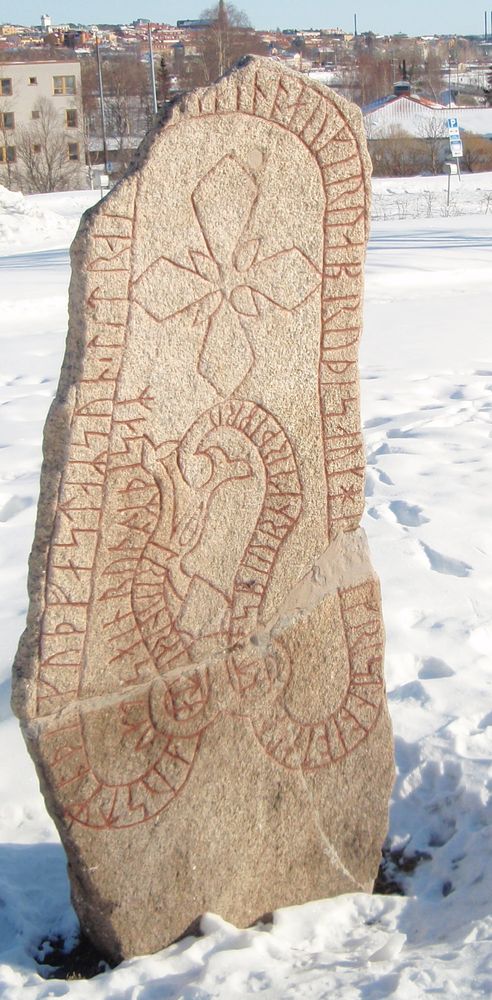
Frösö Runestone (Circa 1050 CE)
The Frösö Runestone, erected in the mid-eleventh century near Lake Storsjön in Jämtland, Sweden. According to a legend recorded in 1635, the creature known as Storsjöodjuret is said to be the serpent depicted on the stone. The association derives from later folklore traditions and is not part of the original runic inscription itself. The runestone remains one of the region's most significant historical monuments and is frequently cited in discussions of the Storsjöodjuret legend.
Status: Verified
Further reading
Continue exploring — Wikipedia, documentaries, podcasts, museum pages. Not treated as proof, and not independently verified by this archive.
Investigation timeline
- 2026-11-11 — Historical file submitted.
- 2026-11-11 — Research question opened
What is the earliest traceable eyewitness-style report describing a physical animal rather than a supernatural or folkloric being?
- 2026-11-11 — Research question opened
Can the original July 1857 newspaper report be recovered and compared with later summaries of the encounter?
- 2026-11-11 — Research question opened
Do Peter Olsson's original 1899 notes or complete witness accounts survive, and how closely do later cryptid descriptions match them?
- 2026-11-11 — Research question answered
Do Peter Olsson's original 1899 notes or complete witness accounts survive, and how closely do later cryptid descriptions match them?
- 2026-11-11 — Research question reopened following review.
- 2026-11-11 — Research question opened
What original technical data survive from the 2008 camera and thermal-monitoring project, and were the recorded targets independently analyzed?
- 2026-11-11 — Research question opened
Which modern sighting reports can be connected with identifiable witnesses, precise dates, photographs or contemporary documentation?
- 2026-11-11 — Historical file accepted and published.
Assigned GG-2026-205
Research notes
Historical research: When Did the Monster Become an Animal?
One of the most interesting features of Storsjöodjuret is the transition from supernatural folklore to cryptozoological interpretation. The 1635 tradition concerns magical binding, trolls and a serpent associated with a rune-master's spell. By the late nineteenth century, witnesses and investigators were increasingly discussing a potentially physical animal that might be captured and classified.
The 1894 capture company and Peter Olsson's 1899 collection of twenty-two eyewitness accounts mark particularly important stages in this transition. The creature was no longer merely an actor in traditional narrative. Local investigators were attempting to transform the tradition into an empirical zoological question.
Future research should therefore compare the physical characteristics recorded in nineteenth-century witness testimony against seventeenth- and eighteenth-century folkloric descriptions. If dog-like heads, humps, long necks or other familiar cryptid features became prominent only after zoological interest developed, that would reveal how interpretation reshaped the monster without requiring either the earlier folklore or later witnesses to be dismissed.
Open research questions
A specific gap in the file. An accepted source, research note, or further-reading link closes it.
What is the earliest traceable eyewitness-style report describing a physical animal rather than a supernatural or folkloric being?
Can the original July 1857 newspaper report be recovered and compared with later summaries of the encounter?
Do Peter Olsson's original 1899 notes or complete witness accounts survive, and how closely do later cryptid descriptions match them?
What original technical data survive from the 2008 camera and thermal-monitoring project, and were the recorded targets independently analyzed?
Which modern sighting reports can be connected with identifiable witnesses, precise dates, photographs or contemporary documentation?
Propose evidence & media, a source citation, further reading, a research note, a correction, a related case, or a series link. Staff review before anything is added. An accepted correction does not replace the file by itself.