GG-2026-099
Skunk Ape
- Phenomenon Cryptids & Unknown Zoology
- Documentation
Rating C
- A — Strong dossier: several independent sources plus primary evidence (original media, records, measurements) a researcher could use without interviewing anyone.
- B — Well documented: multiple independent witnesses with at least some contemporary primary material, or one witness with substantial primary corroboration (photos, recordings, contemporaneous notes, documents).
- C — Multi-source but soft: several witnesses or a long run of reports, but mostly testimony and after-the-fact secondary sources (newspapers, folklore collections, later interviews). Little or no primary physical evidence. Regional legend clusters such as the Bridgewater Triangle land here.
- D — Thin: single witness (or one household), little or no support beyond the account. Normal for a sincere personal experience.
- E — Incomplete or not yet assessed. Every new submission starts here until staff have read it.
- Evidence & media 2 items
- Status Active
- Location Everglades region, Florida
Summary
The Skunk Ape—often referred to as the "Swamp Ape" or "Florida Bigfoot"—is an alleged large, bipedal, ape-like cryptid purported to inhabit the dense, subtropical wetlands of the Florida Everglades and Big Cypress National Preserve. Standing between 6 to 7 feet tall and covered in matted, reddish-brown fur, the entity is defined primarily by its overpowering, sulfurous odor—frequently likened to rotting garbage, swamp gas, or skunk spray—which witnesses report noticing prior to visual contact. While indigenous Seminole and Miccosukee traditions describe similar swamp-dwelling entities (such as the Esti Capcoki), modern public interest peaked during the 1970s following localized surges in reported sightings and track discoveries. The case gained worldwide media attention in 2000 with the mailing of the anonymous "Myakka Skunk Ape photographs," showing a large, ape-like figure crouching in palmetto brush. Despite decades of field investigations, wildlife camera deployments, and public fascination, mainstream zoology attributes the phenomenon to escaped exotic primates, misidentified black bears, and regional folklore.
Background
Historical Development & The 1970s Surge
Reports of large, bipedal hairy creatures in the southeastern United States span native tradition and modern municipal reports:
Indigenous & Pioneer Roots: Seminole and Miccosukee oral traditions describe the Esti Capcoki ("tall man" or "giant"), a secretive, hairy swamp dweller. Early European settlers in the 19th century similarly recorded encounters with "wild men" in the Big Cypress swamps.
The 1970s Outbreak (Dade and Broward Counties): In the summer of 1977, a rash of sightings occurred along the fringes of the Everglades. Residents in suburban Miami and Collier County reported a foul-smelling, 7-foot tall creature disturbing livestock, crossing highways, and leaving behind two-toed and four-toed footprints in mud banks.
Dave Shealy & The Skunk Ape Research Headquarters: Ochopee resident Dave Shealy became the foremost public proponent of the creature's existence, claiming his first sighting in 1974 at age 10. Shealy established the Skunk Ape Research Headquarters in Ochopee, Florida, documenting track casts, fur samples, and sighting reports across the Everglades basin.
Timeline of Key Events
├── 1970s : Outbreak of reports in South Florida; police logs record high volume of "swamp monster" calls.
├── Dec 2000 : Anonymous Sarasota County resident mails the "Myakka Skunk Ape" photographs to police.
├── 2000s–Present: Widespread deployment of trail cameras across Big Cypress yields no verified specimens.
└── Present : Maintained under Gothic.Black as a Regional Cryptid / Unverified Zoological Anomaly.
The 2000 Myakka Photos & Physical Evidence
The physical record of the Skunk Ape relies heavily on ambiguous photographs, footprint casts, and hair samples:
The Myakka Photographs (December 2000): The Sarasota County Sheriff's Department received two anonymous photographs enclosed with a letter from an elderly woman claiming a large, ape-like creature had been stealing apples from her backyard porch over three consecutive nights. The photographs show a dark, hairy figure with deep-set, yellow-reflecting eyes crouching behind saw palmetto fronds.
Photographic Debate: Skeptics and primatologists analyzed the Myakka images, pointing out that the face and fur structure closely match an escaped escaped or staged orangutan (Pongo) costume/specimen. However, no individual ever came forward to claim responsibility for a hoax, leaving the photos a focal point of online cryptid discussions.
Environmental Odor: Witnesses consistently report a pungent, nauseating stench. Investigators note that the swamp environment itself—rich in anaerobic decay, hydrogen sulfide emissions, and decaying organic matter—frequently coats local fauna in pungent sulfur compounds.
Witness statement
No statement on file.
Evidence & media
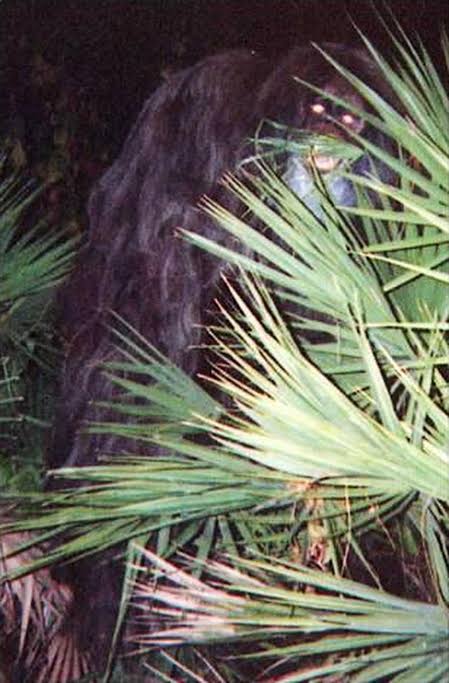 Dec 2000, picture sent to police depicted what appeared to be a hairy beast the author said had repeatedly visited her back porch to steal apples.
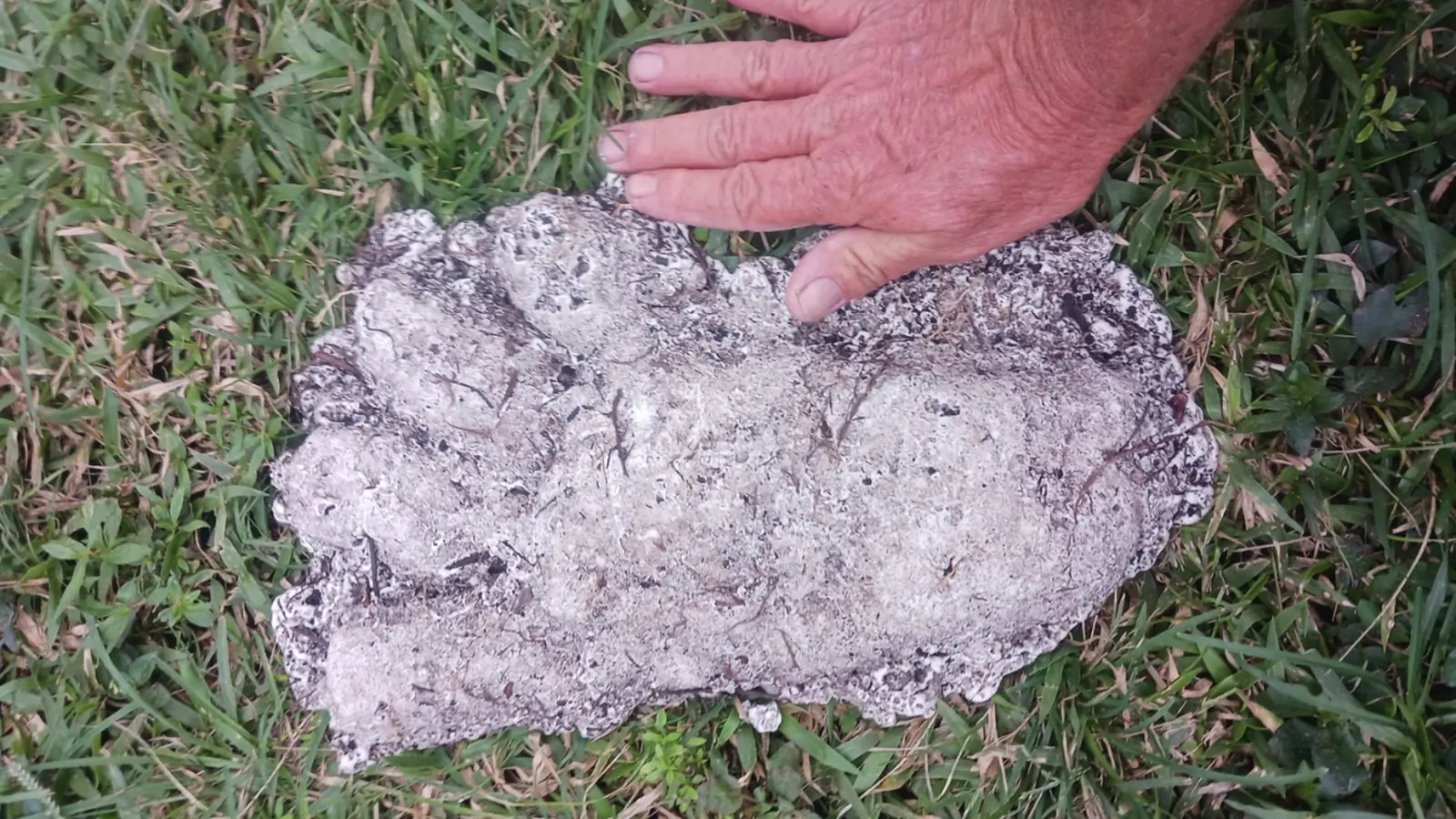 An alleged footprint of a Skunk Ape that Dave Shealy claims to have found.
Investigation timeline
- 2026-09-30 — Historical file submitted.
- 2026-09-30 — Historical file accepted and published.
Research notes
Historical research: Ecological Carrying Capacity, Primatology, and Misidentification Candidates
From a zoological and ecological standpoint, the existence of an undiscovered breeding population of large primates in South Florida faces severe biological constraints.
Primate physiology requires significant land range, high caloric intake, and genetic diversity to sustain a viable population over centuries. Florida's ecosystem lacks native hominids or apes; however, the state has a well-documented history of escaped exotic wildlife. During the mid-to-late 20th century, thousands of primates (such as rhesus macaques, chimpanzees, and orangutans) were imported for research, roadside attractions, and the pet trade—many escaping into the wild during major hurricanes (e.g., Hurricane Andrew in 1992). Primatologists note that an escaped, displaced orangutan or large chimp living in the warm, wet climate of the Everglades would closely mirror the physical appearance, vocalizations, and solitary behavior attributed to the Skunk Ape.
Historical research: Olfactory Misattribution, Wetland Methane Outgassing, and Regional Identity
From an anthropological perspective, the Skunk Ape serves as a quintessential example of regional identity and environmental folklore.The defining characteristic of the Skunk Ape—its overpowering smell—is chemically linked to the wetland environment. The Florida Everglades' deep peat beds routinely release trapped hydrogen sulfide ($H_2S$) and methane gas when disturbed. A witness encountering an unexpected animal (such as a Florida black bear, Ursus americanus floridanus, mangy or covered in swamp muck) while simultaneously inhaling a pocket of marsh gas experienced a combined sensory overload. This sensory pairing creates a vivid, memorable narrative that reinforces regional "swamp lore" and tourism folklore.
Propose evidence & media, a source citation, further reading, a research note, a correction, a related case, or a series link. Staff review before anything is added. An accepted correction does not replace the file by itself.