GG-2026-119
Owlman of Mawnan
- Phenomenon Cryptids & Unknown Zoology
- Documentation
Rating C
- A — Strong dossier: several independent sources plus primary evidence (original media, records, measurements) a researcher could use without interviewing anyone.
- B — Well documented: multiple independent witnesses with at least some contemporary primary material, or one witness with substantial primary corroboration (photos, recordings, contemporaneous notes, documents).
- C — Multi-source but soft: several witnesses or a long run of reports, but mostly testimony and after-the-fact secondary sources (newspapers, folklore collections, later interviews). Little or no primary physical evidence. Regional legend clusters such as the Bridgewater Triangle land here.
- D — Thin: single witness (or one household), little or no support beyond the account. Normal for a sincere personal experience.
- E — Incomplete or not yet assessed. Every new submission starts here until staff have read it.
- Evidence & media 3 items
- Status Historic
- Location Mawnan, Cornwall, England
- Occurred 17 April 1976
Summary
The Owlman of Mawnan is one of Britain's most unusual cryptid legends. First reported in April 1976 near Mawnan, Cornwall, England, the creature was described as a large winged humanoid with glowing eyes, clawed feet, and an owl-like appearance. The case became closely associated with the church of St. Mawnan and St. Stephen and investigator Tony "Doc" Shiels. Despite numerous claims and decades of discussion, the creature remains unverified.
Background
The Initial Flap (April – August 1976)
The Melling Encounter (April 17, 1976): June Melling (aged 12) and her sister Vicky (aged 9) were playing near the woods of St. Mawnan Church while their family prepared a picnic. The girls fled back to their parents in hysteria, describing a "huge bird-man" hovering motionless above the church tower. Disturbed by his daughters' trauma, their father, Don Melling, cut the family holiday short. He provided a drawing executed by June to local showman Tony "Doc" Shiels.
The July/August Wave: On July 3, 1976, 14-year-old Sally Chapman and a friend were camping near Mawnan Woods when they reportedly saw a 5-foot-tall grey entity with glowing eyes and wide clawed feet perched in a tree. The entity rose straight into the air without flapping its wings. In August 1976, three visiting French tourists reported seeing the creature watching them from a branch near the church grounds before ascending vertically into the sky.
Later Sightings (1989 & 1995): The case saw brief resurgence years later. In 1989, a witness reported a 4-foot-tall entity with two large front-facing toes ducking and taking flight near the woods. In August 1995, an American marine biology student sent a letter to the Western Morning News, claiming to have encountered a "ghastly vision from hell"—a birdman with red eyes, pointed ears, and large black claws—in the track behind Mawnan Church.
Timeline of the Mawnan Flap
├── Apr 17, 1976 : June & Vicky Melling spot the Owlman over St. Mawnan Church tower.
├── Jul–Aug 1976 : Subsequent reports by Sally Chapman & visiting French tourists.
├── 1976–1978 : Tony "Doc" Shiels publishes drawings & case accounts in Fortean Times.
├── 1989 : Karl Shuker logs a report describing zygodactyl foot traits.
└── Aug 1995 : American tourist reports a close-range encounter near the church track.
The Anomaly Profile
Witness descriptions of the Owlman maintained surprising consistency across reports:
Morphology: Height estimated between 4 and 5 feet, covered in ash-grey or brownish feathers with a flat, predatory "owl face," pointed ears or horns, and wide, burning red eyes.
Locomotion: Capable of vertical lift-off without visible wing beating. Witnesses noted a high-pitched metallic or static hiss emanating from the trees following its departure.
Foot Structure: Notable for having long bird-like legs terminating in two large front toes and black claws—a feature key to zoological analysis.
Witness statement
No statement on file.
Evidence & media
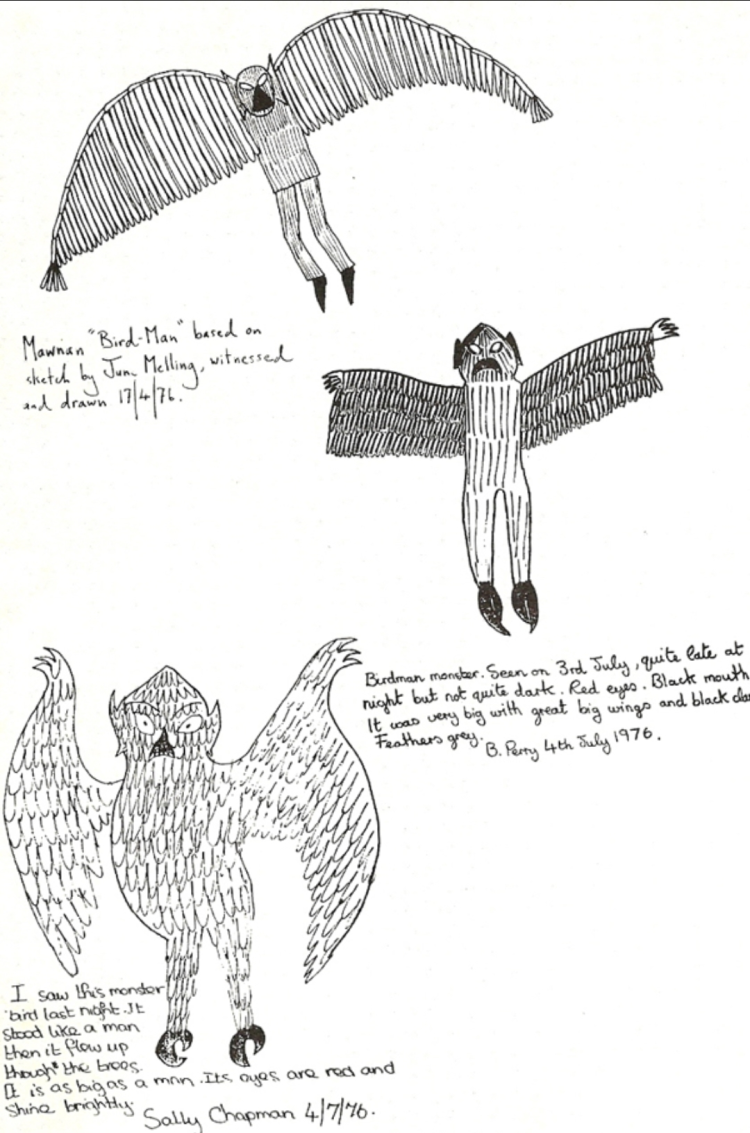 Images drawn by witnesses.
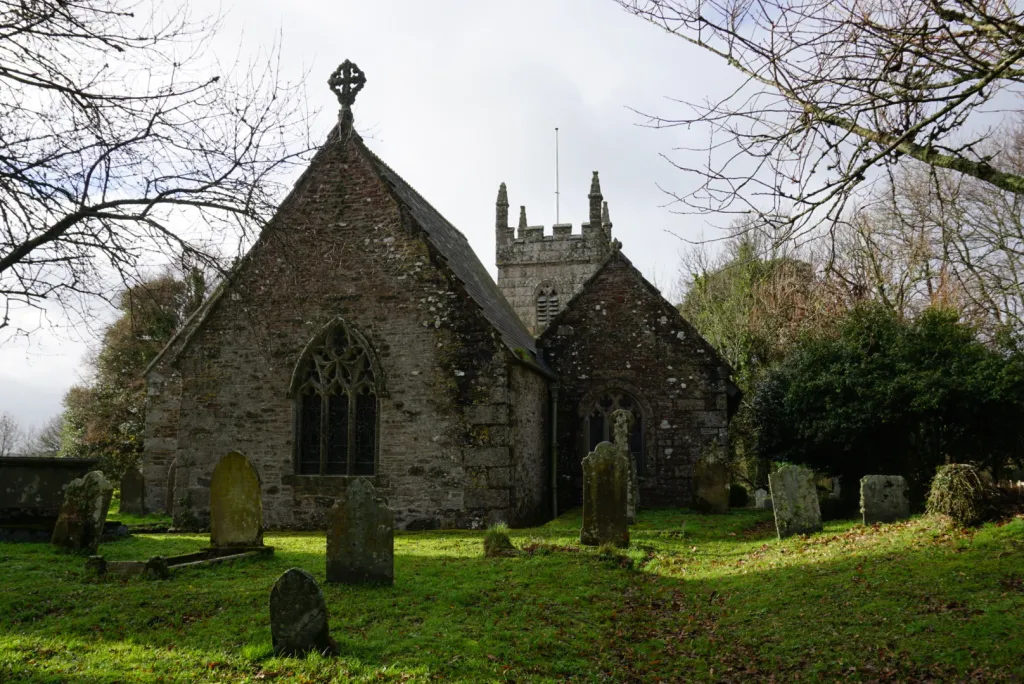 Mawnan Church
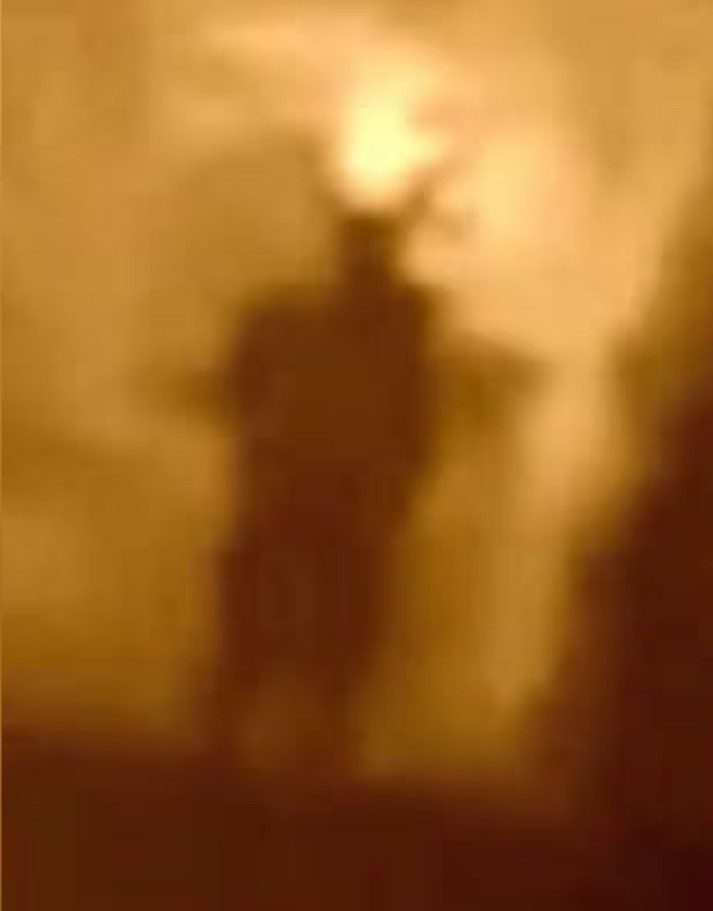 Mark Davies claims to captured the Owlman in 2019.
Investigation timeline
- 2026-10-08 — Historical file submitted.
- 2026-10-09 — Historical file accepted and published.
Research notes
Historical research: Tyto alba & Bubo bubo Misidentification Mechanics
From an ornithological perspective, the core features of the Owlman correspond closely with escaped or native raptor species observed under extreme low-light conditions:
Eurasian Eagle-Owl (Bubo bubo): Featuring prominent ear tufts, large orange/red eyes, a wingspan exceeding 5.5 feet, and an aggressive territorial response when nesting near elevated stone structures (such as church spires). An escaped Eagle-Owl resting atop a 30-foot church tower in twilight would easily present a terrifying, humanoid-proportioned silhouette to young observers.
Zygodactyl Foot Arrangement: Zoologist Dr. Karl Shuker noted that the 1989 witness description of "two distinct front toes" precisely matches zygodactyly—the anatomical arrangement found in owls, where two toes face forward and two backward. This detail strongly anchors the physical origin of the entity in the order Strigiformes.
Historical research: Fortean Surrealism, Monster Hoaxes, and Psychogeography
Critical evaluation of the Owlman case cannot be separated from Anthony "Doc" Shiels, a theatrical magician, surrealist artist, and self-styled "Wizard of the West":
Parallel Phenomena: At the exact same time the Owlman appeared in 1976, Shiels was actively promoting sightings of Morgawr—a alleged sea serpent in the nearby Falmouth Bay—and staging filmed magical rituals to "summon" monsters for television crews.
Chain of Custody: Shiels served as the sole intermediary for the original Melling drawings and early press releases. Investigators have long debated whether Shiels either fabricated the Melling sketches outright or actively primed impressionable local youths through theatrical hoaxes using wooden cutouts, theatrical props, or elevated mannequins hidden in the dense Mawnan foliage.
Propose evidence & media, a source citation, further reading, a research note, a related case, or a series link. Staff review before anything is added.