GG-2026-007
Allagash Abduction Claims
- Phenomenon UFOs/UAPs, Spatiotemporal Anomalies (Missing Time)
- Documentation
Rating C
- A — Strong dossier: several independent sources plus primary evidence (original media, records, measurements) a researcher could use without interviewing anyone.
- B — Well documented: multiple independent witnesses with at least some contemporary primary material, or one witness with substantial primary corroboration (photos, recordings, contemporaneous notes, documents).
- C — Multi-source but soft: several witnesses or a long run of reports, but mostly testimony and after-the-fact secondary sources (newspapers, folklore collections, later interviews). Little or no primary physical evidence. Regional legend clusters such as the Bridgewater Triangle land here.
- D — Thin: single witness (or one household), little or no support beyond the account. Normal for a sincere personal experience.
- E — Incomplete or not yet assessed. Every new submission starts here until staff have read it.
- Evidence & media 3 items
- Status Historic
- Location Eagle Lake, Maine · regional placement
- Occurred 1 August 1976
Regional marker for Eagle Lake in the Allagash Wilderness Waterway. The pin does not represent a verified exact position of the reported 1976 encounter.
This file is placed as a region or body of water, not a single exact event location.
Activity period
- Earliest claimed event 26 August 1976
- Earliest documented report Unknown
- Latest documented report 26 August 1976
- Pattern Single event
Summary
In August 1976, four art students canoeing the Allagash Wilderness Waterway in Maine reported a strange bright light while night-fishing on Eagle Lake. Years later, under hypnotic regression, they described alleged alien abduction — missing time, a craft, and medical examinations by non-human beings. The case became one of the best-known multiple-witness abduction accounts in the United States. The men have largely stood by their story; critics point to hypnosis, later cultural exposure to abduction narratives, and the lack of independent physical evidence. The file remains disputed and unresolved.
Background
The Allagash case centers on four friends — brothers Jack and Jim Weiner, Chuck Rak, and Charlie Foltz — art students who took a wilderness canoe trip through the remote Allagash Wilderness Waterway in northern Maine in August 1976.
According to their later accounts, the incident happened while they were fishing at night on Eagle Lake. They reported a bright object in the sky that seemed unusually large and intense. They say they signaled it with a flashlight; the object appeared to respond and move toward them. They later described confusion about the sequence and claimed missing time before finding themselves farther from their starting point than expected. At first the episode was remembered mainly as a strange aerial sighting, not as an abduction.
Several years afterward, one of the men reportedly began having disturbing dreams tied to the trip. As the group compared notes, overlapping details emerged. In the late 1980s they underwent hypnotic regression. In those sessions they described being taken aboard a craft and examined by non-human entities. The fuller narrative that came out of hypnosis included missing time, transport onto a craft, medical procedures, humanoid beings, and shared or mutually reinforcing recollections among the four. That material turned a UFO sighting claim into a full abduction claim and drew national attention through television, books, magazines, and UFO research circles. It remains one of the best-known named, multiple-witness abduction reports in American ufology.
One reason the case still draws interest is that all four principal witnesses have largely maintained the core story for many years. Unlike some famous UFO cases where accounts shifted sharply or a key witness later walked the story back, the Allagash men generally kept supporting the main narrative. Supporters treat that consistency as a strength. Critics note that consistency alone cannot prove that memories recovered under hypnosis match historical events — once a story settles inside a close group, recollections can stabilize whether or not the events happened as later described.
Hypnosis is the central evidentiary problem. In the 1970s and 1980s, hypnotic regression was widely used in abduction research in the hope of recovering buried memory. Later work in psychology raised serious concerns: hypnosis can raise confidence in what is recalled, introduce suggestion, help create false memories, blend imagination with recollection, and leave people less able to tell reconstructed material from lived experience. Memories recovered mainly through hypnosis are therefore not generally treated as reliable evidence on their own. That does not prove the Allagash witnesses invented their experiences. It does mean the most dramatic elements of the case come from a method many researchers now treat cautiously.
The timing matters for interpretation. Between the 1976 sighting and the late-1980s sessions, books and media about alleged alien abduction had become much more common. Some researchers ask whether that cultural backdrop shaped how an unusual wilderness experience was later understood. Supporters answer that similarities to other abduction reports may point to a shared underlying phenomenon. Either reading can fit the facts on hand.
No independently verified physical evidence has confirmed an abduction: no photographs of an abduction event, no verified biological samples, no confirmed landing traces, and no independently documented medical findings that tie the witnesses to a non-human encounter. The strongest material remains testimony and the long-term consistency of the participants. The weakest is the gap between those extraordinary claims and any physical corroboration.
Witness statement
No statement on file.
Evidence & media
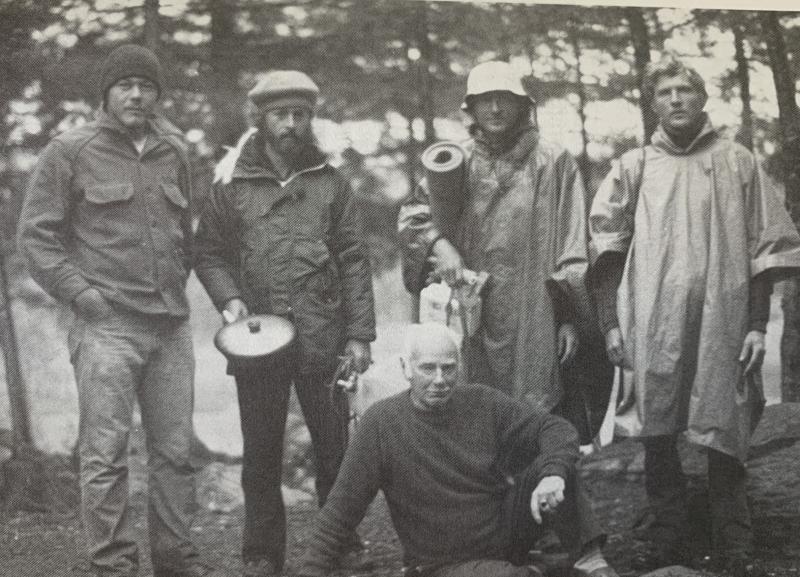 From left to right in back: Charlie Foltz, Chuck Rak, and the Weiner twins. Seated man came out of the woods, stayed for awhile, left, and never gave his name.
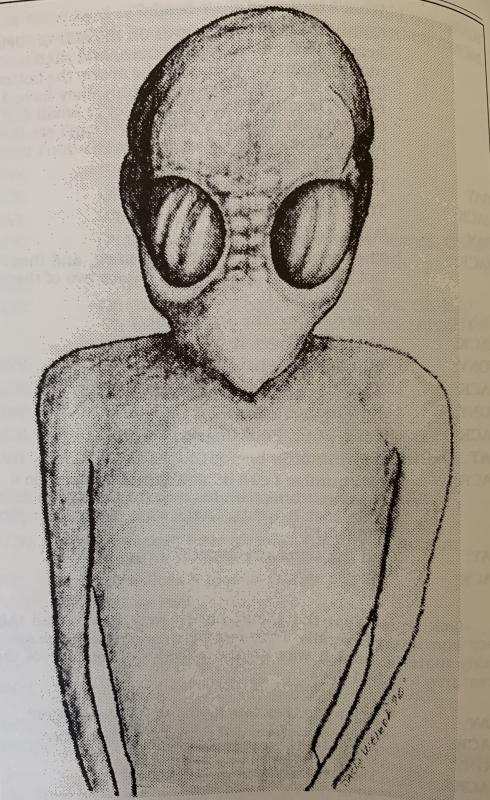 Jack Weiner's drawing
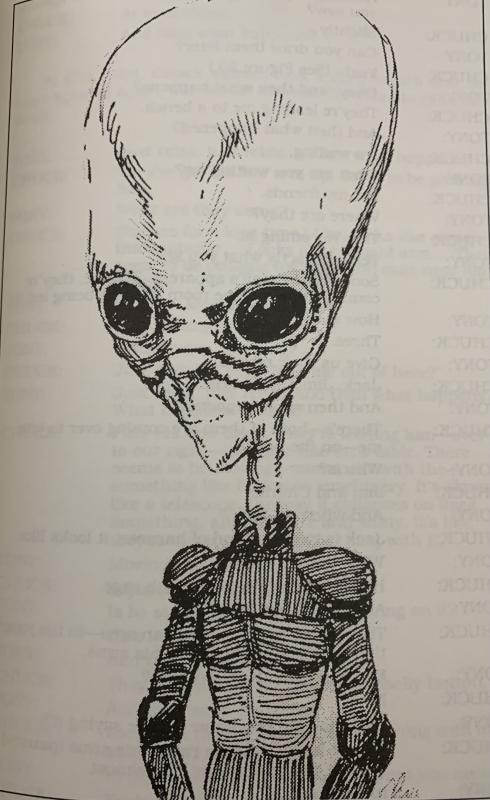 Chuck Rak's drawing
Investigation timeline
- 2026-09-21 — Historical file submitted.
- 2026-09-21 — Historical file accepted and published.
Research notes
Historical research: Multiple Witnesses, Extraordinary Claims
The Allagash case sits in an awkward middle ground in UFO history. Several features make it stronger than many abduction reports: multiple named witnesses, an original sighting claim with a fairly clear trip timeline, long-term consistency, and men who put their real names and reputations on the account rather than hiding behind anonymity.
Those strengths do not establish alien abduction. The detailed abduction narrative emerged years after the canoe trip and was developed through hypnotic regression. Modern memory research raises substantial doubts about treating such recovered material as literal history. No independent physical evidence corroborates the extraordinary claims that came out of hypnosis.
What is well supported is narrower and still important: four men reported an unusual event on a Maine canoe trip and later became convinced they had been abducted by non-human entities. That arc — sighting claim, later hypnosis, public abduction narrative — is documented.
What the present record does not establish is that an extraterrestrial craft was involved, that a physical abduction occurred, that the hypnotically recovered scenes are accurate historical memory, or that any non-human intelligence interacted with them.
Open questions remain: what, exactly, did they see over Eagle Lake; whether genuine missing time occurred; how much of the later story is memory versus reconstruction; whether an unusual but conventional event was reinterpreted as abduction over time; and, if something extraordinary did happen, what its nature was. The evidence on file does not answer those conclusively. Preserve the testimony; do not promote the hypnosis narrative as verified fact, and do not dismiss the original sighting claim merely because the later abduction reading is unproven.
Open research questions
A specific gap in the file. An accepted source, research note, or further-reading link closes it.
Establish the earliest contemporary documentation of the four men's 1976 UFO sighting.
Establish when the abduction interpretation first entered the record, separately from the original unusual-light sighting.
Propose evidence & media, a source citation, further reading, a research note, a correction, a related case, or a series link. Staff review before anything is added. An accepted correction does not replace the file by itself.