GG-2026-154
Campeche Mexican Air Force Infrared Lights
- Phenomenon UFOs/UAPs
- Documentation
Rating B
- A — Strong dossier: several independent sources plus primary evidence (original media, records, measurements) a researcher could use without interviewing anyone.
- B — Well documented: multiple independent witnesses with at least some contemporary primary material, or one witness with substantial primary corroboration (photos, recordings, contemporaneous notes, documents).
- C — Multi-source but soft: several witnesses or a long run of reports, but mostly testimony and after-the-fact secondary sources (newspapers, folklore collections, later interviews). Little or no primary physical evidence. Regional legend clusters such as the Bridgewater Triangle land here.
- D — Thin: single witness (or one household), little or no support beyond the account. Normal for a sincere personal experience.
- E — Incomplete or not yet assessed. Every new submission starts here until staff have read it.
- Evidence & media 2 items
- Status Historic
- Location Campeche, Mexico · regional placement
- Occurred 5 March 2004
Regional marker representing the Bay of Campeche and Ciudad del Carmen area associated with the March 5, 2004 Mexican Air Force surveillance flight. The mission covered a broad route between southern Mexico and Campeche, while the infrared sources were viewed at long range and lacked independently measured positions. This marker should not be interpreted as the precise location of the recorded lights or a confirmed flight track.
This file is placed as a region or body of water, not a single exact event location.
Activity period
- Earliest claimed event 5 March 2004
- Earliest documented report 11 May 2004
- Latest documented report 12 May 2004
- Pattern Single event
Summary
On March 5, 2004, a Mexican Air Force Merlin C-26A surveillance aircraft recorded multiple bright infrared sources during a counter-narcotics patrol over southern Mexico and the Campeche region. The famous group, at times numbering as many as eleven sources, appeared on the aircraft's Star SAFIRE II forward-looking infrared system but was not visible to the crew through the aircraft windows. Separate radar contacts were also discussed during the flight, although the surviving public material does not establish that the radar returns corresponded with the principal infrared grouping. The Mexican Defence Ministry authenticated the footage as a genuine military recording and authorized its public release through journalist and UFO investigator Jaime Maussan in May 2004. Subsequent technical analyses identified continuously burning gas flares at offshore oil platforms in the Bay of Campeche as the strongest explanation for the main infrared sequence. The recording is therefore authentic military sensor evidence, but authenticity does not establish that the sources were nearby aircraft, intelligently controlled objects or extraterrestrial craft.
Background
On March 5, 2004, a Mexican Air Force Merlin C-26A assigned to the 501st Air Squadron was conducting a routine counter-narcotics surveillance mission over southern Mexico. The aircraft carried an APS-143 search radar and a Star SAFIRE II forward-looking infrared imaging system designed to detect aircraft, boats and other heat-producing targets.
During the mission, the crew began tracking reported contacts while flying between the Chiapas and Campeche regions. The publicly released recording contains cockpit conversation concerning radar targets and attempts by the infrared operator to locate and follow unusual heat sources. At later points in the recording, the FLIR system displayed a grouping of bright sources, with as many as eleven visible in a single frame.
The principal infrared grouping was not visible through the aircraft windows. The crew observed the lights on the sensor display and attempted to interpret their apparent movement relative to the aircraft. This distinction is essential because infrared imagery records differences in thermal radiation, not a conventional visual picture of an object's shape, physical size or distance. A bright unresolved point on FLIR can represent a nearby heat source, a distant industrial flame or another source whose range cannot be determined from image brightness alone.
Contemporary reporting described three objects or contacts appearing on radar, while the infrared sequence displayed as many as eleven sources. The surviving analysis indicates that the radar contacts and the famous infrared grouping occurred in different directions or portions of the flight and cannot automatically be treated as one instrumentally confirmed formation. Complete raw radar data were not made publicly available, and later technical work relied heavily on translated cockpit conversation preserved on the infrared recording.
The crew interpreted portions of the recording as objects moving around or surrounding the aircraft. Aircraft captain Magdaleno Castañón later said the crew became tense when the sensor displays seemed to place objects behind, beside and ahead of the aircraft. Radar operator Germán Marín and infrared operator Mario Adrián Vázquez likewise described the experience as unusual. Those reactions are historically relevant, but they remain interpretations of sensor displays rather than independent measurements showing objects maneuvering deliberately around the aircraft.
The case became international news two months later. The Mexican Secretariat of National Defence supplied a copy of the recording to journalist and UFO investigator Jaime Maussan, who presented it publicly on May 11, 2004. Mexican defence authorities confirmed that Air Force personnel had made the recording during an official mission, but the ministry did not publicly identify the recorded lights.
This official confirmation established the provenance of the recording. It did not endorse every interpretation presented at the press conference. Maussan characterized the infrared sources as intelligently controlled UFOs, while the Defence Ministry's public confirmation was narrower: the tape was authentic military footage, and its contents had not been officially identified.
A conventional explanation emerged shortly after the footage became public. Independent analysts, including Mexican pilot Alejandro Franz and skeptical researcher Robert Sheaffer, argued that the principal infrared grouping corresponded with continuously burning gas flares from offshore petroleum platforms in the Bay of Campeche, particularly the Cantarell complex and neighboring installations.
That explanation is physically specific rather than a generic suggestion that the crew “must have seen lights.” The proposed flare locations matched the direction in which the infrared camera was looking during the main sequence. At long range, the hot flare stacks would appear as bright unresolved infrared sources near the horizon. Movement of the aircraft and sensor could then create parallax and make fixed sources appear to move relative to the aircraft or surrounding clouds.
The spacing and grouping of the recorded infrared points also broadly correspond with offshore petroleum infrastructure. Because the flares could be detected strongly in infrared while remaining difficult or impossible for the crew to see directly at long range, the flare hypothesis also accounts for the absence of naked-eye confirmation of the famous group.
The flare explanation does not mean that every reported sensor event during the flight necessarily had the same cause. The published material describes an initial radar contact, a brief infrared target associated with portions of that search and the later grouping of multiple infrared-bright sources. These episodes should be analyzed separately rather than fused into one formation of eleven objects confirmed simultaneously by radar and FLIR.
Technical disagreement also continued. Researcher Bruce Maccabee challenged aspects of the flare identification and argued that camera geometry and calibration needed to be considered more carefully. His counteranalysis demonstrates that the case generated a genuine technical dispute, but the publicly available record lacks the complete raw calibrated data needed to reconstruct every source's range, temperature and position conclusively.
No physical object, debris or other material was recovered. The crew did not obtain direct visual confirmation of the principal infrared grouping, and the publicly available footage does not resolve structured craft. The recording shows bright heat sources whose nature must be inferred from sensor geometry and the surrounding industrial environment.
The Campeche case is therefore exceptionally useful for understanding modern UAP evidence. The recording's authenticity is not seriously in dispute. The flight was real, the sensor was real, the crew members were identifiable, and Mexican defence authorities acknowledged that the footage came from an official military mission.
What remains disputed is interpretation.
The strongest available evidence supports offshore industrial gas flares as the explanation for the famous group of infrared sources. That conclusion substantially weakens claims that eleven craft surrounded the aircraft, while leaving room for more limited uncertainty concerning other reported contacts during the flight.
Witness statement
No statement on file.
Evidence & media
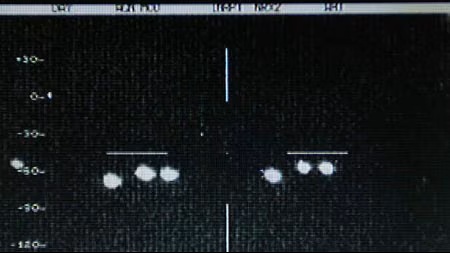
Mexican Air Force infrared footage of what one expert claims was a close encounter with UFOs. (Reuters)
Status: Verified
 Mexican Air Force: ‘We Are Not Alone’
Infrared recording produced by a Mexican Air Force Merlin C-26A surveillance aircraft during a counter-narcotics patrol on March 5, 2004. The footage shows multiple bright unresolved infrared sources and includes recorded crew commentary. The recording's military provenance is established, but the images do not independently determine the sources' range, physical size or identity. Later technical analyses identified offshore gas flares as the strongest explanation for the principal grouping.
Status: Verified
Investigation timeline
- 2026-11-04 — Historical file submitted.
- 2026-11-04 — Research question opened: Can the complete original Star SAFIRE II recording, including uncompressed imagery, sensor settings, camera azimuth, elevation, field of view and calibration data, be…
Research question opened: Can the complete original Star SAFIRE II recording, including uncompressed imagery, sensor settings, camera azimuth, elevation, field of view and calibration data, be located in Mexican military archives?
- 2026-11-04 — Research question opened: Do any original APS-143 radar recordings, operator logs or mission records survive, and can they determine whether the reported radar contacts corresponded with any of the…
Research question opened: Do any original APS-143 radar recordings, operator logs or mission records survive, and can they determine whether the reported radar contacts corresponded with any of the infrared sources?
- 2026-11-04 — Research question opened: Can the aircraft's complete flight track and sensor look direction be reconstructed accurately enough to test the Cantarell gas-flare identification against the positions…
Research question opened: Can the aircraft's complete flight track and sensor look direction be reconstructed accurately enough to test the Cantarell gas-flare identification against the positions of offshore platforms active on March 5, 2004?
- 2026-11-04 — Research question opened: Which portions of the released recording represent the initial radar contact, the brief individual infrared target and the later grouping of multiple infrared sources, and…
Research question opened: Which portions of the released recording represent the initial radar contact, the brief individual infrared target and the later grouping of multiple infrared sources, and should those episodes be treated as separate observations?
- 2026-11-04 — Historical file accepted and published.
Assigned GG-2026-154
Research notes
No curated research notes.
Open research questions
A specific gap in the file. An accepted source, research note, or further-reading link closes it.
Can the complete original Star SAFIRE II recording, including uncompressed imagery, sensor settings, camera azimuth, elevation, field of view and calibration data, be located in Mexican military archives?
Do any original APS-143 radar recordings, operator logs or mission records survive, and can they determine whether the reported radar contacts corresponded with any of the infrared sources?
Can the aircraft's complete flight track and sensor look direction be reconstructed accurately enough to test the Cantarell gas-flare identification against the positions of offshore platforms active on March 5, 2004?
Which portions of the released recording represent the initial radar contact, the brief individual infrared target and the later grouping of multiple infrared sources, and should those episodes be treated as separate observations?
Propose evidence & media, a source citation, further reading, a research note, a correction, a related case, or a series link. Staff review before anything is added. An accepted correction does not replace the file by itself.