GG-2026-178
The Talpa Poltergeist
- Phenomenon Physical & Poltergeist Activity
- Documentation
Rating A
- A — Strong dossier: several independent sources plus primary evidence (original media, records, measurements) a researcher could use without interviewing anyone.
- B — Well documented: multiple independent witnesses with at least some contemporary primary material, or one witness with substantial primary corroboration (photos, recordings, contemporaneous notes, documents).
- C — Multi-source but soft: several witnesses or a long run of reports, but mostly testimony and after-the-fact secondary sources (newspapers, folklore collections, later interviews). Little or no primary physical evidence. Regional legend clusters such as the Bridgewater Triangle land here.
- D — Thin: single witness (or one household), little or no support beyond the account. Normal for a sincere personal experience.
- E — Incomplete or not yet assessed. Every new submission starts here until staff have read it.
- Evidence & media 3 items
- Status Historic
- Location Talpa, Bacău County, Romania · regional placement
- Occurred February 1925
The case is associated with historical locations rather than a surviving paranormal landmark.
This file is placed as a region or body of water, not a single exact event location.
Activity period
- Earliest claimed event February 1925
- Earliest documented report 1925
- Latest documented report 1927
- Pattern Historic wave
Summary
The Talpa Poltergeist centers on Eleonore Zugun, a Romanian child who became associated with an internationally investigated series of alleged poltergeist phenomena beginning in 1925. Reports included stones striking buildings, household objects moving or being thrown, unexplained raps, disappearing and reappearing objects, and scratches, weals, and bite-like marks appearing on Zugun's body. The disturbances followed Zugun through several residences and institutions and subsequently attracted investigators including Fritz Grunewald, Zoë Wassilko-Serecki, and Harry Price, who observed and documented portions of the reported activity. Investigators disagreed over whether the phenomena represented psychokinesis, psychological or physiological effects, deliberate or unconscious deception, or some combination of causes, and Price himself noted that some bodily marks could be duplicated conventionally. The case remains historically important because of the unusually extensive contemporary investigation, photographic documentation, archival record, and competing interpretations surrounding one of the twentieth century's most studied alleged poltergeist cases.
Background
Zugun was born in Talpa, Romania, on 1913-05-24 to a farming family. In February 1925, at age eleven, Zugun visited relatives and reportedly picked up money found beside the road despite being warned that it was associated with the Devil. After Zugun spent the money on sweets, a relative reportedly told the child that the Devil had entered or would remain with Zugun. The episode subsequently became central to the family's interpretation of the disturbances that followed, although the connection between the coin incident and later phenomena was itself an interpretation rather than an independently established cause.
The earliest reported disturbances involved stones striking a house and breaking windows, together with small objects moving, jumping, or apparently being thrown without an identified person responsible. Similar events were reported after Zugun returned to Talpa, leading relatives and neighbors to increasingly associate the activity with the child. Stories concerning the Devil, possession, or a malevolent force influenced local interpretations of the events.
Attempts were subsequently made to address the situation through religious and institutional intervention. Zugun spent time in a monastery, where disturbances were also reported, and was later placed in a psychiatric institution for observation. The continuing reports attracted wider attention after a local newspaper account appeared on 1925-04-18. German engineer and psychical researcher Fritz Grunewald subsequently traveled to investigate and personally observed Zugun during May 1925. Grunewald publicly stated that the phenomena witnessed during the investigation appeared genuinely paranormal, although that conclusion remained an interpretation of the observations rather than independently demonstrated proof of psychokinesis.
Following Grunewald's involvement, Austrian researcher Zoë Wassilko-Serecki became one of the most important investigators of the case. Wassilko-Serecki brought Zugun to Vienna in early 1926 and conducted extensive observations over subsequent months. A report published in the February 1927 issue of Zeitschrift für Parapsychologie stated that more than nine hundred alleged phenomena had been recorded in Zugun's immediate surroundings during the Vienna investigation.
The reported manifestations included raps; movement, disappearance, and reappearance of objects; thrown or displaced household items; pins or needles appearing in Zugun's clothing or skin; and scratches, weals, abrasions, and bite-like marks appearing on the body. These bodily manifestations became one of the most distinctive aspects of the case because they could sometimes be photographed and examined after they appeared. The physical existence of photographed marks is therefore better documented than the claimed paranormal mechanism responsible for producing them.
British psychical researcher Price first investigated Zugun in Vienna in April 1926. Price reported witnessing several unusual object movements, including a steel letter opener moving across a room, a mirror being displaced, and other household objects apparently moving while Zugun and Wassilko-Serecki were under observation. Price subsequently arranged for continued investigation at the National Laboratory of Psychical Research in London, where Zugun was studied during the autumn of 1926.
Contemporary British newspapers reported extensively on the London investigation. A Daily News article dated 1926-06-02 described Price's earlier observations and reported numerous incidents attributed to the case, while additional British coverage appeared during Zugun's visit later that year. The case consequently became a public-media phenomenon as well as a subject of psychical research.
Price's later published treatment is useful because the investigator did not regard every category of alleged evidence as equally secure. Discussing the bite-like marks, Price acknowledged that impressions produced experimentally by Zugun's own teeth could closely resemble those attributed to unexplained causes. Price also noted that the bite marks occurred only on areas accessible to Zugun's mouth and that scratches and other marks appeared on accessible portions of the chest, arms, wrists, and hands. However, Price maintained that investigators did not actually observe Zugun deliberately producing the marks while under surveillance.
This distinction is important when evaluating the case. Photographs demonstrate that marks and abrasions existed, and contemporary observers documented their appearance, but those facts do not establish that an external entity or psychokinetic process produced them. Conversely, demonstrating that similar marks could be reproduced conventionally does not prove how every documented mark actually originated. The evidentiary strength therefore differs substantially between the existence of the physical marks and the explanation proposed for them.
Investigators likewise disagreed over the object movements and other reported phenomena. Some regarded their observations as evidence of genuine psychokinetic activity, while critics questioned the adequacy of controls and considered deliberate or unconscious deception possible. The case also became important in the development of psychological interpretations of poltergeist phenomena, particularly theories connecting recurrent spontaneous psychokinesis or disruptive physical events with adolescent subjects experiencing psychological conflict.
The investigation gradually ended as Zugun matured and the reported phenomena subsided. Later accounts indicate that Zugun returned to comparatively ordinary life, while the case remained influential in psychical-research literature. The surviving documentary record includes contemporary press reports, photographs, published investigative accounts, and archival material preserved within the Society for Psychical Research collections at Cambridge University Library.
The Talpa Poltergeist is therefore unusually valuable because the case does not depend exclusively upon a decades-later family story or paranormal legend. Multiple investigators observed Zugun, physical marks were photographed, contemporary newspapers reported the investigation, and substantial archival material survives. At the same time, the documentation also preserves reasons for caution, including weaknesses in experimental control, phenomena that could potentially be produced normally, and disagreement among investigators over what had actually been demonstrated. The case is strongest when those competing elements are preserved together rather than treating extensive documentation as proof that a supernatural or psychokinetic interpretation was established.
Witness statement
No statement on file.
Evidence & media
 The Devil's Girl: The Chilling Case of Eleonora Zugun | Documentary
Documentary examining the case of Eleonora Zugun, the Romanian girl who became the focus of one of the twentieth century's most extensively investigated poltergeist cases. The video explores reports of flying objects, unexplained injuries, exorcism attempts, and investigations conducted by figures including Harry Price and Countess Zoë Wassiliko van Serecki, as well as competing paranormal and skeptical interpretations of the events.
Status: Verified
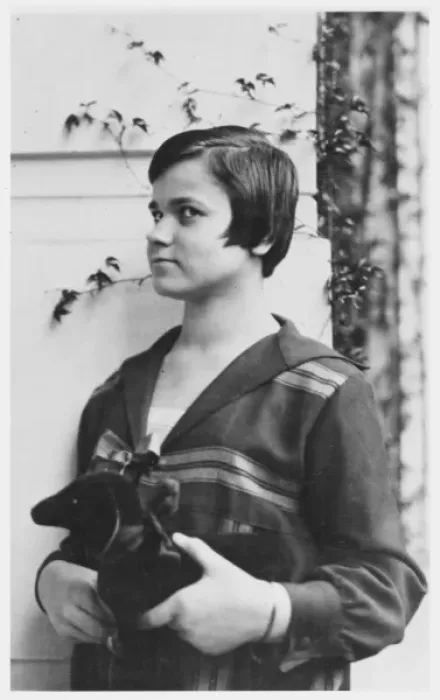
Eleonora Zugun During the Poltergeist Investigations
Photograph of Eleonora Zugun, the Romanian girl who became the focus of one of the twentieth century's most extensively documented poltergeist cases. Between 1925 and 1927, reports of flying objects, falling stones, unexplained injuries, and other disturbances attracted international attention and prompted investigations by psychical researchers, physicians, and journalists across Europe.
Status: Verified
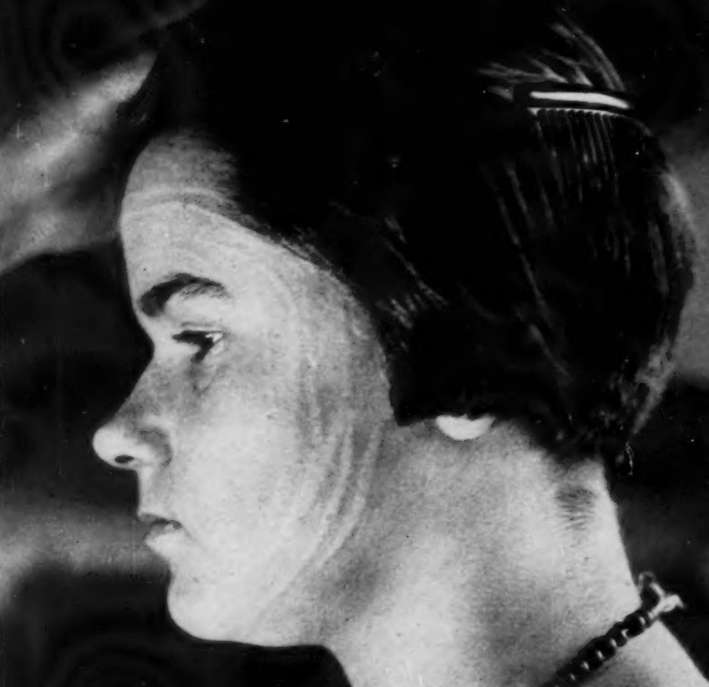
Reported Scratches Observed on Eleonora Zugun
Historical photograph showing marks reportedly observed on Eleonora Zugun during investigations of the Talpa Poltergeist case. Researchers documented recurring scratches, welts, abrasions, and alleged bite marks that appeared without an immediately identifiable cause. Such physical manifestations became one of the most controversial and widely discussed aspects of the Zugun case.
Status: Verified
Further reading
Continue exploring — Wikipedia, documentaries, podcasts, museum pages. Not treated as proof, and not independently verified by this archive.
Investigation timeline
- 2026-11-08 — Historical file submitted.
- 2026-11-08 — Research question opened
How reliable were the observations recorded by the various investigators?
- 2026-11-08 — Research question opened
What differences emerged between Romanian, Austrian, German, and British investigations?
- 2026-11-08 — Research question opened
How much of the case record survives in original form?
- 2026-11-08 — Research question opened
To what extent did media coverage influence later interpretations of the events?
- 2026-11-08 — Research question opened
What evidence survives concerning the earliest April 1925 Romanian newspaper reporting that brought the case to international attention?
- 2026-11-08 — Historical file accepted and published.
Assigned GG-2026-178
Research notes
No curated research notes.
Open research questions
A specific gap in the file. An accepted source, research note, or further-reading link closes it.
Which original observation records from the 1925-1927 investigations of Eleonore Zugun survive in institutional archives?
Which phenomena reported around Eleonore Zugun occurred under controls sufficient to exclude ordinary handling or self-production?
How did the interpretations of Fritz Grunewald, Zoë Wassilko-Serecki, Harry Price, and later investigators differ when evaluating the same categories of phenomena?
How did contemporary newspaper coverage alter the public portrayal of Eleonore Zugun and the Talpa Poltergeist case?
What evidence survives concerning the earliest April 1925 Romanian newspaper reporting that brought the case to international attention?
Propose evidence & media, a source citation, further reading, a research note, a correction, a related case, or a series link. Staff review before anything is added. An accepted correction does not replace the file by itself.