GG-2026-190
Nyami Nyami and the Kariba Dam Traditions
- Phenomenon Folklore & Cultural Encounters, Religious & Spiritual Manifestations
- Documentation
Rating C
- A — Strong dossier: several independent sources plus primary evidence (original media, records, measurements) a researcher could use without interviewing anyone.
- B — Well documented: multiple independent witnesses with at least some contemporary primary material, or one witness with substantial primary corroboration (photos, recordings, contemporaneous notes, documents).
- C — Multi-source but soft: several witnesses or a long run of reports, but mostly testimony and after-the-fact secondary sources (newspapers, folklore collections, later interviews). Little or no primary physical evidence. Regional legend clusters such as the Bridgewater Triangle land here.
- D — Thin: single witness (or one household), little or no support beyond the account. Normal for a sincere personal experience.
- E — Incomplete or not yet assessed. Every new submission starts here until staff have read it.
- Evidence & media 2 items
- Status Historic
- Location Kariba, Kariba Gorge, Zimbabwe · regional placement
Regional marker using Kariba Dam as a public reference point for the Nyami Nyami traditions associated with the Zambezi River, Kariba Gorge and creation of Lake Kariba. The tradition extends across a broader cultural and geographic landscape in both Zimbabwe and Zambia; this marker does not identify a single supernatural event location.
This file is placed as a region or body of water, not a single exact event location.
Activity period
- Earliest claimed event Unknown
- Earliest documented report Unknown
- Latest documented report 1958
- Pattern Historic wave
Summary
Nyami Nyami is a Zambezi river spirit associated with the traditions of Tonga communities in what are now Zambia and Zimbabwe, commonly represented in modern imagery as a serpent-like being with a fish-like head. The tradition became internationally associated with construction of the Kariba Dam during the 1950s, when major floods, worker deaths and other setbacks were interpreted within some Tonga accounts as the river spirit's response to the disruption of the Zambezi and the separation of Nyami Nyami from his counterpart. The historical events underlying those stories were substantial: construction transformed the river, killed scores of workers and displaced tens of thousands of Tonga people from the valley as Lake Kariba formed. The floods and human consequences of the project are documented, while attributing them to the intervention of a river spirit belongs to cultural and spiritual interpretation rather than independently established causation. The Nyami Nyami tradition consequently preserves not only supernatural folklore but a continuing cultural memory of the enormous social and environmental disruption caused by the dam.
Background
Long before the construction of Kariba Dam, Tonga communities lived along the Zambezi River in the valley now divided between Zambia and Zimbabwe. The river supplied water, fish, fertile land and transportation, but its significance extended beyond material resources into culture, ancestry and spiritual life. Within traditions associated with this landscape, Nyami Nyami was a powerful spirit of the Zambezi, connected with the river's ability both to sustain life and to destroy it. Modern representations commonly give Nyami Nyami a long serpent-like body and fish-like head, although reducing the figure to the anatomy of a literal animal risks imposing later “monster” imagery onto a religious and cultural tradition.
Accounts portray Nyami Nyami primarily as guardian and provider rather than simply as a dangerous monster. The spirit was associated with the resources and power of the river, and traditions describe intervention through elders and spirit mediums when the relationship between the river and its people became disturbed. Modern carvings, pendants and other representations have standardized the familiar fish-headed serpent image, but descriptions vary, reflecting the fact that Nyami Nyami belongs to an oral spiritual tradition rather than a zoological record of an unidentified animal.
That relationship with the river was transformed radically during the colonial period. Authorities of the Federation of Rhodesia and Nyasaland selected Kariba Gorge for a massive hydroelectric project intended to harness the Zambezi for regional electricity production and economic development. Construction began during the mid-1950s. The resulting double-curvature concrete arch dam reached approximately 128 metres in height and created Lake Kariba, a reservoir extending roughly 280 kilometres along the former river valley. The project was one of the most ambitious engineering works undertaken in Africa during the period.
The engineering achievement came with profound human consequences. Formation of Lake Kariba flooded Tonga settlements, farmland, graves and landscapes through which communities had lived for generations. Estimates vary by source and population counted, but modern historical treatments commonly place the number of displaced Tonga people at roughly 57,000. Research into the resettlement has documented long-term social and economic consequences extending far beyond the initial removal from the river valley.
Within Nyami Nyami tradition, construction of the dam represented more than physical displacement. One of the best-known modern narratives holds that the dam separated Nyami Nyami from a female counterpart living on the opposite side of the river or gorge. The disruption was interpreted as an offense against the river and its spiritual order, and subsequent disasters affecting the construction project became incorporated into a narrative of resistance by the river spirit.
Those disasters were not invented for the legend. Serious floods repeatedly struck the construction site. A major flood at the end of 1955 damaged early works, while unusually heavy rainfall and further flooding again disrupted construction during the following years. Modern histories of the project describe damage to cofferdams, equipment and works in the gorge during the difficult construction period. Within the Nyami Nyami tradition, these events were interpreted not merely as hydrological accidents but as manifestations of the river spirit's anger at attempts to restrain the Zambezi.
Construction also caused substantial loss of human life. Modern engineering histories place the number of workers killed during construction in the mid-eighties, with one account giving 86 deaths and another 87. On 1959-02-20, the collapse of a working platform in a power-station shaft killed 17 workers. These deaths are documented elements of the project's history. Their supernatural attribution to Nyami Nyami belongs to the subsequent spiritual and folkloric interpretation of the construction disasters.
Some later versions of the Nyami Nyami story add particularly dramatic details, including claims that bodies of workers killed during floods mysteriously disappeared and were returned only after traditional elders or spirit mediums intervened. Other retellings say bodies remain incorporated within the dam wall. Such claims should be treated considerably more cautiously than the documented floods and fatalities. They appear frequently in popular versions of the legend but require independent contemporary documentation before being incorporated into the historical record as fact.
The distinction is important because the construction disasters themselves require no extraordinary physical cause. The Zambezi is a major river flowing through difficult terrain with substantial seasonal variation, while building a huge concrete dam inside a narrow gorge during the 1950s exposed workers and partially completed structures to predictable engineering, geological and hydrological hazards. Flooding capable of damaging construction works is therefore neither unexpected nor evidence by itself of supernatural intervention.
But treating the floods only as engineering failures also misses why the Nyami Nyami narrative remained powerful. To Tonga communities being forced from ancestral land, the dam represented an externally imposed transformation of a river on which their livelihoods, communities, memory and spiritual relationships depended. The story of a river spirit resisting the dam therefore occupies a cultural landscape created by real displacement and loss. Modern scholarship on Kariba increasingly examines the dam not simply as an engineering achievement but as a source of contested memory, political identity and continuing claims concerning the people displaced by its construction.
As the reservoir filled, another enormous consequence became visible. Rising water stranded wildlife on shrinking islands, leading to the rescue effort known as Operation Noah, during which thousands of animals were relocated from the inundated valley. Although the wildlife rescue received considerable contemporary international attention, later historical examination has contrasted that publicity with the substantially less celebrated displacement of the human communities whose homes and farmland disappeared beneath the same reservoir.
Completion of the dam did not erase Nyami Nyami. Instead, the figure became increasingly inseparable from the cultural identity of Lake Kariba and the middle Zambezi. The curved serpent-and-fish image appears today in carvings, jewelry and tourism material across Zimbabwe and Zambia. This continuing visibility preserves the tradition but also complicates historical research because commercial souvenir imagery, colonial-era storytelling, modern tourism and older Tonga traditions have influenced one another. Features familiar from today's standardized representation should therefore not automatically be projected backward as ancient, unchanged descriptions.
Nyami Nyami is consequently more significant to Gothic.Black as a cultural and historical case than as a simple claim that a supernatural creature physically attacked a dam. Kariba Dam, the construction floods, worker deaths, displacement of Tonga communities and transformation of the Zambezi are documented events. Understanding them as the anger or resistance of Nyami Nyami belongs to a living cultural and spiritual tradition whose historical development deserves preservation in its own right. The central research problem is therefore how the older river-spirit tradition changed as the dam transformed the river, and which details of the familiar modern legend predate the construction crisis rather than emerging from it.
Witness statement
No statement on file.
Evidence & media
 Faces of Africa: Nyaminyami – The River God
Documentary examining the Nyami Nyami river-spirit tradition of the Zambezi and its relationship to Tonga and Lozi culture, including traditions linking construction of Kariba Dam with the separation and anger of the river spirit. Included as cultural and historical context; supernatural interpretations presented in the tradition are not treated as independently verified events.
Status: Verified
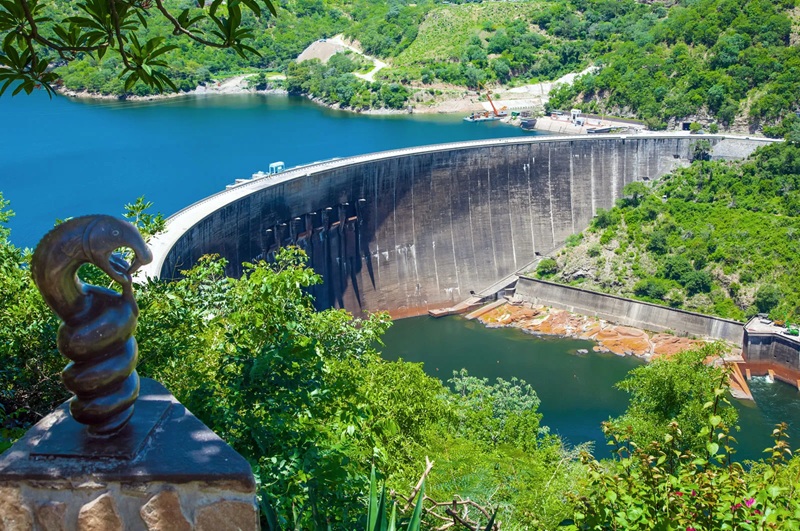
Nyami Nyami Overlooking Kariba Dam
Modern Nyami Nyami sculpture overlooking Kariba Dam on the Zambezi River. The image visually connects the river-spirit tradition with the engineering project that transformed the Zambezi and became central to later stories of Nyami Nyami's resistance to the dam.
Status: Verified
Further reading
Continue exploring — Wikipedia, documentaries, podcasts, museum pages. Not treated as proof, and not independently verified by this archive.
Investigation timeline
- 2026-11-09 — Historical file submitted.
- 2026-11-09 — Research question opened
What is the earliest surviving ethnographic or written documentation explicitly identifying Nyami Nyami in Tonga traditions of the Zambezi?
- 2026-11-09 — Research question opened
Which characteristics of Nyami Nyami were documented before construction of Kariba Dam, and which appear only in post-dam accounts?
- 2026-11-09 — Research question opened
Can contemporary documentation establish which construction disasters were explicitly interpreted as Nyami Nyami activity by Tonga witnesses during the 1950s, rather than attributed retrospectively?
- 2026-11-09 — Research question opened
What contemporary records document claims that bodies lost during flood disasters disappeared or were recovered following intervention by traditional spiritual authorities?
- 2026-11-09 — Historical file accepted and published.
Assigned GG-2026-190
Research notes
Historical research: Did the Dam Transform Nyami Nyami?
The most important research problem in this case is not whether the floods that struck construction of Kariba Dam occurred; they did. The harder question is how closely the Nyami Nyami tradition known today resembles Tonga traditions recorded before the dam project.
Modern versions frequently contain a coherent narrative in which Nyami Nyami and a female counterpart occupied opposite parts of the river, construction of the dam separated them, the spirit responded with destructive floods, workers died, traditional authorities warned that the project would fail, and completion of the dam caused Nyami Nyami to withdraw from direct interaction with people. That narrative may preserve authentic Tonga beliefs while simultaneously incorporating details shaped by one of the most disruptive events in modern Tonga history.
The problem resembles the distinction Gothic.Black makes between an earliest claimed event and an earliest documented report. The existence of an older oral tradition does not justify assuming that every detail found in a modern version existed before the 1950s. Colonial reporting, engineering publicity, tourism, souvenir production and later retellings may all have influenced how Nyami Nyami is described today.
A particularly valuable research direction would therefore compare ethnographic work on Tonga communities conducted before and during the Kariba project with post-dam versions of the tradition. That analysis could clarify which attributes belonged to earlier river belief, which developed as cultural interpretations of displacement and flooding, and which were subsequently standardized through tourism and popular media.
Open research questions
A specific gap in the file. An accepted source, research note, or further-reading link closes it.
What is the earliest surviving ethnographic or written documentation explicitly identifying Nyami Nyami in Tonga traditions of the Zambezi?
Which characteristics of Nyami Nyami were documented before construction of Kariba Dam, and which appear only in post-dam accounts?
Can contemporary documentation establish which construction disasters were explicitly interpreted as Nyami Nyami activity by Tonga witnesses during the 1950s, rather than attributed retrospectively?
What contemporary records document claims that bodies lost during flood disasters disappeared or were recovered following intervention by traditional spiritual authorities?
Propose evidence & media, a source citation, further reading, a research note, a correction, a related case, or a series link. Staff review before anything is added. An accepted correction does not replace the file by itself.