GG-2026-203
Akershus Fortress
- Phenomenon Apparitions & Spirits, Auditory & Acoustic Events, Folklore & Cultural Encounters
- Documentation
Rating C
- A — Strong dossier: several independent sources plus primary evidence (original media, records, measurements) a researcher could use without interviewing anyone.
- B — Well documented: multiple independent witnesses with at least some contemporary primary material, or one witness with substantial primary corroboration (photos, recordings, contemporaneous notes, documents).
- C — Multi-source but soft: several witnesses or a long run of reports, but mostly testimony and after-the-fact secondary sources (newspapers, folklore collections, later interviews). Little or no primary physical evidence. Regional legend clusters such as the Bridgewater Triangle land here.
- D — Thin: single witness (or one household), little or no support beyond the account. Normal for a sincere personal experience.
- E — Incomplete or not yet assessed. Every new submission starts here until staff have read it.
- Evidence & media 3 items
- Status Historic
- Location Oslo, Oslo, Norway
Exact public marker identifying Akershus Fortress, the historic military complex associated with the traditions in this file. Reported experiences involve multiple gates, towers, prison areas and interior spaces rather than one incident location. The fortress grounds are publicly accessible, but individual museums, military areas and buildings have separate access restrictions and opening hours.
Activity period
- Earliest claimed event Unknown
- Earliest documented report Unknown
- Latest documented report Unknown
- Pattern Recurring
Summary
Akershus Fortress is a medieval castle and military complex overlooking Oslofjord whose long history of siege, imprisonment, occupation and execution has generated one of Norway's best-known collections of ghost traditions. Construction began around the end of the thirteenth century under King Håkon V, and the fortress subsequently served as a royal residence, defensive stronghold, prison and military installation while surviving repeated sieges. Its supernatural traditions include the spectral dog Malcanisen, a female apparition commonly called Mantelgeisten, unexplained footsteps and voices, screams near the Virgin's Tower and other figures associated with the fortress's prison and military history. Some of these stories attach dramatic deaths or burials to identifiable parts of the complex, but the historical documentation for those origin stories is much weaker than the history of Akershus itself. The fortress therefore provides an exceptionally well-documented historical setting for a persistent body of Norwegian ghost folklore whose individual supernatural claims remain largely unverified.
Background
Akershus Fortress stands on a rocky promontory overlooking Oslo's harbor and the Oslofjord, occupying one of the most strategically important locations in Norwegian history. Construction began during the reign of King Håkon V near the end of the thirteenth century, following an attack on Oslo in 1287 that demonstrated the inadequacy of the city's existing defenses. Written sources mention Akershus by 1300, although the precise date at which construction began remains uncertain.
The fortress's defensive value became apparent almost immediately. In 1308 it endured a siege led by Swedish duke Erik Magnusson, and during subsequent centuries Akershus repeatedly resisted attempts to capture it by force. Its location gave defenders control over approaches to Oslo's harbor, while possession of Akershus became closely associated with control of the capital and, by extension, political authority in Norway.
Akershus changed substantially as warfare and royal needs evolved. During the seventeenth century, King Christian IV transformed portions of the medieval stronghold into a Renaissance castle and strengthened the surrounding defenses. After a catastrophic fire destroyed much of old Oslo in 1624, Christian IV rebuilt the city closer to the protection of Akershus, creating Christiania immediately behind the fortress. The surviving complex consequently represents centuries of alteration rather than a medieval castle preserved unchanged from one period.
The fortress also developed a long and harsh history of imprisonment. Part of the prison was known as Slaveriet, or “the Slavery,” because prisoners could be assigned to forced labor outside the prison itself. Among those confined at Akershus were participants in the 1852 Kautokeino uprising, while notorious nineteenth-century prisoner Ole Høiland was repeatedly held there following his celebrated escapes and criminal exploits. Such documented confinement and death later provided an obvious historical framework for stories of footsteps, voices and human figures within the fortress.
One of the most distinctive supernatural traditions associated with Akershus concerns a spectral dog called Malcanisen. Modern folklore describes the animal as a guardian of the fortress gates, sometimes portraying an encounter with the black or demonic dog as an omen of death. A common origin story claims that a living guard dog was deliberately buried at or near a gateway so that its spirit would protect the fortress. The ghost-dog tradition is well established in modern accounts of Akershus, but Gothic.Black has not located historical documentation establishing that such a ritual burial actually occurred. Malcanisen should therefore be preserved as fortress folklore rather than converted into a documented medieval practice.
A second prominent apparition is commonly known as Mantelgeisten, essentially the “cloak ghost.” Later accounts describe a female figure moving through the fortress in long clothing or a flowing mantle, sometimes associated with hallways and castle rooms. Some modern retellings transform the figure into a woman supposedly walled up alive inside Akershus, while others provide less specific identities or histories. Gothic.Black has not established a contemporary record for such an immurement, and the apparition's supposed biography should therefore be distinguished from the report tradition itself.
The Virgin's Tower, one of the older surviving portions of the fortress, has accumulated additional stories involving screams, footsteps and sensations interpreted as another presence nearby. Modern paranormal treatments sometimes connect those experiences with an alleged gatekeeper or other former occupant. As with Malcanisen and Mantelgeisten, the precise historical identity assigned to the phenomenon is considerably weaker than the fact that the story now forms part of the fortress's supernatural tradition.
Additional accounts describe human shadows, voices in apparently empty spaces, footsteps in corridors and even phantom hoofbeats across parts of the grounds. One modern legend attributes the hoofbeats to a Swedish rider and horse killed during an attempted attack. The fortress genuinely experienced repeated Swedish military assaults during its history, but the existence of those conflicts does not independently establish the individual death narrative or its connection with later reported sounds.
The darkest firmly documented modern chapter in Akershus's history occurred during the German occupation of Norway from 1940 to 1945. German forces took possession of the fortress after Oslo's surrender and used parts of the complex for imprisonment and execution. Norwegian resistance members were among those killed there. After liberation, Akershus also became an execution site for convicted collaborators, including Vidkun Quisling. These events are historically documented and require no supernatural embellishment to explain why the fortress occupies such a somber place in Norwegian memory.
Akershus's physical environment offers obvious conventional mechanisms for some reported experiences. Massive stone construction, stairways, interconnected rooms, courtyards, gates and enclosed passages can make the apparent direction of footsteps and voices difficult to judge. The fortress is also an active public and military complex rather than an abandoned site: staff, visitors, ceremonies and activity occur throughout portions of the grounds. Such conditions should be considered before assigning a supernatural cause to isolated sounds or movement.
Today, Akershus remains both an active military area and one of Oslo's major historic attractions. The grounds are open to visitors, while the complex includes museums, Akershus Castle and Norway's royal mausoleum. That continuing public use ensures that the folklore remains visible and provides opportunities for new experiences to be reported, but modern retellings describing the fortress as “still active” paranormally do not provide a sufficiently documented recent event to meet Gothic.Black's Active-status threshold.
Akershus consequently presents two bodies of material with vastly different levels of support. Its construction, sieges, political role, prison history and wartime use are extensively documented. The stories of Malcanisen, Mantelgeisten, phantom riders and unexplained voices are culturally established but much harder to trace to their earliest witnesses and documents. The central research challenge is therefore to determine when these specific supernatural traditions first appeared and which parts of their familiar origin stories represent older Norwegian folklore rather than later haunted-castle storytelling.
Witness statement
No statement on file.
Evidence & media
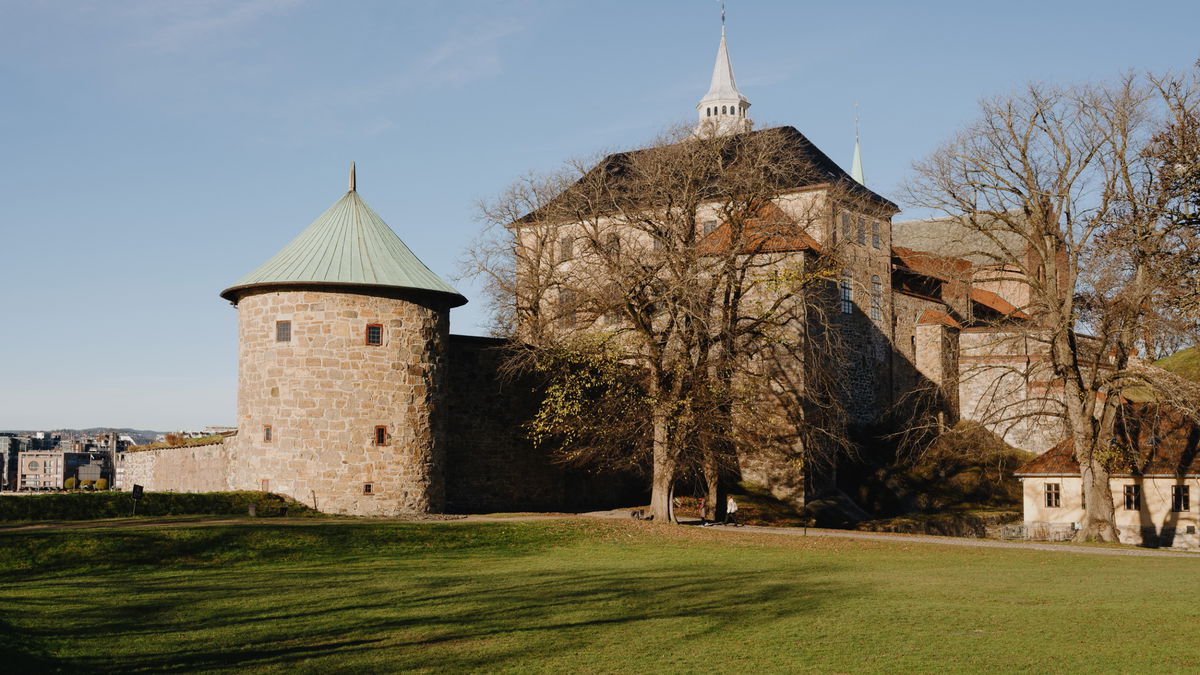
Akershus Fortress Exterior (Contemporary View)
Modern exterior view of Akershus Fortress overlooking Oslo Harbor. Originally established during the reign of King Haakon V in the late thirteenth century, the fortress played a central role in the defense of Norway and remains one of the country's most significant historic landmarks.
Status: Verified
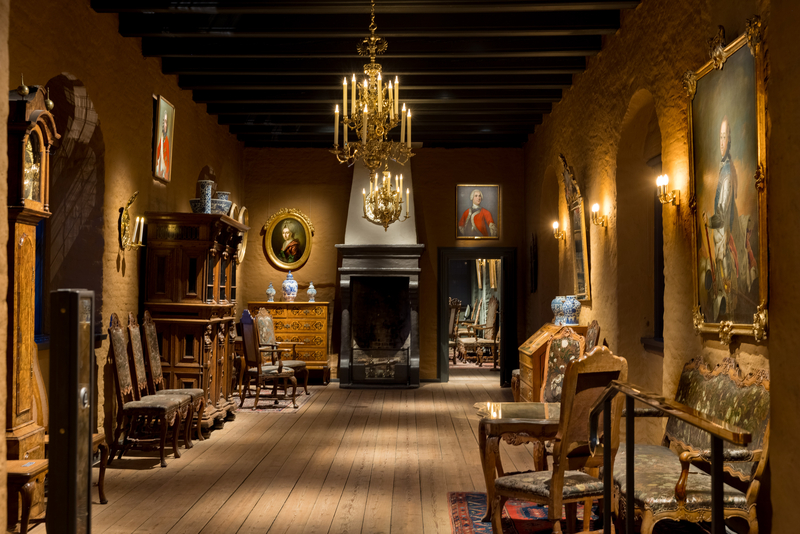
State Apartments Corridor, Akershus Fortress
Historic corridor within the State Apartments of Akershus Fortress in Oslo, Norway. The fortress has served as a royal residence, military stronghold, prison, and administrative center since the late thirteenth century. Preserved furnishings, portraits, and architectural features reflect centuries of Norwegian royal and military history.
Status: Verified
 Akershus Fortress: Norway's Haunted Citadel
Video overview examining the history, folklore, and reported hauntings associated with Akershus Fortress, including legends surrounding Malcanisen and Mantelgeisten. The presentation incorporates historical information alongside cinematic recreations and paranormal interpretations.
Status: Verified
Further reading
Continue exploring — Wikipedia, documentaries, podcasts, museum pages. Not treated as proof, and not independently verified by this archive.
Investigation timeline
- 2026-11-11 — Research dossier submitted.
- 2026-11-11 — Research question opened
What is the earliest surviving written account naming Malcanisen as a supernatural guardian of Akershus Fortress?
- 2026-11-11 — Research question opened
Is there any historical or archaeological evidence that a dog was deliberately buried at an Akershus gateway as part of a protective ritual?
- 2026-11-11 — Research question opened
What is the earliest traceable report of Mantelgeisten, and when did the story that a woman was walled up alive become attached to the apparition?
- 2026-11-11 — Research question opened
Can the Virgin's Tower screams or gatekeeper tradition be traced to identifiable witnesses or historical records?
- 2026-11-11 — Research question opened
What is the earliest written account of phantom hoofbeats or a supernatural horse and rider at Akershus?
- 2026-11-11 — Research dossier accepted and published.
Assigned GG-2026-203
Research notes
Historical research: How Old Are the Akershus Ghost Traditions?
Modern descriptions of Akershus frequently present Malcanisen, Mantelgeisten and other supernatural figures as though their stories have been continuously told since the medieval period. Gothic.Black has not yet established that chronology.
The distinction matters particularly for Malcanisen. A spectral guardian dog is entirely compatible with broader European black-dog and supernatural-hound traditions, while stories of animals deliberately buried beneath gates or foundations also appear in folklore associated with ritual protection and construction. Establishing that such motifs exist elsewhere, however, does not prove that a dog was historically buried alive at Akershus.
The same problem affects Mantelgeisten. A female apparition may have been reported independently before later storytellers assigned an immurement narrative, or the entire account may have developed together in relatively modern folklore. Only dated Norwegian-language newspapers, guidebooks, memoirs, military accounts and earlier folklore collections can establish when the recognizable modern traditions entered the record.
The most valuable next research step is therefore chronological rather than paranormal: identify the earliest written version of each major Akershus ghost story and compare later versions to determine when names, identities and dramatic deaths were added.
Open research questions
A specific gap in the file. An accepted source, research note, or further-reading link closes it.
What is the earliest surviving written account naming Malcanisen as a supernatural guardian of Akershus Fortress?
Is there any historical or archaeological evidence that a dog was deliberately buried at an Akershus gateway as part of a protective ritual?
What is the earliest traceable report of Mantelgeisten, and when did the story that a woman was walled up alive become attached to the apparition?
Can the Virgin's Tower screams or gatekeeper tradition be traced to identifiable witnesses or historical records?
What is the earliest written account of phantom hoofbeats or a supernatural horse and rider at Akershus?
Propose evidence & media, a source citation, further reading, a research note, a correction, a related case, or a series link. Staff review before anything is added. An accepted correction does not replace the file by itself.