GG-2026-206
Molebka Anomalous Zone
- Phenomenon UFOs/UAPs
- Documentation
Rating C
- A — Strong dossier: several independent sources plus primary evidence (original media, records, measurements) a researcher could use without interviewing anyone.
- B — Well documented: multiple independent witnesses with at least some contemporary primary material, or one witness with substantial primary corroboration (photos, recordings, contemporaneous notes, documents).
- C — Multi-source but soft: several witnesses or a long run of reports, but mostly testimony and after-the-fact secondary sources (newspapers, folklore collections, later interviews). Little or no primary physical evidence. Regional legend clusters such as the Bridgewater Triangle land here.
- D — Thin: single witness (or one household), little or no support beyond the account. Normal for a sincere personal experience.
- E — Incomplete or not yet assessed. Every new submission starts here until staff have read it.
- Evidence & media 2 items
- Status Historic
- Location Molebka, Perm Krai, Russia · regional placement
Regional marker representing the forested Molebka anomalous zone on the left bank of the Sylva River near Molebka and Kamenka. Reported phenomena and named expedition locations extend across a broad area rather than one incident site; the marker does not identify an exact UFO sighting, alleged landing trace, or anomaly location. Visitors should prepare for remote terrain, limited services, river conditions, and seasonal weather.
This file is placed as a region or body of water, not a single exact event location.
Activity period
- Earliest claimed event Unknown
- Earliest documented report 1983
- Latest documented report Ongoing
- Pattern Recurring
Summary
The Molebka Anomalous Zone, commonly known as the Perm Triangle, is one of Russia's most famous anomalous regions. Located near the village of Molebka in Perm Krai, the area became widely known during the late Soviet era following reports of unidentified lights, unusual aerial objects, environmental anomalies, and encounters with unidentified figures.
Unlike many paranormal cases centered around a single event, the Molebka phenomenon consists of decades of recurring reports from visitors, researchers, journalists, and expedition teams. Witnesses have described luminous spheres, structured aerial objects, glowing formations, missing-time experiences, equipment malfunctions, and unusual visual phenomena.
The area attracted substantial media attention throughout the 1980s and 1990s, becoming one of the Soviet Union's best-known UFO hotspots. While many claims remain anecdotal and unverified, the volume of reports and continued interest have secured Molebka's place in the history of anomalous-zone research.
Today the region remains a destination for investigators, tourists, UFO researchers, and curiosity seekers interested in unexplained phenomena.
Background
The Molebka Anomalous Zone lies near the village of Molebka along the Sylva River in Perm Krai, Russia. The region consists primarily of forests, meadows, river valleys, and remote wilderness. Long before gaining international attention, the area was associated with local traditions and unusual stories connected to the landscape.
Modern interest in the zone emerged during the early 1980s. The location gained widespread attention after reports by geologist Emil Bachurin, who allegedly discovered unusual traces in the snow while conducting work in the region. The reports generated interest among Soviet journalists and researchers, eventually drawing larger investigative expeditions to the area.
As media attention increased, accounts of anomalous experiences multiplied. Visitors described observations of glowing spheres moving through forests, luminous formations hovering over clearings, and bright lights appearing without obvious explanation.
Several locations within the zone became particularly well known. Informal names such as the Central Clearing, the Cosmodrome, and Snake Hill entered expedition lore and were frequently cited in witness accounts. Different zones reportedly became associated with different categories of encounters.
Witness reports varied substantially. Some described distant lights or unusual atmospheric effects. Others reported seeing humanoid silhouettes, giant figures, translucent forms, or geometric shapes appearing in the landscape. Descriptions often differed significantly between expeditions.
A recurring element in many reports involved physiological effects. Visitors occasionally reported headaches, disorientation, fatigue, time distortion, unusual dreams, or sensations of being watched. Some investigators also described battery drain, compass anomalies, and unexplained equipment malfunctions. These experiences remain anecdotal and have not been consistently reproduced under controlled conditions.
During the late Soviet period, Molebka became one of the most famous anomalous locations in the USSR. Newspapers, magazines, documentaries, and television programs featured stories from the region. As a result, the area developed a reputation similar to other internationally known paranormal locations such as Hessdalen in Norway and the Bridgewater Triangle in Massachusetts.
Critics have suggested that some experiences may be explained by natural environmental factors, witness expectation, observational errors, or the influence of publicity. Others argue that the consistency of certain reports across multiple expeditions warrants further study.
Unlike many folklore-based paranormal locations, the Molebka Anomalous Zone owes much of its reputation to modern witness testimony rather than ancient legends. The phenomenon therefore occupies an unusual position between UFO case studies, environmental mystery investigations, and regional folklore development.
Today Molebka remains one of Russia's best-known anomalous regions and continues to generate discussion among researchers interested in unexplained aerial phenomena and environmental anomalies.
Witness statement
No statement on file.
Evidence & media
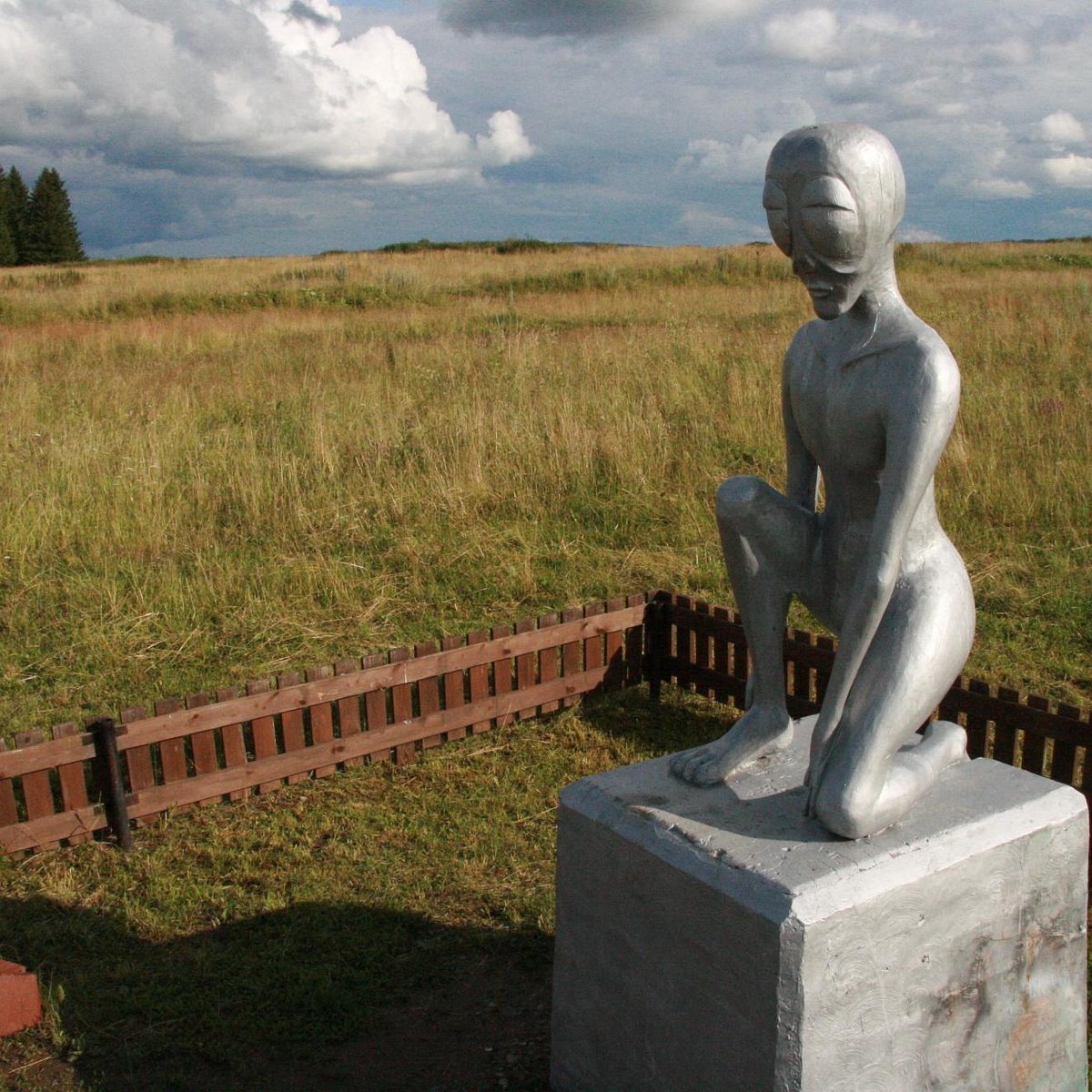
Molebka Alien Monument
Alien monument near Molebka reflecting the area's modern identity as one of Russia's best-known UFO and anomalous-zone destinations. The monument documents the cultural and tourism legacy of the Molebka case, not evidence of extraterrestrial activity.
Status: Verified
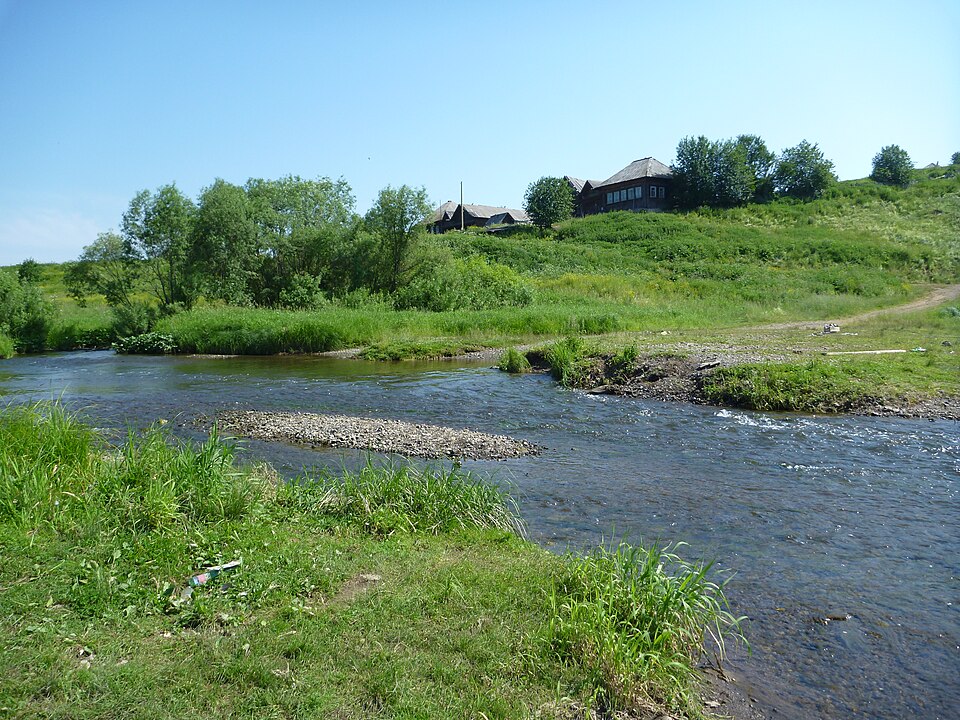
Molebka Anomalous Zone – Sylva River Landscape
Forested landscape near Molebka and the Sylva River within the broader area associated with the M-Triangle tradition. Reported lights, equipment effects and unusual experiences occurred across multiple clearings, riverbanks and forest locations; the photograph documents the regional setting rather than an anomalous event.
Status: Verified
Sources
- Emil Bachurin – How I Discovered the Molebka Anomalous Zone (2005) — 2005 video interview in which Bachurin recounts the events he believed led to the discovery of the Molebka anomalous zone. The recording preserves the principal witness's later version of the foundational story; because it was made more than twenty years after the claimed event, it should be compared with earlier records rather than treated as contemporary documentation.
- Boris Ignatiev. Молёбка без легенд: что на самом деле происходит в Пермской аномальной зоне — Modern Russian reconstruction of the Molebka story that distinguishes the foundational Bachurin account, late-Soviet press coverage, later folklore and conventional explanations. Particularly useful for identifying inconsistencies in the 1983/1984 discovery date and the absence of surviving contemporary documentation of the original circular trace. Individual claims should be checked against underlying expedition and newspaper material where available.
- The M-Triangle: The Zone at Molebka — Modern critical overview summarizing reported phenomena and the negative findings attributed to a 1992 Perm State University survey. Useful as a research lead; the original university report should replace this source if located.
Further reading
Continue exploring — Wikipedia, documentaries, podcasts, museum pages. Not treated as proof, and not independently verified by this archive.
Investigation timeline
- 2026-11-12 — Historical file submitted.
- 2026-11-12 — Research question opened
What exactly did Emil Bachurin document during the earliest reported investigations?
- 2026-11-12 — Research question opened
Which reported anomalies can be independently verified through contemporary records?
- 2026-11-12 — Research question opened
Are specific locations within the zone associated with recurring witness reports over multiple decades?
- 2026-11-12 — Research question opened
Which cases remain unexplained after review by investigators and skeptics?
- 2026-11-12 — Research question opened
What complete records survive from the 1992 Perm State University investigation, including magnetic, radiation, soil and microbiological measurements?
- 2026-11-12 — Research question opened
Can any post-2016 anomalous incident be connected to named witnesses, contemporaneous documentation, photographs, instrument data or independent corroboration?
- 2026-11-12 — Historical file accepted and published.
Assigned GG-2026-206
Research notes
Historical research: A Modern Anomalous Zone
Molebka's reputation developed unusually rapidly. Bachurin's initial claim remained relatively obscure, but late-1980s expeditions and particularly sensational newspaper coverage transformed the area into a nationally recognized anomalous zone within only a few years.
That chronology creates an important research opportunity. Reports made before the major 1989 publicity can be compared with experiences described afterward to determine whether the vocabulary, locations and expected phenomena changed as the site's reputation grew. Named locations such as Central Clearing, Cosmodrome and Snake Hill may have helped organize genuinely independent reports, but they may also have directed later visitors toward particular interpretations and expectations.
The key question is therefore not merely whether witnesses reported unusual experiences. It is when each specific element of the modern Molebka mythology first entered the record. Luminous spheres, equipment failures, distorted time, humanoid silhouettes, telepathic communication and extraterrestrial-contact claims should each be traced independently rather than assumed to have formed one stable tradition from the beginning.
A report-by-report chronology could reveal a smaller core of early observations surrounded by later media amplification, or it could demonstrate that particular phenomena were reported independently before becoming widely publicized. Either result would substantially improve the historical understanding of the case.
Open research questions
A specific gap in the file. An accepted source, research note, or further-reading link closes it.
What exactly did Bachurin document during the earliest Molebka investigation, and can his original notes, photographs, measurements or correspondence be located?
Was Bachurin's foundational circular trace discovered in 1983 or 1984, and what accounts for the conflicting dates and descriptions?
Which reported anomalies were documented before the major 1989 Soviet press coverage of Molebka?
Which original articles, photographs and expedition records survive from Mukhortov's 1989 investigation, and which claims were disputed afterward by other participants?
What complete records survive from the 1992 Perm State University investigation, including magnetic, radiation, soil and microbiological measurements?
Can any post-2016 anomalous incident be connected to named witnesses, contemporaneous documentation, photographs, instrument data or independent corroboration?
Propose evidence & media, a source citation, further reading, a research note, a correction, a related case, or a series link. Staff review before anything is added. An accepted correction does not replace the file by itself.