GG-2026-026
Mothman Sightings - WV
- Phenomenon Cryptids & Unknown Zoology
- Documentation
Rating C
- A — Strong dossier: several independent sources plus primary evidence (original media, records, measurements) a researcher could use without interviewing anyone.
- B — Well documented: multiple independent witnesses with at least some contemporary primary material, or one witness with substantial primary corroboration (photos, recordings, contemporaneous notes, documents).
- C — Multi-source but soft: several witnesses or a long run of reports, but mostly testimony and after-the-fact secondary sources (newspapers, folklore collections, later interviews). Little or no primary physical evidence. Regional legend clusters such as the Bridgewater Triangle land here.
- D — Thin: single witness (or one household), little or no support beyond the account. Normal for a sincere personal experience.
- E — Incomplete or not yet assessed. Every new submission starts here until staff have read it.
- Evidence & media 2 items
- Status Historic
- Location Point Pleasant, West Virginia · regional placement
- Occurred 15 November 1966
Regional marker using downtown Point Pleasant as a public reference point for the 1966-1967 Mothman sighting wave. Individual encounters occurred at multiple locations in and around Point Pleasant, including the TNT area.
This file is placed as a region or body of water, not a single exact event location.
Activity period
- Earliest claimed event 15 November 1966
- Earliest documented report 16 November 1966
- Latest documented report 15 December 1967
- Pattern Historic wave
Summary
Between November 1966 and December 1967, witnesses in and around Point Pleasant, West Virginia, reported a large winged figure with glowing red eyes — especially near the abandoned WWII TNT area north of town. Contemporary papers covered the claims; the press nickname “Mothman” stuck. Popular lore later tied the sightings to the 15 December 1967 Silver Bridge collapse (46 dead). The bridge failure is settled engineering history (defective eyebar / corrosion fatigue). That Mothman existed, or warned of the disaster, is not established.
Background
The first widely reported encounter came the night of 15–16 November 1966. Roger and Linda Scarberry and Steve and Mary Mallette told police they saw a man-sized, bird-like creature — about six or seven feet tall, large wings, red eyes — near the old power plant / TNT complex outside Point Pleasant. They said it ran awkwardly, flew very fast, and followed their car partway toward town. Deputies searched and found nothing conclusive. The Point Pleasant Register ran the story the next day; other regional papers followed. The name “Mothman” came from media wordplay on the Batman TV craze, not from the witnesses.
Through late 1966 and 1967, more reports accumulated: red eyes in headlights, silent or near-silent flight, figures near roads and the TNT grounds, some multi-witness, some alone. Descriptions vary; the core motif is a large winged humanoid or bird-man with reflective red eyes. Wildlife officials and skeptics floated large birds (notably sandhill crane) as misidentification. Hoax and unknown-animal readings also circulated. No body, clear photo series, or physical type specimen entered the public record.
On 15 December 1967 the Silver Bridge (U.S. 35, Point Pleasant–Kanauga) collapsed into the Ohio River during rush hour. Forty-six people died. The National Transportation Safety Board traced the failure to a cleavage fracture in eyebar 330 of the north suspension chain, from stress corrosion and corrosion fatigue over the bridge’s life — not sabotage or the paranormal. After the disaster, writers folded Mothman into omen/harbinger folklore; many tellings claim sightings dropped off afterward.
John A. Keel’s The Mothman Prophecies (1975) widened the story into UFOs, Men in Black, precognition, and synchronicity. That book — and later film/tourism — shaped the modern mythology more than the 1966–67 newspaper cluster alone.
Witness statement
No statement on file.
Evidence & media
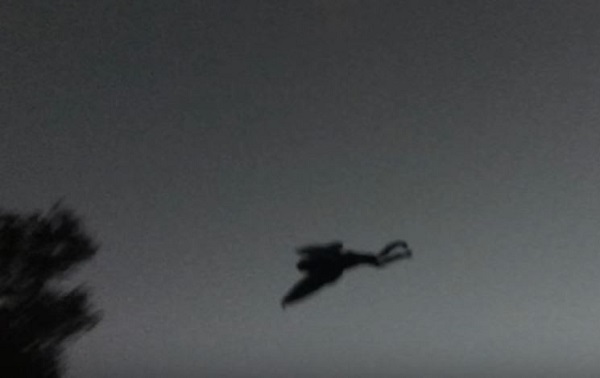 2016 photo from Point Pleasant, West Virginia.
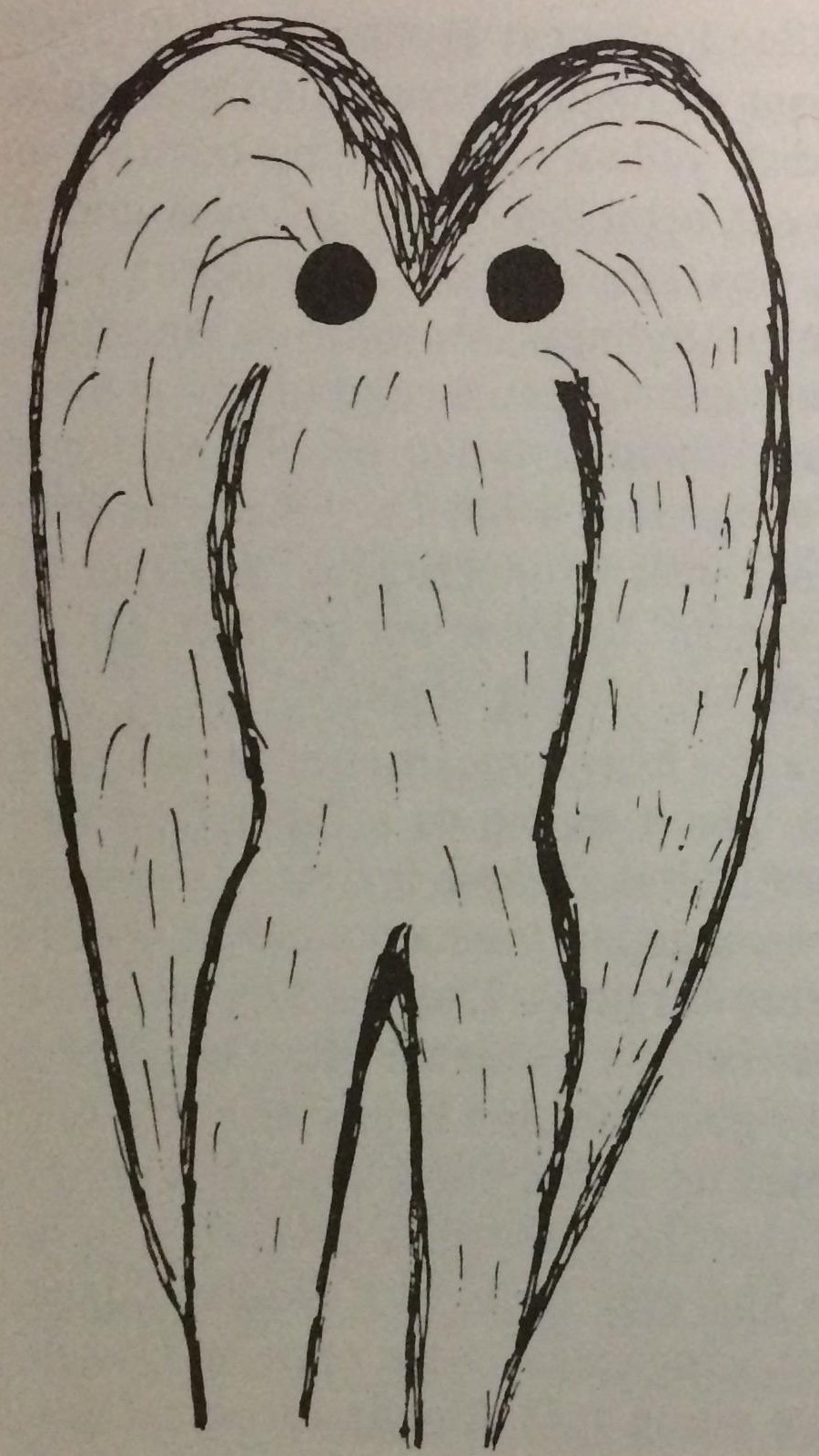 Roger Scarberry's sketch of Mothman
Investigation timeline
- 2026-09-22 — Historical file submitted.
- 2026-09-22 — Historical file accepted and published.
Research notes
Historical research: The Strongest Cryptid Case or a Media-Driven Legend?
Layer one: a short, intense burst of local reports with named early witnesses and same-week press. That is stronger documentation than most cryptid lore. It still does not prove an unknown species.
Layer two: Silver Bridge as omen, Keel’s expanded paranormal system, disaster-prediction cultus. Treat as folklore built after (or around) a real tragedy. Official cause of the collapse is structural; NTSB materials do not mention a creature.
Sandhill-crane and other bird hypotheses address red facial skin and startling size for observers unused to them; they do not automatically match every “followed the car / ten-foot wingspan” detail. Leave cause open.
Historical research: The Ultraterrestrial and Disaster Precursor Model
The 13-month wave of anomalous phenomena in Point Pleasant, West Virginia (1966–1967), culminating in the collapse of the Silver Bridge, is viewed in anomalistic studies as the quintessential "high strangeness" corridor. The winged, red-eyed humanoid was accompanied by widespread UFO sightings, poltergeist events, electrical interference, and sightings of "Men in Black". In anomalous research, the Mothman case is evaluated through John Keel's "ultraterrestrial" or "superspectrum" hypothesis rather than classical cryptozoology. The core research questions analyze whether the entity represented a manifestation of a non-physical, intelligence-driven phenomenon operating outside the standard electromagnetic spectrum. Researchers question whether the entity functioned as a precognitive omen, a psychical projection generated by localized environmental stress, or a perceptual manifestation appearing during times of impending structural or physical catastrophe.
Open research questions
A specific gap in the file. An accepted source, research note, or further-reading link closes it.
Determine whether the November 12, 1966 Clendenin winged-figure report should be treated as a documented precursor to the Point Pleasant Mothman wave or as a separate later-associated case.
Propose evidence & media, a source citation, further reading, a research note, a correction, a related case, or a series link. Staff review before anything is added. An accepted correction does not replace the file by itself.