Activity period
- Earliest claimed event Unknown
- Earliest documented report Unknown
- Latest documented report Ongoing
- Pattern Recurring
Summary
On the night of 6 April 1830, Capt. Joseph White — an elderly Salem merchant then living at what is now the Gardner-Pingree House (128 Essex Street) — was killed in his bed: skull fractured by a blow, body stabbed repeatedly. The crime was a hired killing for inheritance. Richard Crowninshield carried out the murder; Joseph J. Knapp Jr. and John Francis (“Frank”) Knapp were convicted as principals/accessories in the celebrated trials that followed; Crowninshield died by suicide in jail before he could be tried. The Federal house (Samuel McIntire, 1804) is a National Historic Landmark owned by the Peabody Essex Museum. Later ghost lore (footsteps, faces at windows, a child figure) is sparse and unverified beside the hard murder record.
Background
The brick Federal townhouse at 128 Essex Street was built in 1804–05 for merchant John Gardner Jr., designed by Salem architect Samuel McIntire. Capt. Joseph White purchased the house in 1814. By 1830 the retired shipmaster and trader — about eighty-two — lived there with household servants; his niece Mrs. Beckford kept house and was away the night of the killing.
In the early hours of 7 April 1830 the manservant found a plank set to a rear parlor window, the house otherwise little disturbed, and White dead in his chamber: a heavy blow to the temple that fractured the skull without breaking the skin, and multiple deep stab wounds. Valuables including coin and plate were left behind — not a casual burglary.
Investigation and confessions established a conspiracy. Joseph J. Knapp Jr., connected by marriage to White’s household and expecting gain if White died without a favorable will, had already stolen what he believed to be White’s will and arranged for a window to be left accessible. He and his brother John Francis Knapp hired Richard Crowninshield (with George Crowninshield also drawn into the case) to kill White. On the night of 6 April, Richard entered and murdered the sleeping captain while the Knapps waited outside.
Richard Crowninshield hanged himself in the Salem jail on 15 June 1830. Francis Knapp was convicted and hanged; Joseph Knapp Jr. was likewise convicted and hanged (31 December 1830). George Crowninshield was tried and acquitted. Daniel Webster argued for the prosecution; the trials were a national sensation. Literary tradition later tied Webster’s rhetoric and the case’s themes of guilt and conspiracy to work by Edgar Allan Poe (often The Tell-Tale Heart) and to Nathaniel Hawthorne’s interest in Salem crime — influence claims, not courtroom exhibits.
David Pingree acquired the house in 1834; the Pingree family held it until gift to the Essex Institute in 1933. It is now part of the Peabody Essex Museum’s historic houses, restored toward an early-nineteenth-century interior. PEM retains (but does not routinely exhibit) a club associated with the murder weapon tradition.
Witness statement
No statement on file.
Evidence & media
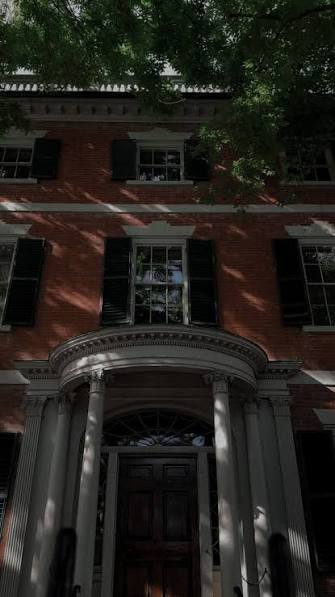 Gardner-Pingree House
 Claimed child ghost in 2019
Investigation timeline
- 2026-09-23 — Historical file submitted.
- 2026-09-23 — Historical file accepted and published.
Research notes
Historical research: Settled paper trail vs. soft haunt lore
The murder is not folklore. Contemporary discovery accounts, the Knapp trials, Webster’s published argument, and modern syntheses (e.g. Smithsonian; History of Massachusetts) agree on date, place, method, and the inheritance conspiracy. Do not flatten the story to “the Crowninshield brothers murdered White for the will”: Richard was the killer; the Knapps hired and abetted; George was acquitted. PEM’s short public note sometimes compresses that cast — prefer trial-level sources for the dossier.
Haunt claims (footsteps attributed to White, faces in upper windows, a child at a downstairs window, anniversary “reenactments”) appear on tour and enthusiast pages without named witnesses, dates, or retained media. A documented homicide does not automatically produce a verified haunting. Those reports stay open and thin.
Avoid ghost-site errors that invent a “White family massacre”; only Captain White was killed in this crime. White’s mercantile career included the era’s East India and related trades; some historical treatments also note slave trading — state that from named historical sources if you cite it, separate from the murder narrative.
Related cases: soft literary/Salem ties only (e.g. Hawthorne-era crime culture, Howard Street Cemetery burial tradition for White/Knapps if you document it). Not SameEvent with 1692 trials.
Open research questions
A specific gap in the file. An accepted source, research note, or further-reading link closes it.
Locate the earliest traceable paranormal account associated with the Gardner-Pingree House and determine when the documented 1830 murder of Captain Joseph White first became connected to reported haunting activity.
Propose evidence & media, a source citation, further reading, a research note, a correction, a related case, or a series link. Staff review before anything is added. An accepted correction does not replace the file by itself.