GG-2026-058
Black Monk of Pontefract
- Phenomenon Apparitions & Spirits, Physical & Poltergeist Activity
- Documentation
Rating C
- A — Strong dossier: several independent sources plus primary evidence (original media, records, measurements) a researcher could use without interviewing anyone.
- B — Well documented: multiple independent witnesses with at least some contemporary primary material, or one witness with substantial primary corroboration (photos, recordings, contemporaneous notes, documents).
- C — Multi-source but soft: several witnesses or a long run of reports, but mostly testimony and after-the-fact secondary sources (newspapers, folklore collections, later interviews). Little or no primary physical evidence. Regional legend clusters such as the Bridgewater Triangle land here.
- D — Thin: single witness (or one household), little or no support beyond the account. Normal for a sincere personal experience.
- E — Incomplete or not yet assessed. Every new submission starts here until staff have read it.
- Evidence & media 5 items
- Status Active
- Location Pontefract, England · exact location withheld
- Occurred 29 August 1966
This case is associated with private or restricted property. Do not trespass, disturb residents, remove artifacts, or conduct an investigation without explicit permission.
Activity period
- Earliest claimed event August 1966
- Earliest documented report 1966
- Latest documented report Unknown
- Pattern Historic wave
Summary
Beginning in 1966, the Pritchard family of Pontefract, West Yorkshire, reported a series of unusual disturbances in their council house on the Chequerfield estate. Accounts included unexplained pools of water, falling or thrown objects, moving furniture, damaged household items, loud noises, and increasingly aggressive incidents that the family believed were caused by an unseen presence they nicknamed “Fred.” Some later accounts also described a dark, hooded apparition. The haunting eventually became known as the Black Monk of Pontefract, although the supposed identification of the apparition as a medieval monk appears to have developed later and is not established by the earliest reports. The case remains difficult to assess because the dramatic family testimony is only partly supported by surviving contemporary documentation, while later retellings substantially expanded the story.
Background
The Pontefract poltergeist case began in 1966 after the Pritchard family moved into a council house on the Chequerfield estate in Pontefract, West Yorkshire. The household included Joe Pritchard, Jean Pritchard, and their children Phillip Pritchard and Diane Pritchard. Later accounts place the beginning of the disturbances during the summer of that year.
The earliest family story describes relatively modest but puzzling incidents. A fine, chalk-like substance was reportedly seen falling inside the house, while unexplained pools of water appeared on the floor despite no obvious leak. These incidents were followed by reports of household objects moving or appearing in unexpected places.
As the story developed, the disturbances became more dramatic. The family reported objects being thrown, furniture moving, clocks and other household items falling or breaking, lights or electrical equipment behaving unexpectedly, and noises without an identifiable source. The unseen presence acquired a personality of sorts within the household and was nicknamed“Fred,” while newspapers used names such as“Mr Nobody.”
The case reached local newspapers by the late 1960s, providing an important documentary anchor independent of much later paranormal literature. Those contemporary reports establish that the Pritchards were publicly describing unusual disturbances at the house during that period. They do not, however, independently verify every dramatic incident that subsequently became associated with the case.
Later family accounts describe increasingly aggressive phenomena, some reportedly involving Diane Pritchard. Stories include heavy furniture moving, objects being thrown, and incidents in which Diane was reportedly physically affected by an unseen force. These claims became central to the later reputation of Pontefract as an unusually violent poltergeist case, but the strongest versions come primarily through family testimony and subsequent retellings rather than a comparably strong body of contemporary independent documentation.
Another major addition to the story was the appearance of a dark, hooded figure. Family members and later witnesses described an apparition resembling a person wearing a black robe or monk's habit. That image eventually gave the case its most famous modern name: the Black Monk of Pontefract.
The apparition's supposed identity, however, is considerably less secure than the existence of the haunting tradition itself.
Pontefract genuinely had an important medieval religious history, including a Cluniac priory founded around the end of the eleventh century. But the later story identifying the haunting specifically with a monk executed for a violent crime is not supported by the early Pritchard-era reports available to us. The connection appears to be a later attempt to provide the apparition with a historical biography rather than information documented when the disturbances first became public.
That distinction matters. There are really two historical layers:
The Pontefract poltergeist: a 1960s household case involving the Pritchard family's reports of disturbances and an unseen presence.
The Black Monk: the later interpretation that gave the presence a specific medieval identity and backstory.
Those layers became so thoroughly merged in popular retellings that the modern name can make the medieval explanation appear contemporary with the original events when it was not.
The case also lacks the sort of controlled investigative record available for cases such as Enfield or Rosenheim. Modern paranormal literature often describes Pontefract as exceptionally well documented or even as one of Britain's most violent hauntings, but much of the surviving narrative ultimately relies on family testimony, later interviews, press accounts, and subsequent authors. One modern review explicitly notes that critics regard the more dramatic claims as lacking verifiable contemporary evidence and potentially affected by later embellishment.
The house itself has since become part of the story. It is now associated publicly with the Black Monk legend and has been used for paranormal visits and investigations. Reports from modern visitors belong to a different evidentiary period, however, and should not be treated as retroactive corroboration of what the Pritchards reported during the 1960s.
The Pontefract case is therefore best approached as a documented modern haunting tradition whose original boundaries have become blurred by later folklore. The Pritchard family really did report disturbances, newspapers really did cover the story, and the family's accounts include some striking claims.
What is much less secure is the later certainty that an identified medieval monk caused them.
The surviving record does not require dismissing everything reported by the Pritchards, but neither does it justify treating every dramatic later version as equally well documented. The alleged poltergeist activity is the original mystery. The Black Monk is an interpretation layered onto it.
Witness statement
No statement on file.
Evidence & media
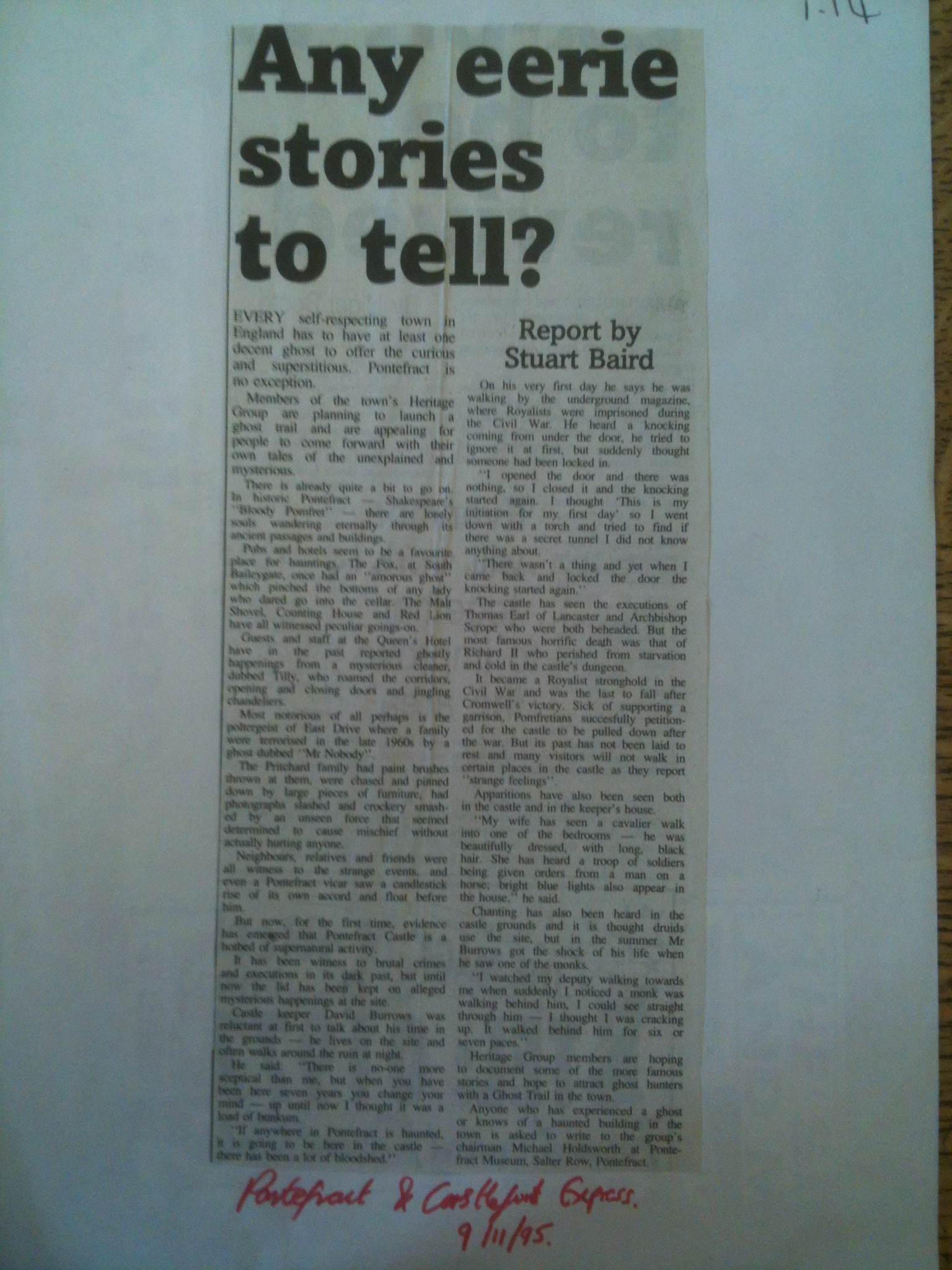
Img 3390
Various newspaper articles over the years.
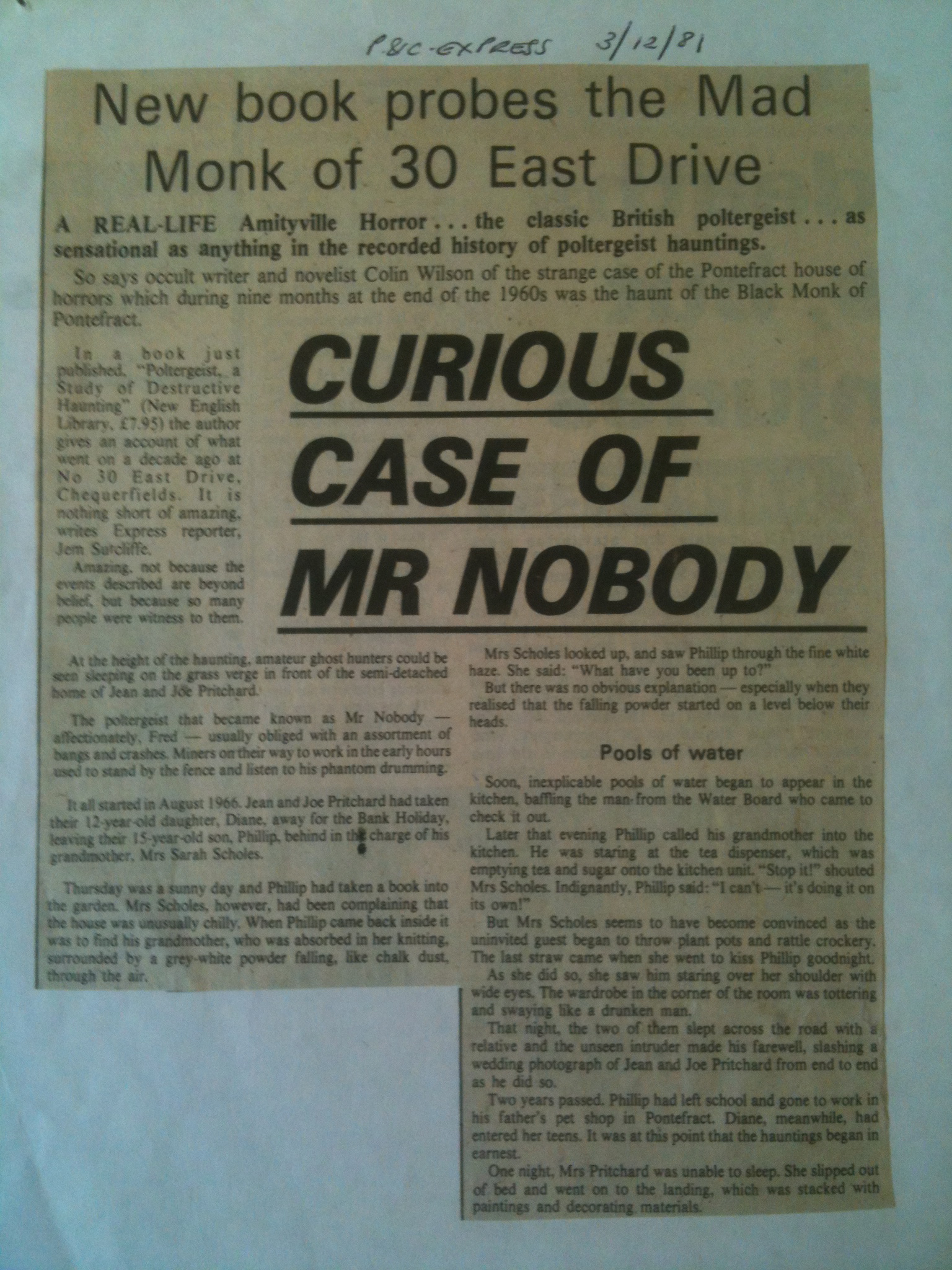
Img 3416
Various newspaper articles over the years.
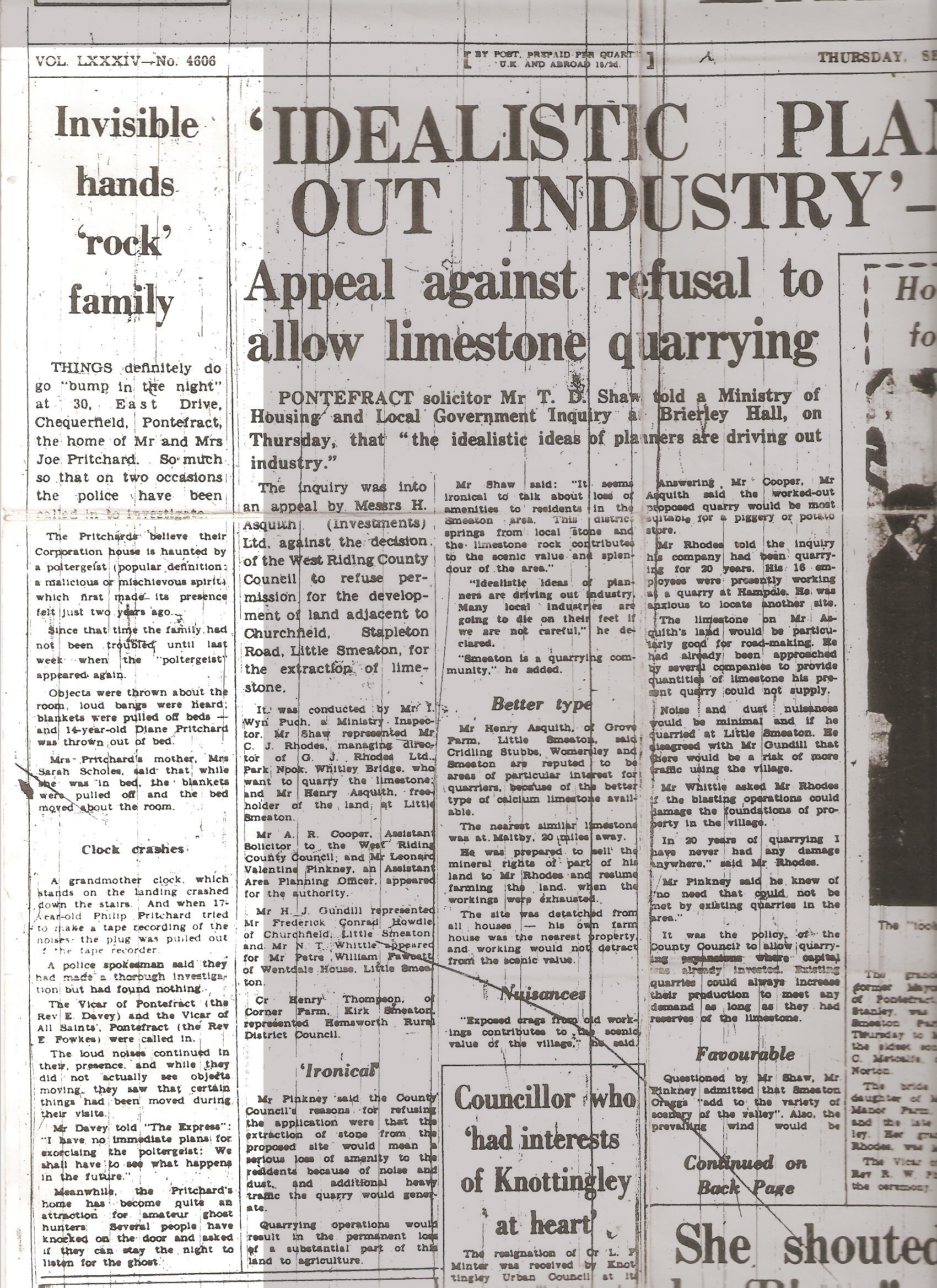
Invisible Hands Article 1968 Copy
Various newspaper articles over the years.
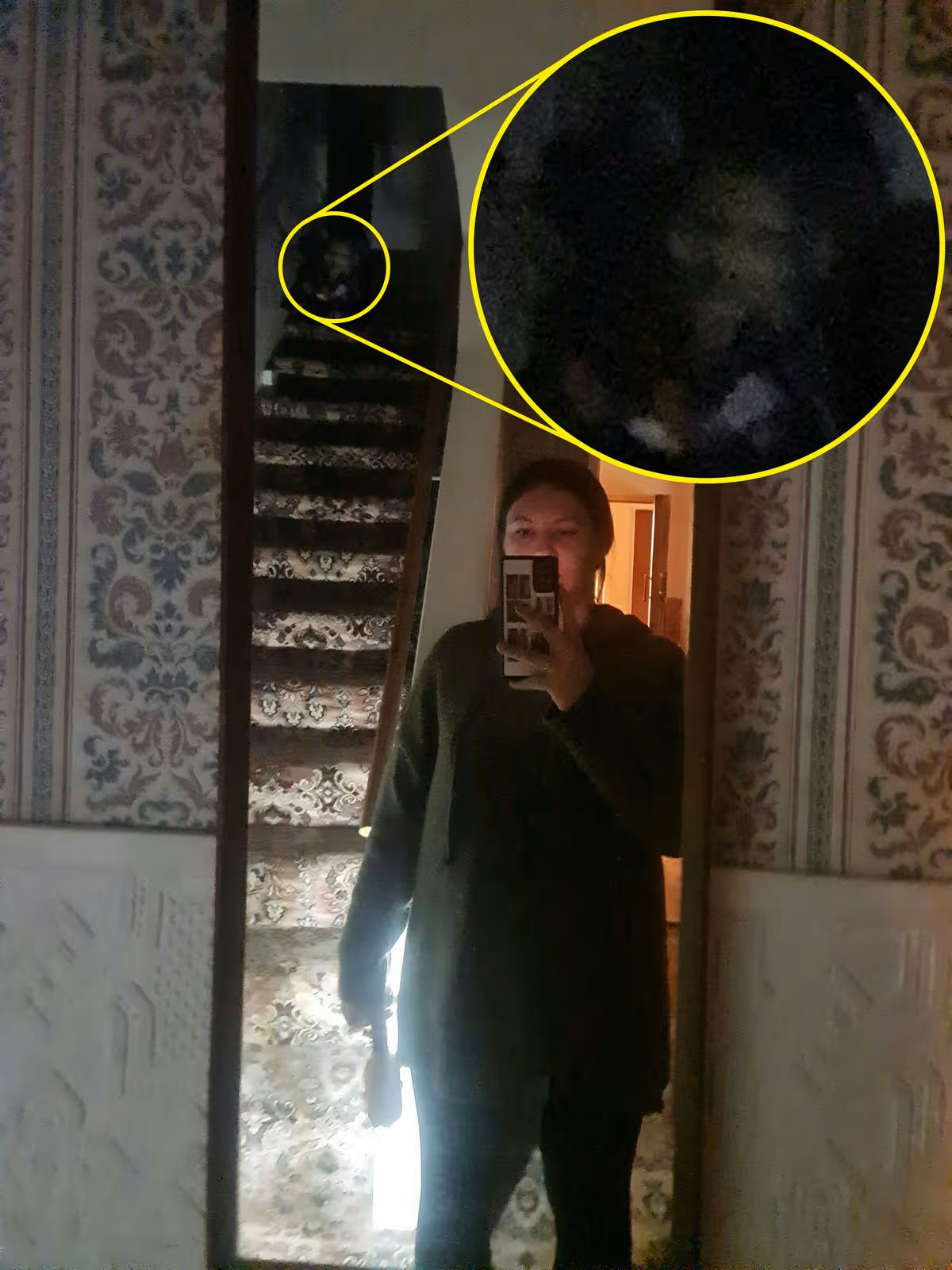
1 Knm Black Monk In Selfie
Alleged paranormal photos from recent guests.
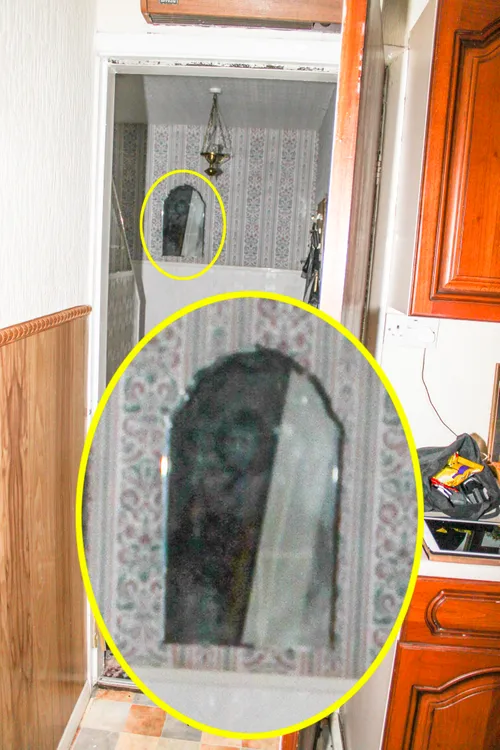
Untitled Photo
Alleged paranormal photos from recent guests.
Further reading
Continue exploring — Wikipedia, documentaries, podcasts, museum pages. Not treated as proof, and not independently verified by this archive.
Investigation timeline
- 2026-09-26 — Historical file submitted.
- 2026-09-26 — Historical file accepted and published.
Assigned GG-2026-058
Research notes
Historical research: Recurrent Spontaneous Psychokinesis and Fraud Analysis
In academic parapsychology and anomalistic psychology, the Pontefract case serves as a benchmark for analyzing Recurrent Spontaneous Psychokinesis (RSPK) alongside socio-familial dynamics.
Researchers like Colin Wilson and Tom Cuny, who documented the case in detail, highlight that the most extreme violent manifestations coincided strictly with Diane Pritchard's early adolescence. Parapsychologists frequently hypothesize that RSPK outbreaks are subconscious externalizations of acute psychological stress, emotional turmoil, or repressed adolescent trauma, manifesting physically without conscious intent. Conversely, skeptic investigators note that primary documentation relies heavily on secondary witness testimony and family anecdotes recorded years after the events. Skeptical analyses argue that many early incidents (such as pools of water or falling chalk) could be achieved through simple trickery or staging by teenagers, amplified by collective familial reinforcement, confirmation bias, and local folklore regarding the historic priory.
Historical research: Unresolved Physical Anomalies and High-Intensity Poltergeist Dynamics
While psychological stress accounts for the demographic positioning of RSPK foci, specific physical characteristics recorded by independent visitors present persistent parapsychological questions.
Open-minded investigators point to several multi-witness reports that are difficult to explain through simple adolescent fraud or hysteria. Multiple non-family witnesses—including local police officers, council workers, and visiting journalists—reported observing structural movement, extreme localized temperature drops, and the spontaneous levitation of heavy objects while all family members were fully accounted for and in clear line of sight. Furthermore, the sheer duration and physical violence of the reported attacks—such as severe friction burns and deep tissue bruising on Diane's neck—raise questions regarding whether an extreme, unclassified physical energy or autonomous, external entity was interacting with the residence's occupants.
Open research questions
A specific gap in the file. An accepted source, research note, or further-reading link closes it.
Trace the earliest contemporary sources for the Black Monk case and establish the documented activity period. Determine whether reports continued into 1969 or ended in 1968. Compare early records of knocking, object movement, apparitions and physical interactions with later books, articles and documentaries to identify details added through retelling.
Propose evidence & media, a source citation, further reading, a research note, a correction, a related case, or a series link. Staff review before anything is added. An accepted correction does not replace the file by itself.