GG-2026-076
New London Ledge Light
- Phenomenon Physical & Poltergeist Activity, Auditory & Acoustic Events
- Documentation
Rating B
- A — Strong dossier: several independent sources plus primary evidence (original media, records, measurements) a researcher could use without interviewing anyone.
- B — Well documented: multiple independent witnesses with at least some contemporary primary material, or one witness with substantial primary corroboration (photos, recordings, contemporaneous notes, documents).
- C — Multi-source but soft: several witnesses or a long run of reports, but mostly testimony and after-the-fact secondary sources (newspapers, folklore collections, later interviews). Little or no primary physical evidence. Regional legend clusters such as the Bridgewater Triangle land here.
- D — Thin: single witness (or one household), little or no support beyond the account. Normal for a sincere personal experience.
- E — Incomplete or not yet assessed. Every new submission starts here until staff have read it.
- Evidence & media 2 items
- Status Historic
- Location New London Ledge Light, Connecticut
Summary
Situated at the mouth of the Thames River in Groton, Connecticut, New London Ledge Light is a three-story, French Second Empire style lighthouse constructed in 1909. According to long-standing maritime lore, a keeper named "Ernie" committed suicide by jumping from the lantern deck in the 1930s after his wife deserted him for a block island ferry captain. Decades of Coast Guard personnel, crewmen, and preservationists stationed at the offshore light have documented poltergeist-like phenomena, including mysterious foghorn activations, moving furniture, unscheduled boat arrivals, and disembodied footsteps.
Background
Built on an artificial granite pier in Long Island Sound, New London Ledge Light is famous for its distinctive brick Mansard-roof architecture—designed to match the affluent coastal estates of nearby Eastern Point.
The Heartbreak Narrative: Folk tradition holds that in May 1936, a keeper named John "Ernie" Randolph returned from shore leave to find his wife had absconded with a local ferry captain. Distraught over the betrayal and suffering from severe isolation, Ernie allegedly climbed to the lantern gallery 58 feet above the water, slit his throat, and leaped into the rocky surf.
Archival and Census Records: Local historians note that official United States Lighthouse Service employment logs do not list an active keeper named "Ernie Randolph" dying by suicide on the ledge in 1936. However, archival research identifies early keeper John A. Cook, who served at the station during the 1920s and early 1930s and whose personal hardships and solitary routines may have formed the real-world basis for the localized narrative.
Timeline of Key Events
├── 1909 : New London Ledge Light constructed and commissioned.
├── 1936 (May) : Traditional date attributed to the suicide of keeper "Ernie."
├── 1939 : U.S. Coast Guard assumes operational control of the light.
├── 1970s–1980s : Active Coast Guard logs document repetitive poltergeist activity.
├── 1987 (May 1) : Lighthouse fully automated; final Coast Guard crew departs.
└── 2014–Pres. : Customary preservation managed by New London Maritime Society; seasonal tours run.
Official Coast Guard Log Entries and Poltergeist Reports
Despite questions regarding the 1930s origin story, anomalous activity was so persistent that active-duty U.S. Coast Guard personnel routinely recorded strange occurrences in official station logbooks prior to automation:
Physical Interferences: Coast Guard crews reported televisions turning on and off independently, bedsheets being pulled off sleeping Coast Guardsmen, locked doors unlatching in heavy seas, and coffee pots boiling on turned-off stoves.
Acoustic and Nautical Activity: Servicemen frequently recorded hearing heavy footsteps pacing the spiral staircase of the lantern room at night. On multiple occasions, the automated foghorn—which required manual override procedures—would activate on clear, sunny afternoons or shut off completely during heavy dense fog.
Note: Last documented paranormal event was 1987 when the last stationed crew left due to it being automated. A few visitors since claimed minor experiences but nothing formally documented, logged. Ghost Hunters went there in 2005 and said they did not find enough activity to call it active. Thus we are labeling this "historic" not active. Granted this may be simply due to no one there for any length of time anymore. But until someone can document something of substance we will side with it being inactive.
Witness statement
No statement on file.
Evidence & media
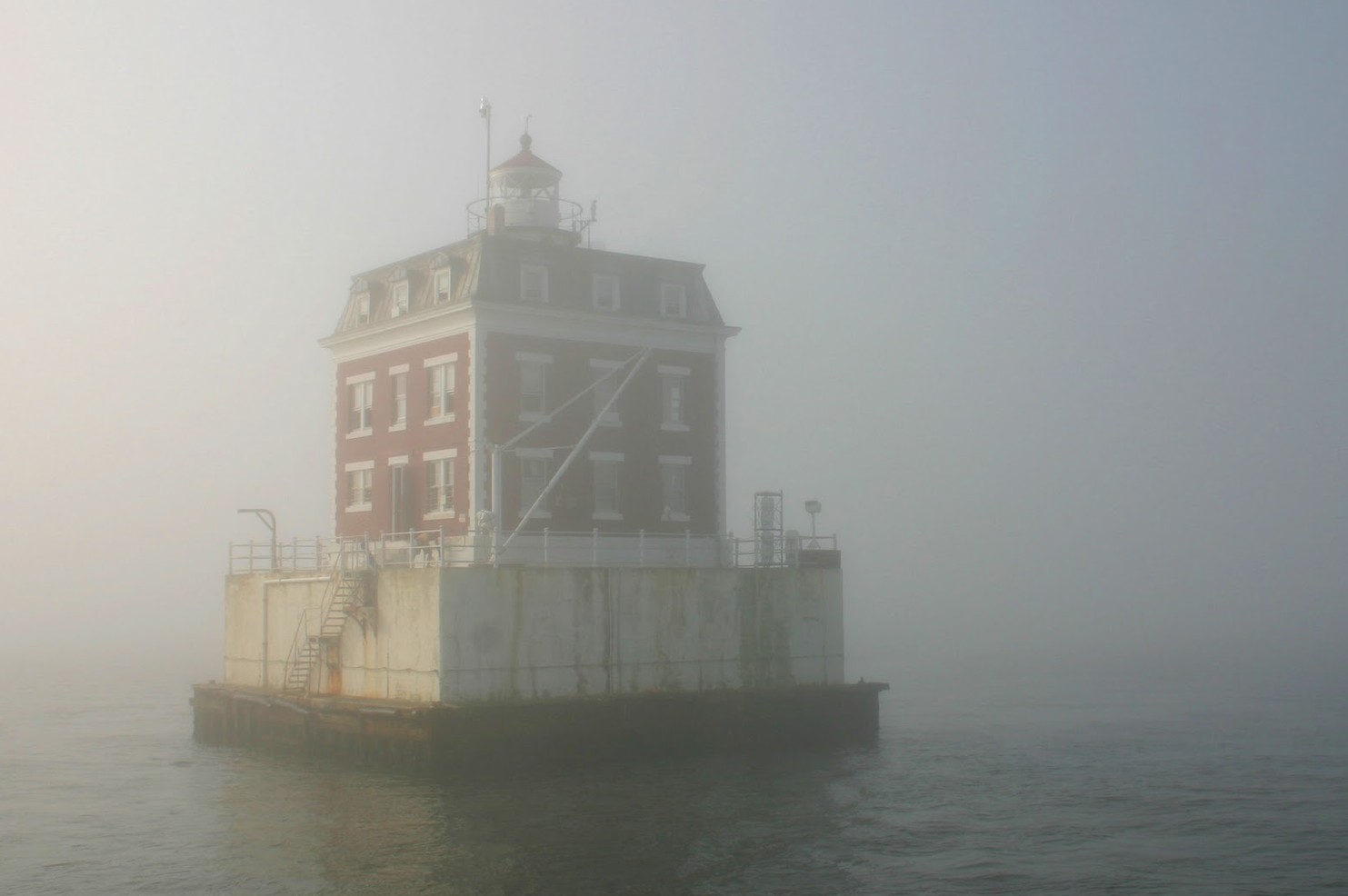 New London Ledge Light, 2011
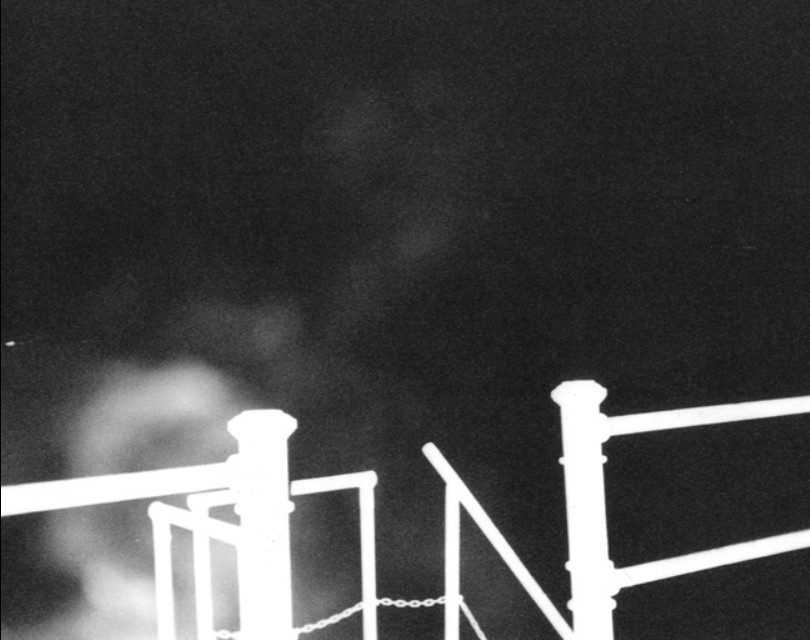 Picture of mist phenomena at Ledge Light by Christine Kaczynski
Investigation timeline
- 2026-09-28 — Historical file submitted.
- 2026-09-28 — Historical file accepted and published.
Research notes
Historical research: Infrasound Oscillations, Marine Electrical Grounding, and Offshore Sensory Isolation
From environmental physics, structural acoustics, and occupational psychology perspectives, New London Ledge Light presents an exceptional case study in natural sensory deception.
Sited on an isolated masonry caisson surrounded by open sea, the heavy brick structure acts as a resonant chamber for low-frequency wave impacts and wind shears. Acoustic engineers highlight that low-frequency sound waves (infrasound) generated by engine vibration from passing submarine traffic out of Naval Submarine Base New London, combined with high-wind resonance through the Mansard roof, produce standing acoustic waves within the hollow stairwells. Infrasound induces feelings of dread, auditory hallucinations, and physiological discomfort. Furthermore, early 20th-century marine wiring systems on offshore structures were prone to voltage fluctuations and stray ground currents caused by saltwater corrosion, providing a mechanical explanation for intermittent foghorn triggers and erratic appliance behavior.
Historical research: Poltergeist Structural Imprinting, Station-Log Anomalies, and Occupational Folklore
Anomalistic researchers and folklorists evaluate the Ledge Light claims as a hybrid of place-memory imprinting, spontaneous psychokinesis (RSPK), and structured occupational folklore.
Parapsychological field researchers focus on the high density of report corroboration found in official government logs. Unlike standard urban legends, the Ledge Light reports were documented by rotating Coast Guard personnel who had no prior investment in promoting local ghost stories and often sought to avoid reprimand for logging non-standard occurrences. Researchers examine whether prolonged isolation and boredom experienced by small two-to-three-man crews generated subconscious psychokinetic responses that physically manifested as recurring poltergeist activity within the confined living space.
Propose evidence & media, a source citation, further reading, a research note, a correction, a related case, or a series link. Staff review before anything is added. An accepted correction does not replace the file by itself.