GG-2026-087
Lonnie Zamora Incident
- Phenomenon UFOs/UAPs
- Documentation
Rating B
- A — Strong dossier: several independent sources plus primary evidence (original media, records, measurements) a researcher could use without interviewing anyone.
- B — Well documented: multiple independent witnesses with at least some contemporary primary material, or one witness with substantial primary corroboration (photos, recordings, contemporaneous notes, documents).
- C — Multi-source but soft: several witnesses or a long run of reports, but mostly testimony and after-the-fact secondary sources (newspapers, folklore collections, later interviews). Little or no primary physical evidence. Regional legend clusters such as the Bridgewater Triangle land here.
- D — Thin: single witness (or one household), little or no support beyond the account. Normal for a sincere personal experience.
- E — Incomplete or not yet assessed. Every new submission starts here until staff have read it.
- Evidence & media 4 items
- Status Historic
- Location Socorro, New Mexico
- Occurred 24 April 1964
Summary
On the evening of April 24, 1964, Lonnie Zamora, a patrol officer with the Socorro Police Department, was pursuing a speeding vehicle when he heard a loud roar and observed a blue-orange flame in the distance. Believing a nearby dynamite shack may have exploded, he discontinued the chase and drove toward the apparent source of the disturbance.
As Zamora approached an arroyo south of Socorro, he observed what he initially thought was an overturned vehicle. Upon getting closer, he reported seeing a smooth, white, oval-shaped object resting on the ground. Near the object he observed two small figures dressed in white coveralls.
Zamora later stated the figures appeared startled by his presence before moving toward the object. Moments later, he reported hearing a roar and observing a blue-orange flame beneath the craft as it rose into the air and departed at high speed.
Background
The Socorro Encounter
At approximately 5:45 PM on April 24, 1964, Officer Lonnie Zamora was patrolling Highway 85 when his attention was diverted by a loud, low-frequency roar and a cone of blue-orange fire rising over a hill south of town:
The Arroyo Approach: Driving his patrol car up a steep gravel ridge, Zamora looked down into a shallow arroyo and initially thought an automobile had flipped onto its side.
The Craft and Entity Observations: Upon closer inspection from a distance of roughly 100 to 150 feet, Zamora observed an oval or egg-shaped white object lacking windows or doors, bearing a distinct red inverted V or chevron-like insignia on its side. Standing beside the object were two small entities (roughly 4 feet tall) clad in white jumpsuits.
The Departure: As Zamora stepped out of his cruiser and radioed dispatch to call for backup, the entities entered the vehicle. A deafening roar erupted, accompanied by a blast of blue flame from underneath the craft. Zamora dropped to the ground for safety as the object rose vertically out of the arroyo, stabilized at approximately 20 to 25 feet, and flew silently out of sight toward the nearby White Sands Missile Range.
Timeline of Key Events
├── April 24, 1964 (05:45 PM) : Officer Lonnie Zamora observes craft, entities, and high-speed departure in Socorro, NM.
├── April 24, 1964 (06:00 PM) : Sgt. Sam Chavez arrives at the arroyo; documents smoking brush and physical soil depressions.
├── April 25, 1964 : FBI Agent Arthur Byrnes Jr. and Army Captain Richard T. Holder conduct initial site interviews.
├── April 27, 1964 : Dr. J. Allen Hynek arrives in Socorro on behalf of USAF Project Blue Book.
└── October 1964 : USAF issues final analysis: Case officially classified as "Unidentified."
Physical Trace Evidence and Official Response
Unlike typical visual-only sightings, the Socorro incident produced immediate physical evidence evaluated by federal agencies:
Physical Site Traces: Arriving at the scene minutes after the event, Sgt. Sam Chavez confirmed that Zamora was noticeably shaken. Together, they documented four wedge-shaped soil depressions arranged in a trapezoidal pattern where the landing legs rested, along with multiple smaller burnt circular depressions and charred creosote bushes.
Interagency Task Force: The proximity of White Sands Missile Range, Holloman Air Force Base, and the Sandia National Laboratories led to immediate involvement by the FBI, U.S. Army Intelligence, and the U.S. Air Force's Project Blue Book. Soil samples were collected and tested for chemical accelerants, propellant residue, and radiation.
Witness statement
No statement on file.
Evidence & media
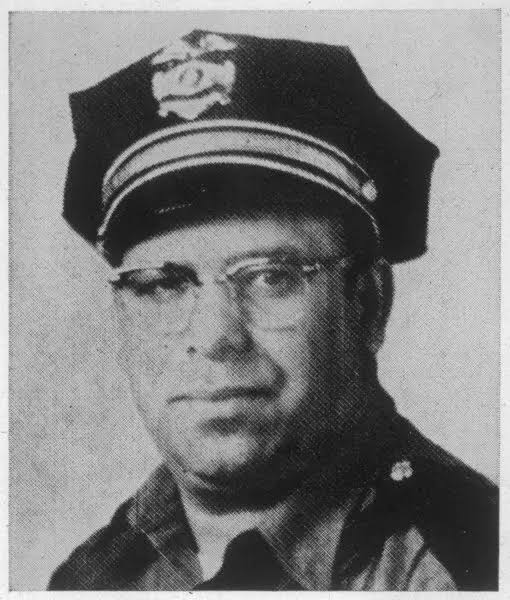 Lonnie Zamora
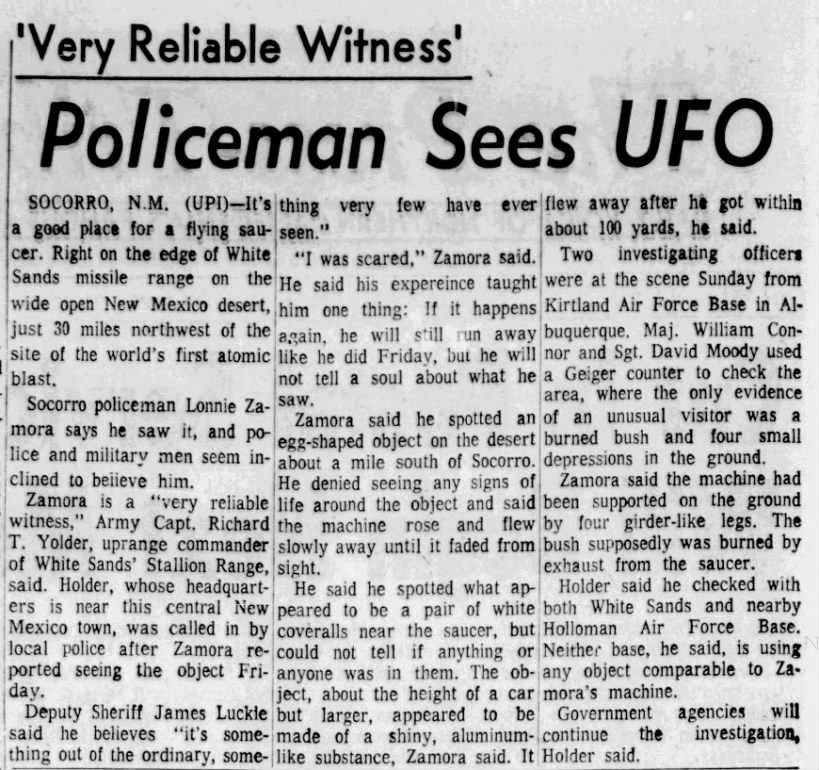 Zamora Socorro UFO sighting April 1964
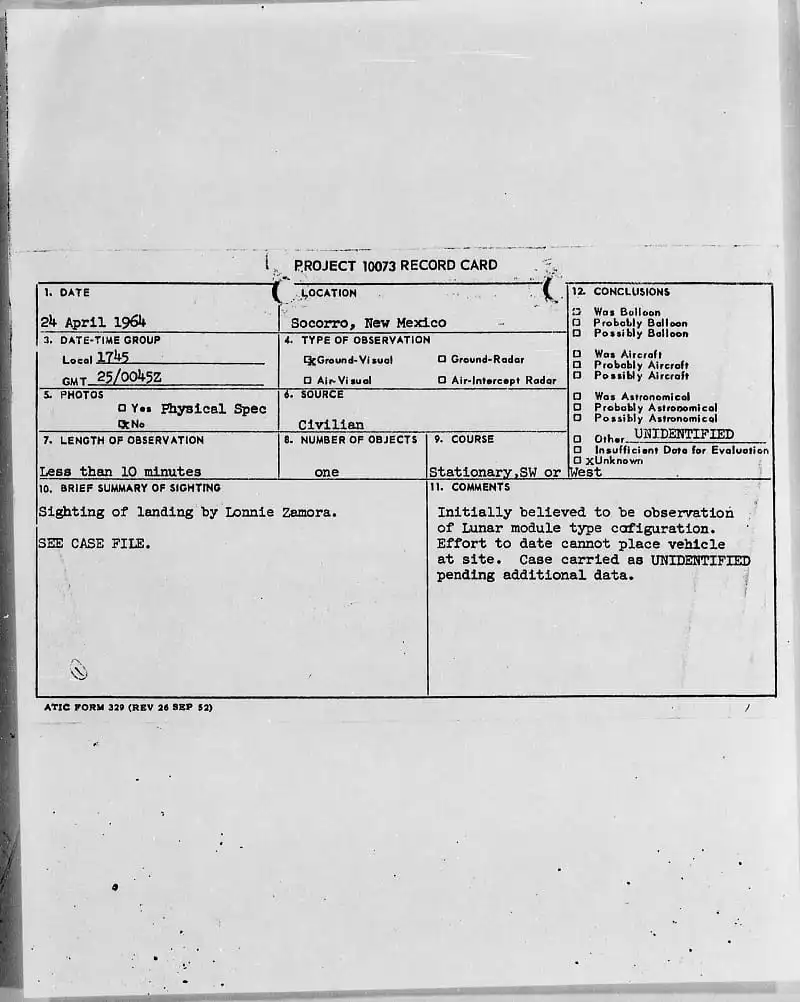 Project Blue Book case file card.
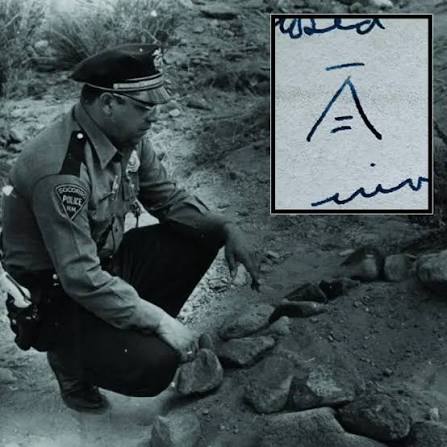 Lonnie Zamora at the scene and his drawing of the symbol he saw.
Investigation timeline
- 2026-09-29 — Historical file submitted.
- 2026-09-30 — Historical file accepted and published.
Research notes
Historical research: One of Project Blue Book's Strongest "Unknowns"
The Socorro Incident occupies a unique position in UFO history because it combines several elements rarely found together: a trained law-enforcement witness, immediate reporting, physical trace evidence, and extensive government investigation. Unlike many UFO reports that depend entirely upon witness memory years later, the Zamora case generated police reports, site examinations, and official documentation almost immediately after the reported event.
At the same time, the case remains unresolved rather than proven. The investigation established that Zamora reported the encounter, that physical marks existed at the scene, and that multiple agencies examined the evidence. It did not establish the identity of the object. Under Gothic.Black standards, the strongest conclusion is that a documented unexplained event occurred on April 24, 1964, while the nature of the object itself remains unknown.
Historical research: Soil Mechanics, Chemical Propellant Analysis, and Military Test Vehicles
From aerospace engineering and forensic site analysis perspectives, the Socorro physical evidence presents several compelling technical constraints.
Analysis of the four wedge-shaped ground depressions by Air Force personnel estimated that producing prints of that depth in the hard-packed, gravelly desert soil required a vehicle mass of approximately 3 to 8 tons. Soil chemistry tests conducted at the Air Force Materials Laboratory at Wright-Patterson AFB failed to identify conventional hydrocarbon fuel residues or chemical rocket exhaust byproducts, despite clear thermal scorching on the creosote bushes. Hynek and military engineers evaluated whether the craft could have been a prototype Lunar Excursion Module (LEM) test rig or a lander built by NASA contractor Bell Aerosystems; however, flight logs confirmed no test vehicles were operating in the area, and none were capable of independent horizontal high-speed flight following a free-air hover.
Historical research: High-Credibility Single-Witness Sightings, Insignia Variants, and Project Blue Book Case #8766
In UAP research, the Socorro case stands out due to the high witness reliability rating assigned to Officer Zamora and the subsequent evaluation by Project Blue Book's chief scientific consultant, Dr. J. Allen Hynek.
Initially skeptical, Hynek admitted that Zamora was a grounded, non-sensationalist law enforcement officer with no interest in science fiction or UFO lore. The case played a pivotal role in shifting Hynek’s personal perspective on UAP from conventional skepticism to open scientific inquiry. Additionally, controversy surrounds the red symbol on the side of the craft: initial field reports depicted an inverted crescent with an arrow pointing upward through it, but rumors persist that Blue Book officials deliberately leaked slightly altered variants of the insignia to filter out hoaxers and copycats in subsequent regional reports.
Propose evidence & media, a source citation, further reading, a research note, a correction, a related case, or a series link. Staff review before anything is added. An accepted correction does not replace the file by itself.