GG-2026-202
Ängelholm UFO Encounter
- Phenomenon UFOs/UAPs
- Documentation
Rating C
- A — Strong dossier: several independent sources plus primary evidence (original media, records, measurements) a researcher could use without interviewing anyone.
- B — Well documented: multiple independent witnesses with at least some contemporary primary material, or one witness with substantial primary corroboration (photos, recordings, contemporaneous notes, documents).
- C — Multi-source but soft: several witnesses or a long run of reports, but mostly testimony and after-the-fact secondary sources (newspapers, folklore collections, later interviews). Little or no primary physical evidence. Regional legend clusters such as the Bridgewater Triangle land here.
- D — Thin: single witness (or one household), little or no support beyond the account. Normal for a sincere personal experience.
- E — Incomplete or not yet assessed. Every new submission starts here until staff have read it.
- Evidence & media 5 items
- Status Historic
- Location Ängelholm, Skåne County, Sweden
Exact public marker identifying the Ängelholm UFO Memorial in Kronoskogen, erected at the location Gösta Carlsson identified as the site of his alleged 1946 encounter. The marker accurately identifies the public memorial; it does not independently establish that a spacecraft landed at this location.
Activity period
- Earliest claimed event 18 May 1946
- Earliest documented report Unknown
- Latest documented report 18 May 1946
- Pattern Single event
Summary
The Ängelholm UFO Encounter is a Swedish close-encounter claim centered on Gösta Carlsson, who said that on 1946-05-18 he discovered a landed disc-shaped craft and human-like occupants in a forest clearing near Ängelholm. Carlsson described an illuminated vehicle supported above the ground, several figures dressed in close-fitting clothing, unusual objects left behind after the craft departed, and marks he interpreted as evidence of the landing. He later claimed that dreams or mental communications connected with the encounter contributed to ideas associated with his subsequent business success, but the story was not publicly documented until decades after the alleged event. Swedish UFO investigator Clas Svahn has extensively studied the case and concluded that significant circumstances fail to support important portions of Carlsson's account. A public UFO memorial erected in 1972 still marks Carlsson's claimed landing site, making Ängelholm unusual as a case in which the alleged extraterrestrial encounter remains disputed but its cultural and physical commemoration is indisputably real.
Background
On 1946-05-18, Gösta Carlsson, then twenty-eight years old, said he was returning from the coast through the wooded landscape near Ängelholm in southern Sweden when he noticed an unexplained light in a clearing. In the detailed version later attributed to Carlsson, it was near 22:45 and visibility remained good in the late spring evening. He initially considered ordinary explanations, including campers or young people in the clearing, before approaching the source of the illumination. UFO-Sverige preserves Carlsson's own later description of the beginning of the encounter.
Carlsson claimed that the illuminated object proved to be a disc-shaped craft resting above the ground on supporting structures. Around or within the craft he described several apparently human-like figures wearing close-fitting clothing, boots and head coverings. One occupant reportedly used a device resembling a camera or other chest-mounted apparatus while apparently warning Carlsson to remain at a distance. In Carlsson's story, the figures eventually entered the craft and the vehicle departed without conventional aircraft noise.
After the departure, Carlsson said he examined the clearing. He described marks or gouges that he interpreted as impressions produced by the craft and claimed to have collected unusual objects, including a quartz-like rod. His recollection of the object's dimensions, landing supports and surrounding ground traces later informed the physical design of the monument constructed at the site. None of the surviving alleged traces or artifacts reviewed for this file independently establishes the presence of an extraterrestrial vehicle.
Carlsson's narrative did not end with the alleged physical encounter. During the remainder of 1946 he said he experienced unusual dreams in which the pilot or commander of the craft communicated ideas to him. The later story connected those experiences with his interest in pollen and with scientific or commercial developments that contributed to his subsequent success. Carlsson founded the company Cernelle in 1953 and became widely known in Sweden as “Pollenkungen,” the Pollen King. His later business achievements are historical; the claim that extraterrestrial information contributed to them remains Carlsson's interpretation.
That distinction became one of the most important features of later investigation. Carlsson was not simply an anonymous teller attached to an isolated legend. He became a successful Swedish entrepreneur and prominent local figure whose personal history could be compared against the extraordinary biography he later associated with the encounter. The existence of identifiable people, businesses, places and dates gave investigators considerably more material to test than exists in many historical UFO stories.
A major evidentiary problem is that the encounter was not publicly documented when Carlsson said it occurred. Although the event was dated to May 1946, Carlsson did not make the story publicly known until decades later. By then, UFO culture had developed internationally and the terminology and imagery surrounding flying saucers had changed substantially. Recovering exactly when Carlsson first told another person about the encounter, and whether contemporary notes, correspondence or independent testimony survive from the period before public disclosure, is therefore central to evaluating the case.
Swedish UFO researcher Clas Svahn has investigated Carlsson's story extensively. Writing through UFO-Sverige, Svahn explicitly describes the encounter as alleged and states that years of investigation uncovered multiple circumstances that do not support Carlsson's own version. Svahn's research eventually produced the book Mötet i gläntan, devoted specifically to examining the Ängelholm case. This skeptical treatment is particularly valuable because it comes from within Swedish UFO research rather than from someone dismissing the subject without investigation.
The encounter also occurred during an extraordinary year in Scandinavian UFO history. Beginning in 1946, Sweden and neighboring countries experienced the famous “ghost rocket” wave, during which roughly two thousand reports of unusual rocket- or missile-like objects were logged across Scandinavia and elsewhere in Europe. Carlsson's claimed Ängelholm encounter belongs chronologically to that broader period, but similarity in date does not demonstrate that his disc-shaped landed craft was connected with the ghost-rocket reports. They should remain separate case histories unless evidence establishes a relationship.
In 1972, a physical monument was erected in the clearing associated with Carlsson's story. The memorial includes a concrete model representing the craft as he remembered it and markings corresponding with the supposed landing impressions. Because the monument was constructed according to Carlsson's recollections rather than recovered from a physical vehicle, it should not be confused with archaeological reconstruction of an independently documented event. What it does preserve exceptionally well is the form in which Carlsson understood and publicly presented the encounter.
Over time the monument became a local curiosity and tourist destination. Its existence creates an unusual evidentiary situation: photographs of the concrete saucer, landing circles and site are entirely authentic photographs of the Ängelholm UFO Memorial, but they are not photographs of a UFO or authentic landing traces from 1946. Even the concrete ground impressions are commemorative representations produced decades after the alleged event. Keeping that distinction explicit is essential when such imagery circulates without adequate captions.
The memorial nevertheless gives the case lasting cultural importance independent of whether Carlsson encountered anything extraordinary. It records how one person's claim became incorporated into the landscape of Ängelholm and eventually into Swedish UFO history. The memorial is publicly identifiable, its construction is documented and the underlying witness can be researched. Those facts make the case historically richer without increasing the evidentiary strength of Carlsson's extraterrestrial interpretation.
The Ängelholm encounter therefore contains three records that must remain distinct. First is the undisputed biography of Gösta Carlsson, including his later business success and local prominence. Second is Carlsson's detailed but retrospective account of an extraordinary 1946 encounter. Third is the documented public and cultural history of that account, including investigation by Swedish UFO researchers and construction of the 1972 memorial. The first and third are strongly documented; the extraordinary physical event occupying the middle remains dependent principally upon Carlsson's testimony and has not been independently corroborated.
Witness statement
No statement on file.
Evidence & media
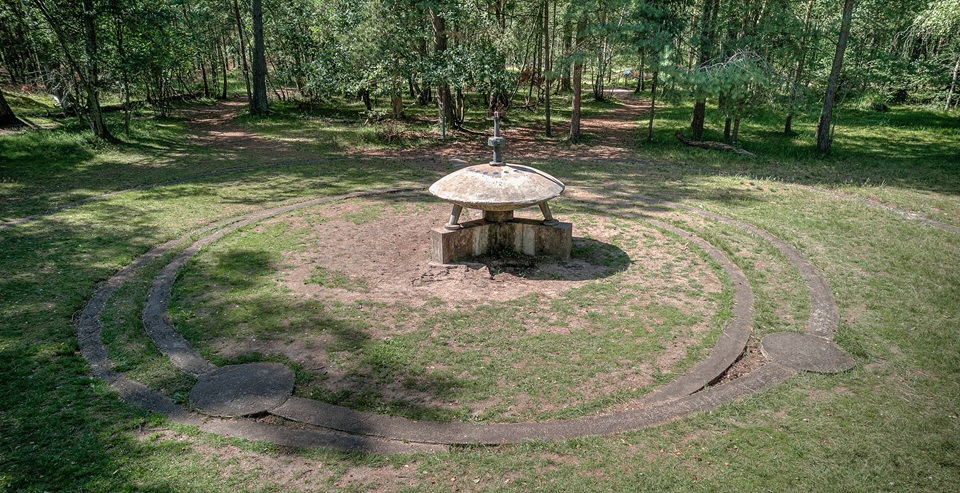
Ängelholm UFO Memorial
UFO memorial erected in 1972 at the location Gösta Carlsson identified as the site of his alleged 1946 encounter near Ängelholm. The concrete craft represents Carlsson's recollection of the reported vehicle and should not be mistaken for a recovered object or physical evidence from 1946.
Status: Verified
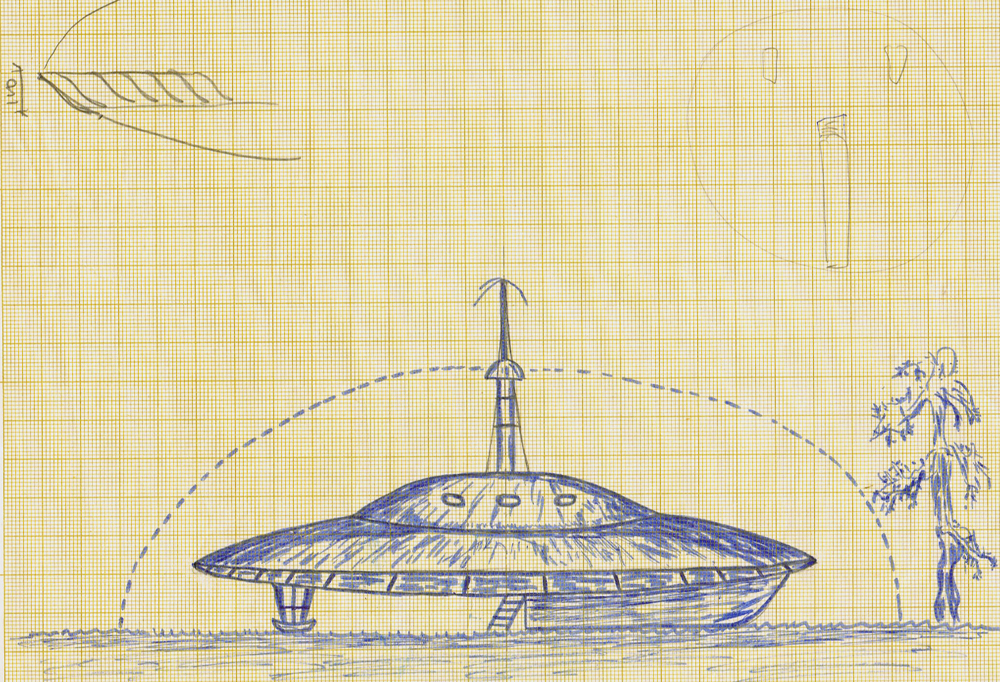
Gösta Carlsson UFO Reconstruction Sketch, 1967
Sketch made by Curt Bergquist in 1967 following Gösta Carlsson's description of the object he claimed to have encountered near Ängelholm in 1946. The drawing documents Carlsson's description of the alleged craft before construction of the 1972 memorial; it is an interpretive reconstruction rather than an eyewitness image or independent evidence of the object.
Status: Verified
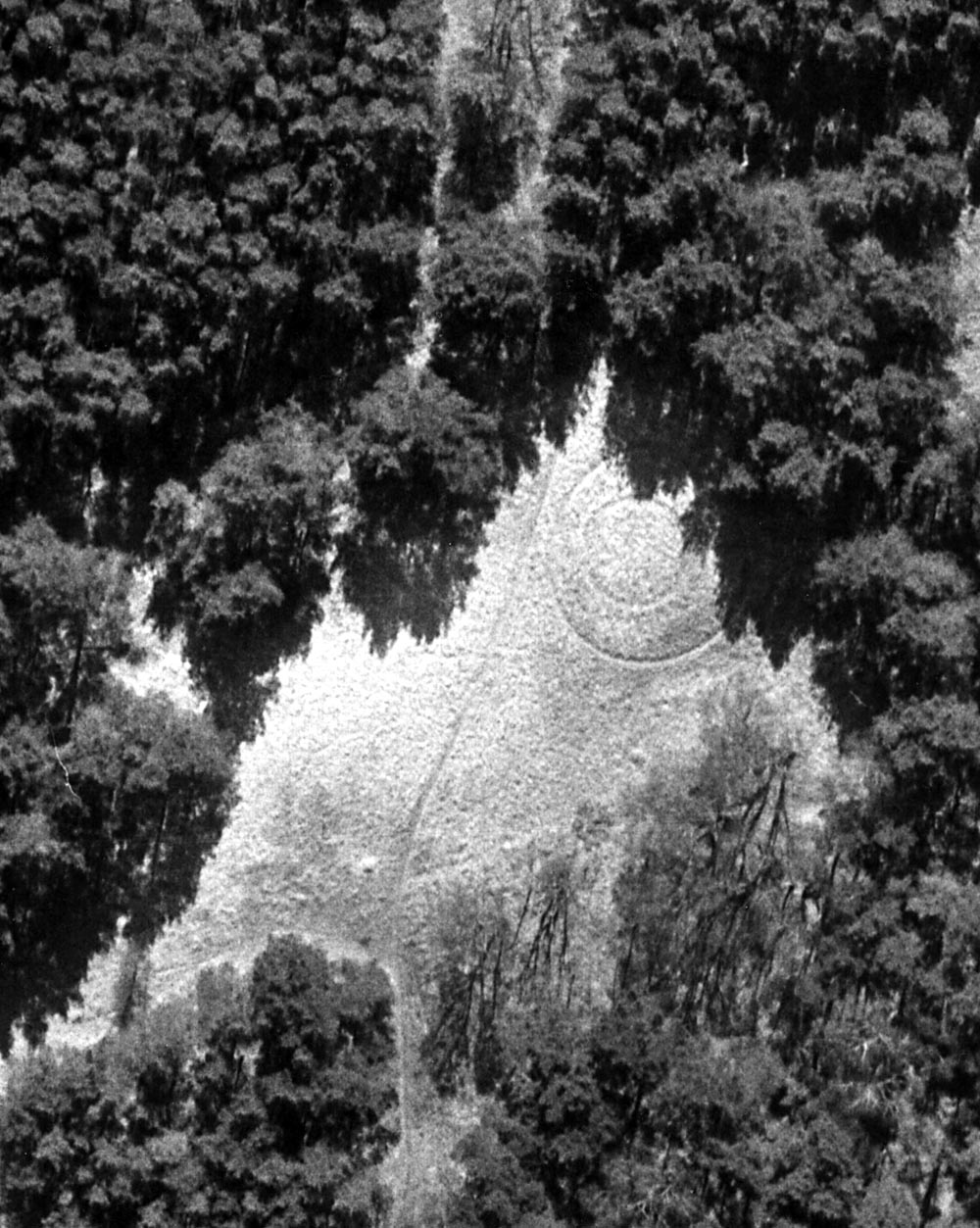
Ängelholm UFO Site – Aerial Photograph, 1963
Aerial photograph of the Ängelholm site in 1963, nine years before construction of the UFO memorial. A roughly circular feature is visible in the clearing associated with Gösta Carlsson's claimed 1946 encounter. The photograph documents the site's appearance in 1963; it does not establish the origin of the visible feature or independently confirm a spacecraft landing.
Status: Verified
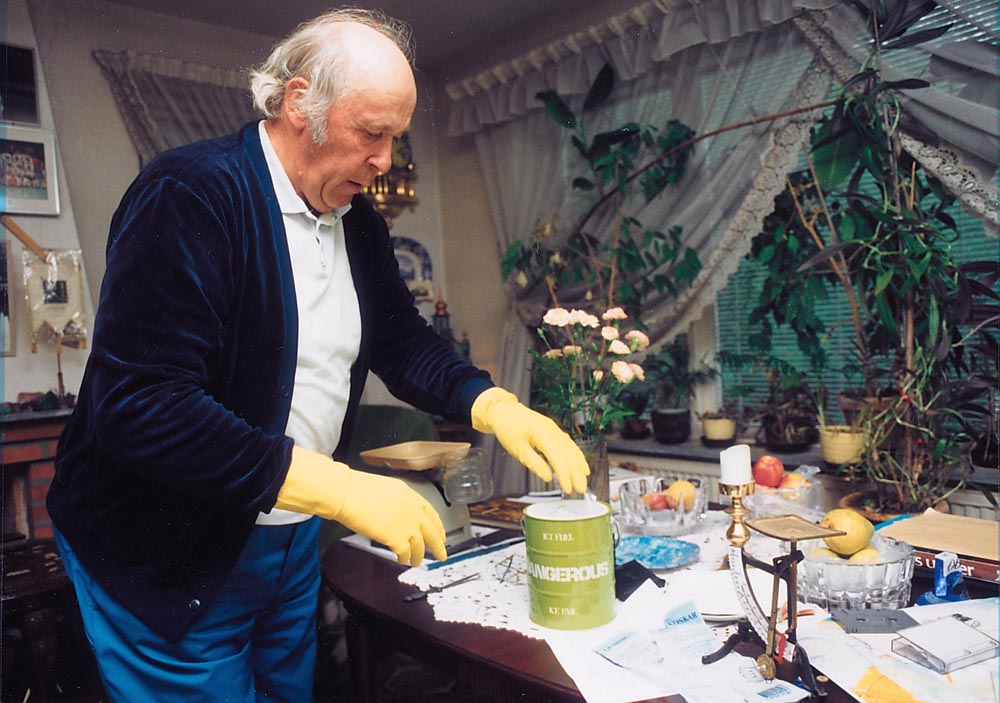
Gösta Carlsson Handling the Alleged Rod and Ring
Photograph showing Gösta Carlsson handling the rod and ring he associated with his claimed 1946 Ängelholm encounter. The objects were stored in a container marked “Dangerous,” and Carlsson is shown using protective gloves. The photograph documents the claimed artifacts and their later handling; it does not establish their origin or connection to an extraterrestrial craft.
Status: Verified
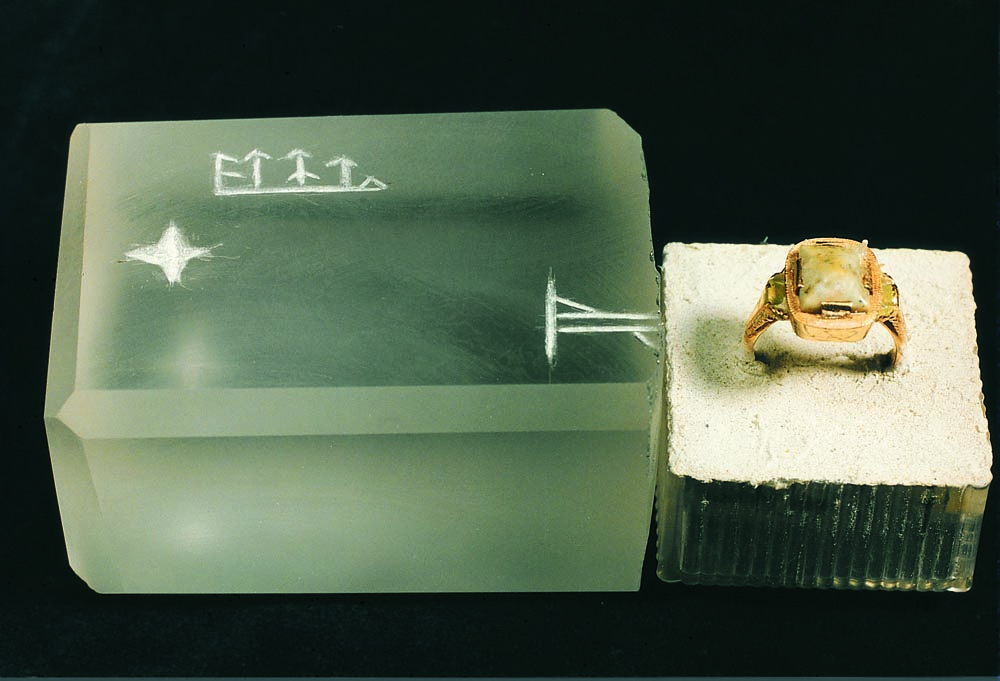
Alleged Ängelholm Rod and Ring Artifacts
Rod and ring that Gösta Carlsson associated with his claimed 1946 Ängelholm encounter. The artifacts were photographed by Hans Jörgen Guttsman but their present whereabouts are uncertain, limiting the possibility of further independent examination. The photograph documents the objects attributed to the case; it does not establish their origin or connection to an extraterrestrial craft.
Status: Verified
Further reading
Continue exploring — Wikipedia, documentaries, podcasts, museum pages. Not treated as proof, and not independently verified by this archive.
Investigation timeline
- 2026-11-11 — Historical file submitted.
- 2026-11-11 — Research question opened
What is the earliest surviving written or recorded account in which Gösta Carlsson describes the 1946 encounter?
- 2026-11-11 — Research question opened
Did Carlsson tell family, friends or colleagues about the event before its later public disclosure, and do any contemporary records survive?
- 2026-11-11 — Research question opened
What became of the quartz rod and other objects Carlsson said he recovered from the clearing, and were any subjected to documented independent analysis?
- 2026-11-11 — Research question opened
What evidence did Clas Svahn identify as inconsistent with or damaging to Carlsson's account?
- 2026-11-11 — Research question opened
Can the evolution of Carlsson's descriptions of the craft, occupants, landing marks and later dreams be reconstructed across his published interviews and statements?
- 2026-11-11 — Historical file accepted and published.
Assigned GG-2026-202
Research notes
Historical research: When Did Gösta Carlsson First Tell the Story?
The largest evidentiary weakness in the Ängelholm case is the gap between the alleged encounter on 1946-05-18 and Carlsson's much later public disclosure. A precisely dated extraordinary encounter can appear better documented than it really is when the event date and documentation date are treated as interchangeable.
Carlsson supplied detailed descriptions of the weather, time, location, craft, occupants and ground traces, but those details survive principally through later testimony. Determining whether any notes, letters, photographs, objects or testimony from family members and acquaintances can establish that Carlsson was telling substantially the same story before public interest in UFOs became widespread would materially affect assessment of the case.
The priority is therefore not merely to ask whether Carlsson was sincere. It is to reconstruct the chronology of the narrative itself: when each major detail was first recorded, whether accounts changed between tellings, when the alleged artifacts first appeared, and how the story developed before construction of the memorial in 1972.
Open research questions
A specific gap in the file. An accepted source, research note, or further-reading link closes it.
What is the earliest surviving written or recorded account in which Gösta Carlsson describes the 1946 encounter?
Did Carlsson tell family, friends or colleagues about the event before its later public disclosure, and do any contemporary records survive?
What became of the quartz rod and other objects Carlsson said he recovered from the clearing, and were any subjected to documented independent analysis?
What evidence did Clas Svahn identify as inconsistent with or damaging to Carlsson's account?
Can the evolution of Carlsson's descriptions of the craft, occupants, landing marks and later dreams be reconstructed across his published interviews and statements?
Propose evidence & media, a source citation, further reading, a research note, a correction, a related case, or a series link. Staff review before anything is added. An accepted correction does not replace the file by itself.