GG-2026-046
Great Amherst Mystery
- Phenomenon Physical & Poltergeist Activity
- Documentation
Rating C
- A — Strong dossier: several independent sources plus primary evidence (original media, records, measurements) a researcher could use without interviewing anyone.
- B — Well documented: multiple independent witnesses with at least some contemporary primary material, or one witness with substantial primary corroboration (photos, recordings, contemporaneous notes, documents).
- C — Multi-source but soft: several witnesses or a long run of reports, but mostly testimony and after-the-fact secondary sources (newspapers, folklore collections, later interviews). Little or no primary physical evidence. Regional legend clusters such as the Bridgewater Triangle land here.
- D — Thin: single witness (or one household), little or no support beyond the account. Normal for a sincere personal experience.
- E — Incomplete or not yet assessed. Every new submission starts here until staff have read it.
- Evidence & media 1 item
- Status Historic
- Location Amherst, Nova Scotia · approximate placement
- Occurred 28 August 1878
Approximate marker placed in Amherst, Nova Scotia, near the area historically associated with the Great Amherst Mystery. The reported events centered on a specific residence, but public mapping uses a generalized location pending precise historical-property review.
Activity period
- Earliest claimed event Late August 1878
- Earliest documented report 22 November 1878
- Latest documented report 1879
- Pattern Historic wave
Summary
From 1878 into 1879, a house in Amherst, Nova Scotia, became the center of one of Canada's best-known historical poltergeist cases. Reported activity surrounding 18-year-old Esther Cox included unexplained rappings, moving and thrown objects, fires, physical disturbances, and threatening words said to have appeared on a bedroom wall. The events attracted neighbors, clergy, physicians, journalists, and eventually American actor Walter Hubbell, who lived with the household and published an account of the case. Esther was later convicted of setting a fire herself, strengthening suspicions that at least some incidents may have involved human agency. The surviving record documents a genuine nineteenth-century public sensation, but it does not establish a paranormal cause.
Background
The Great Amherst Mystery centered on Esther Cox, who in 1878 was living in Amherst, Nova Scotia, with her married sister Olive Teed, Olive's husband Daniel Teed, their children, and other members of the extended household. The disturbances associated with Esther began in the latter part of 1878 and quickly developed from a private household problem into a widely reported local mystery.
Early accounts described strange noises inside the house, particularly rappings, scratching sounds, and disturbances around the room where Esther slept. The reports soon became more dramatic. Household objects were allegedly moved or thrown without an apparent cause, bedding was disturbed, and Esther experienced episodes of physical distress. During one often-repeated incident, threatening words naming Esther reportedly appeared on the wall near her bed while witnesses were present.
The growing activity attracted considerable attention in Amherst. Visitors came to the house hoping to witness the phenomena, including clergy and physicians, while newspapers began reporting on the disturbances. Some observers accepted that something genuinely unexplained was occurring. Others suspected that Esther herself might somehow be responsible. That disagreement became part of the case almost from the beginning and never completely disappeared.
The reported phenomena also proved inconsistent. When Esther became seriously ill in December 1878, accounts say the disturbances stopped while Esther remained bedridden. Esther then spent time away from the Amherst house while recovering, during which no comparable activity was reported. After Esther returned to Amherst, reports began again and increasingly included small fires as well as moving objects and unexplained noises.
That pattern helped shift attention away from the Teed house itself and toward Esther. When Esther stayed with other households, unusual incidents were sometimes reported around Esther there as well. To believers, this suggested that the phenomena were attached to Esther rather than to one building. To skeptics, the same pattern pointed toward Esther as the possible human source of the disturbances.
The case became particularly famous through Walter Hubbell, an American actor who came to Amherst to investigate the story. Hubbell stayed with the household for an extended period and later presented himself as an eyewitness to unexplained events. Rather than exposing the story as trickery, Hubbell became convinced that genuine paranormal phenomena had occurred. National Library of Medicine's historical collection notes that Hubbell observed the family and reported phenomena during 1879 and later published his experiences.
Hubbell also attempted to take the story beyond Amherst. Esther accompanied Hubbell during public appearances, but the venture was unsuccessful and ended after hostile audience reaction. Hubbell nevertheless published an account of the case in 1879, later associated with the title The Great Amherst Mystery. His narrative became the principal source through which much of the case entered paranormal literature.
That dependence on Hubbell creates an important evidentiary limitation. Hubbell personally observed part of the case, but his book also incorporates events that occurred before his arrival. Those earlier episodes therefore cannot all be treated as Hubbell's firsthand observations merely because they appear in his narrative. Contemporary newspaper reports and other surviving records are especially important when attempting to distinguish what was reported during the events from material later assembled into the famous story.
The most serious challenge to a wholly paranormal interpretation came in 1879, when Esther was accused of setting fire to a barn while staying with another household. Esther was tried, convicted of arson, and sentenced to four months in jail, although Hubbell recorded that Esther was released after serving about a month following public pressure. The conviction does not establish that Esther fabricated every earlier event, but it provides documented evidence that contemporary skepticism about Esther's possible role was not confined to later debunkers.
Reports of the disturbances appear to have ended around this period. Esther later married and eventually moved to the United States. Esther died in Brockton, Massachusetts, on November 8, 1912. Meanwhile, Hubbell's account ensured that the Amherst events survived long after the original witnesses were gone. The story has remained part of Canadian paranormal folklore and continues to be commemorated in Amherst itself.
The Great Amherst Mystery is therefore best treated as a documented historical controversy rather than a demonstrated haunting. People in Amherst genuinely reported strange noises, moving objects, fires, threatening writing, and other disturbances associated with Esther Cox. Visitors, journalists, clergy, and physicians became involved, and Walter Hubbell ultimately endorsed a supernatural interpretation. Yet contemporaries themselves disagreed about what was happening, Esther was later convicted of setting a fire, and much of the narrative survives through a source who became committed to a paranormal explanation.
What caused every individual incident cannot now be established from the surviving record. The case is historically real as a nineteenth-century sensation; the supernatural explanation remains an interpretation of that history rather than a verified conclusion.
Witness statement
No statement on file.
Evidence & media
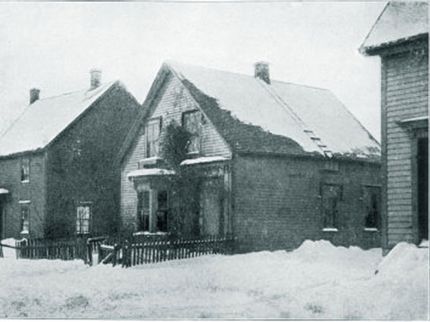
md_36c232-amherst4
House of Esther Cox
Further reading
Continue exploring — Wikipedia, documentaries, podcasts, museum pages. Not treated as proof, and not independently verified by this archive.
Investigation timeline
- 2026-09-25 — Historical file submitted.
- 2026-09-25 — Historical file accepted and published.
Assigned GG-2026-046
Research notes
Historical research: Poltergeist Phenomena, Psychokinesis, and Trauma Responses
The Great Amherst Mystery remains a frequently cited historical case study in psychical research, anomalistic psychology, and historical sociology.Academic and clinical evaluations of the events surrounding Esther Cox primarily center on three analytical models:
Anomalistic Psychology and Dissociation: Modern psychological assessments—such as those later proposed by psychical researcher Walter Franklin Prince—suggest that the intense emotional trauma resulting from the attempted sexual assault induced severe dissociative states or hysteria. Under this model, the physical phenomena were either unconsciously staged during somnambulistic episodes or represented subconscious conversion symptoms that manifested as somatization and self-harm.
Sociological and Eyewitness Contagion: Skeptical researchers highlight the pervasive influence of late 19th-century Spiritualism, which primed observers to interpret ambiguous sounds and misattributed natural occurrences as supernatural intelligence. The sensationalist documentation by Walter Hubbell—who sought commercial success through public exhibitions—introduces potential reporting bias and exaggeration.
Recurrent Spontaneous Psychokinesis (RSPK): Parapsychologists evaluate the case through the lens of RSPK, a hypothesis proposing that severe psychological tension in an adolescent host can subconsciously generate external physical energy (moving objects, loud raps, localized thermal changes).Consequently, scholars view the case as an unresolved confluence of documented psychological trauma, late-Victorian social dynamics, and contested physical anomaly reports.
Historical research: RSPK Dynamics and Somatic Hysteria
The 1878 events surrounding Esther Cox in Amherst, Nova Scotia, represent one of the most rigorously witnessed 19th-century accounts of alleged poltergeist activity. Investigated by contemporary observer Walter Hubbell and evaluated by later parapsychologists, the case centers on the physiological and physical anomalies manifested in Cox's presence following a severe personal trauma.
The unresolved academic questions focus on the interface between acute psychological trauma, somatic hysteria, and macro-psychokinesis. The phenomena exhibited a distinct intelligence—manifesting as spontaneous pyrotechnic events, physical object levitation, and crude wall-writings ("Esther Cox, you are mine to kill")—that directly correlated with severe physical swelling and distress in Cox’s body. Parapsychologists analyze whether the Amherst case represents an extreme manifestation of subconscious RSPK, where unexpressed psychological trauma converts into physical force externalized beyond the nervous system, or whether the trauma acted as an opportunistic conduit for an external, hostile intelligence.
Open research questions
A specific gap in the file. An accepted source, research note, or further-reading link closes it.
Locate the earliest surviving contemporary newspaper account of the Great Amherst Mystery, particularly coverage published before the November 22, 1878 Cincinnati Daily Star report, and determine whether those accounts relied on independent witnesses or repeated the same underlying source.
Propose evidence & media, a source citation, further reading, a research note, a correction, a related case, or a series link. Staff review before anything is added. An accepted correction does not replace the file by itself.