GG-2026-086
Spectre Leaguers of Cape Ann
- Phenomenon Apparitions & Spirits
- Documentation
Rating C
- A — Strong dossier: several independent sources plus primary evidence (original media, records, measurements) a researcher could use without interviewing anyone.
- B — Well documented: multiple independent witnesses with at least some contemporary primary material, or one witness with substantial primary corroboration (photos, recordings, contemporaneous notes, documents).
- C — Multi-source but soft: several witnesses or a long run of reports, but mostly testimony and after-the-fact secondary sources (newspapers, folklore collections, later interviews). Little or no primary physical evidence. Regional legend clusters such as the Bridgewater Triangle land here.
- D — Thin: single witness (or one household), little or no support beyond the account. Normal for a sincere personal experience.
- E — Incomplete or not yet assessed. Every new submission starts here until staff have read it.
- Evidence & media 1 item
- Status Historic
- Location Cape Ann, Massachusetts · regional placement
- Occurred 18 July 1692
Regional marker using the Good Harbor area as a public reference point for the July 1692 Gloucester alarms. Reports involved the Babson farm, the town garrison, fields, swamps and other locations around Gloucester. This marker does not identify a specific apparition or encounter site.
This file is placed as a region or body of water, not a single exact event location.
Activity period
- Earliest claimed event Early July 1692
- Earliest documented report 18 July 1692
- Latest documented report July 1692
- Pattern Historic wave
Summary
The Spectre Leaguers were a series of unusual reports that circulated around Gloucester, Massachusetts, during the summer of 1692. Residents claimed to have seen mysterious armed figures moving through fields, forests, and near local fortifications at a time when fears of French and Native raids were widespread throughout New England. Witnesses reported exchanging musket fire with the figures and observing behavior they believed could not be explained by ordinary human intruders. The events were later recorded by ministers and chroniclers, becoming one of the best-known supernatural traditions of colonial New England.
Background
The Spectre Leaguers reports occurred during a period of intense uncertainty in New England. In 1692, the Massachusetts Bay colony was simultaneously confronting the Salem witch trials and the ongoing conflict known as King William's War. Fear of attack, rumors of enemy activity, and religious anxiety were common throughout the region.
According to later accounts, the episode began when Ebenezer Babson reported seeing two unfamiliar men leaving his property near Gloucester. After questioning members of his household and learning that no visitors had arrived, Babson armed himself and investigated. Similar reports soon followed from other residents.
Witnesses described groups of strange men appearing near fields, swamps, roads, and defensive positions around Cape Ann. The figures were often reported as armed and dressed in light-colored clothing. Some observers believed they were enemy scouts, while others became convinced that something more unusual was occurring.
As reports spread, local residents organized patrols and armed watches. Several accounts claimed that shots were fired at the mysterious figures. Witnesses later stated that the figures appeared unaffected by musket fire or vanished into forests and marshland without leaving expected traces.
Concern became serious enough that colonial authorities dispatched additional militia forces to the area. Under the command of Major Samuel Appleton, troops helped reinforce local defenses and investigate the reports. Despite these efforts, no enemy force was discovered.
The story gradually shifted from a military concern to a supernatural one. After searches failed to locate evidence of raiders or encampments, some ministers concluded that the figures represented demonic or spectral forces rather than human intruders.
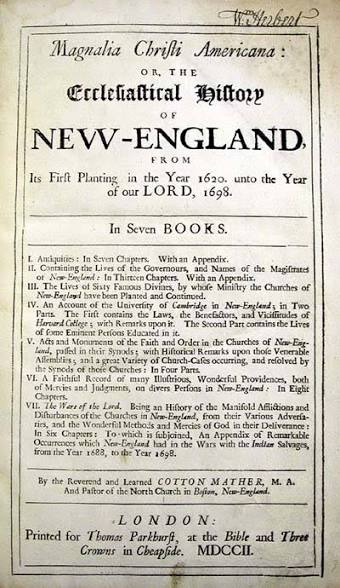
The best-known account was preserved by Cotton Mather, who included the episode in Magnalia Christi Americana (1702). Mather interpreted the sightings through a Puritan religious framework and presented them as evidence of supernatural activity affecting the colony.
Today, historians generally view the Spectre Leaguers as a mixture of eyewitness testimony, wartime anxiety, religious interpretation, rumor, and folklore. The reports themselves are documented in surviving colonial sources. Whether witnesses encountered actual intruders, misunderstood ordinary events, participated in a form of collective panic, or experienced something they genuinely believed to be supernatural remains unresolved.
Witness statement
No statement on file.
Evidence & media
images
Magnalia Christi Americana, 1698
Further reading
Continue exploring — Wikipedia, documentaries, podcasts, museum pages. Not treated as proof, and not independently verified by this archive.
Investigation timeline
- 2026-09-29 — Historical file submitted.
- 2026-09-30 — Historical file accepted and published.
Assigned GG-2026-086
Research notes
Historical research: One of New England's Earliest "Phantom Army" Cases
The Spectre Leaguers case occupies a strange middle ground between history and folklore. Unlike many ghost stories that developed decades after the alleged events, reports of the disturbances were documented by individuals living close to the time they occurred, including Rev. John Emerson and Cotton Mather. The involvement of local militia and multiple witnesses gives the story historical significance beyond ordinary folklore.
At the same time, no physical evidence survives to establish what the witnesses actually encountered. Modern researchers generally view the episode through the lens of wartime anxiety, religious fear, and mass interpretation during one of colonial New England's most stressful periods. Under Gothic.Black standards, the existence of the reports is historically supported, while the nature of the alleged phantom army remains unresolved.
Earliest Documented Paranormal Claims
Midsummer 1692 near Gloucester and Cape Ann, Massachusetts.
Earliest Historical Date Associated with the Events
July 18, 1692 — militia forces led by Major Samuel Appleton were reportedly sent to Gloucester in response to the ongoing disturbances.
Historical research: Wartime Hypervigilance, Mass Contagion, and Frontier Paranoia
From sociological, military, and historical perspectives, the Spectre Leaguers case represents a textbook example of a wartime mass contagion event driven by extreme psychological stress.
During King William's War, English frontier settlements like York, Maine (destroyed in January 1692) lived under constant threat of surprise raids by French soldiers and Wabanaki warriors. Historians note that white waistcoats—frequently described by Babson and other witnesses—closely resembled the off-white wool uniforms worn by French regular troops (Troupes de la Marine) stationed in New France. In a population experiencing acute hypervigilance, mundane visual stimuli (such as cattle in the brush, distant travelers, swaying foliage, or shadows at twilight) combined with gunpowder smoke during high-stress nighttime engagements to create visual misinterpretations that were reinforced through collective reporting.
Historical research: Puritan Daemonology, Spectral Testimony, and Legend Formation
In the study of American folklore and early religious history, the case highlights how colonial theological frameworks shaped the perception of high-strangeness events.
The summer of 1692 marked the exact apex of the Salem witchcraft trials, a period during which "spectral evidence" was legally admissible in court. The Puritan worldview held that the devil viewed New England as his personal domain and would deploy "spectral armies" or witches to break the Puritan covenant. By framing the Gloucester sightings as a "league" of supernatural apparitions rather than a failure of local military scouts, ministers like Cotton Mather successfully integrated an embarrassing military false alarm into a broader religious narrative of spiritual warfare.
Open research questions
A specific gap in the file. An accepted source, research note, or further-reading link closes it.
Reconstruct the Gloucester alarms from the earliest surviving records, especially John Emerson's account and documentation of the July 18, 1692 military response. Determine which details involving Ebenezer Babson, phantom French and Indigenous attackers, gunfire, disappearing figures and supernatural interpretation appear in early sources and which entered through later folklore.
Propose evidence & media, a source citation, further reading, a research note, a correction, a related case, or a series link. Staff review before anything is added. An accepted correction does not replace the file by itself.